
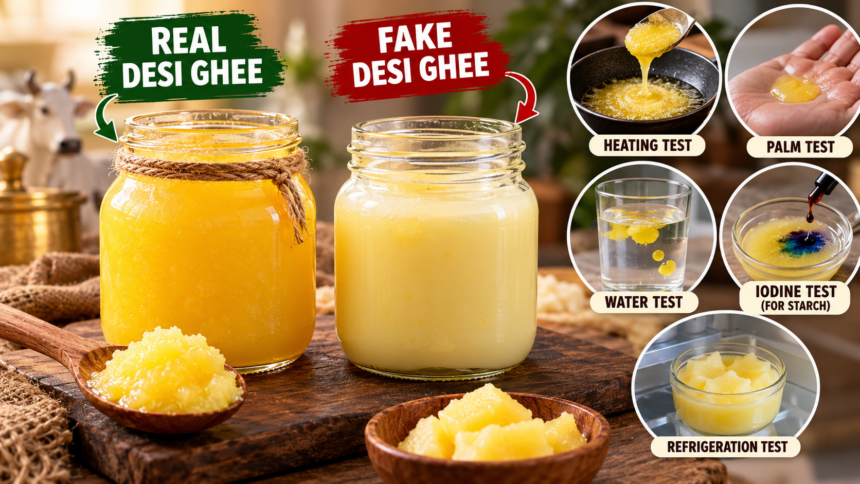
Desi ghee is a staple in Indian households, known for its rich aroma, distinctive flavour and role in traditional cooking. While many families once prepared ghee at home using traditional churning methods, store-bought varieties have become increasingly common, particularly in urban areas. However, with numerous brands available in the market, determining whether ghee is pure or adulterated can be challenging.
Understanding the characteristics of authentic ghee, recognising common adulterants and learning a few basic checks can help consumers make more informed choices when buying this popular dairy product.
What Makes Desi Ghee Pure?
The quality of ghee largely depends on the milk and the process used to prepare it. Traditionally, desi ghee is made by converting milk into curd, churning the curd to extract butter and slowly heating the butter until the ghee separates. This traditional technique is known as the Bilona method.
Authentic ghee generally has a pleasant, rich aroma, a characteristic flavour and a texture that may be slightly grainy. Its colour can range from pale yellow to golden yellow, depending on factors such as the animal’s diet, the milk used and the preparation method.
Ghee made from A2 cow milk is also available in the market. However, the milk type alone does not establish the purity or overall nutritional quality of the finished product.
Common Adulterants Found in Ghee
The demand for ghee and its relatively high price can create incentives for adulteration. Some commonly reported adulterants include vanaspati, refined vegetable oils, palm oil, starch and animal fats.
These substances may be added to increase the quantity of the product or lower production costs. Such adulteration can affect the ghee’s composition, flavour and quality. Identifying suspicious characteristics is therefore important, although appearance and simple home checks cannot conclusively establish whether a product is pure.
How to Check Ghee Purity at Home
Several basic observations and household checks can help consumers identify possible warning signs of adulteration.
Colour, texture and aroma: Pure ghee typically has a pleasant, rich aroma and may develop a granular texture when cooled. Its colour varies naturally. An unusual smell, an unexpectedly waxy texture or other noticeable differences may warrant closer inspection, but colour and texture alone cannot confirm adulteration.
Refrigeration test: Place a small quantity of ghee in a clean container and refrigerate it. Ghee generally solidifies as it cools, but the speed and uniformity of solidification depend on its composition and storage conditions. This test cannot reliably distinguish pure ghee from ghee mixed with other fats.
Heating test: Place a teaspoon of ghee in a pan and warm it gently. Pure ghee typically melts readily and releases its characteristic aroma. Excessive smoke, an unusual smell or unexpected residue may indicate a quality issue, but these signs can also be affected by overheating, moisture and impurities. They are not definitive proof of adulteration.
Palm test: Rub a small amount of ghee between your palms. Ghee melts with body heat, but other fats may behave similarly. A waxy feeling can raise questions about the product’s composition, though this method is not conclusive.
Water test: Add melted ghee to a glass of water and observe how it behaves. Since fats do not mix readily with water, this test cannot reliably determine whether the ghee contains vegetable oils or other adulterants.
Iodine test for starch: Iodine solution can produce a blue or blue-purple colour when starch is present. However, this test requires appropriate handling, and a negative result does not establish that the ghee is pure. Iodine is a chemical reagent and should never be consumed.
These checks can help identify unusual characteristics, but no simple household test can reliably detect every type of adulteration. Laboratory analysis is needed for a more dependable assessment of purity.
Tips for Buying Authentic Ghee and Understanding Its Health Effects
When purchasing desi ghee, check the packaging for the manufacturer’s details, ingredient list, FSSAI licence information and other applicable food-label declarations. For a product sold as pure ghee, the ingredients should be consistent with the applicable standards for milk fat. Prefer reputable sellers and brands that provide transparent information about sourcing and production.
Be cautious of products priced significantly below the usual market rate, as an unusually low price may warrant further investigation. Buying directly from a trusted dairy or farm, where available, and checking for credible laboratory test reports can also help consumers make informed decisions.
Regular consumption of adulterated ghee may expose people to unwanted fats or other substances, depending on the adulterant used. Products containing partially hydrogenated fats may also contain harmful trans fats. The potential health effects depend on the substance present, the amount consumed and the frequency of exposure.
Pure ghee is a source of dietary fat, but it is calorie-dense and should be consumed in moderation as part of a balanced diet. Claims that it automatically improves digestion or boosts immunity should not be treated as guaranteed benefits.
Ultimately, checking labels, choosing reliable suppliers and seeking laboratory verification when necessary are more dependable ways to assess ghee purity than relying solely on home tests.