
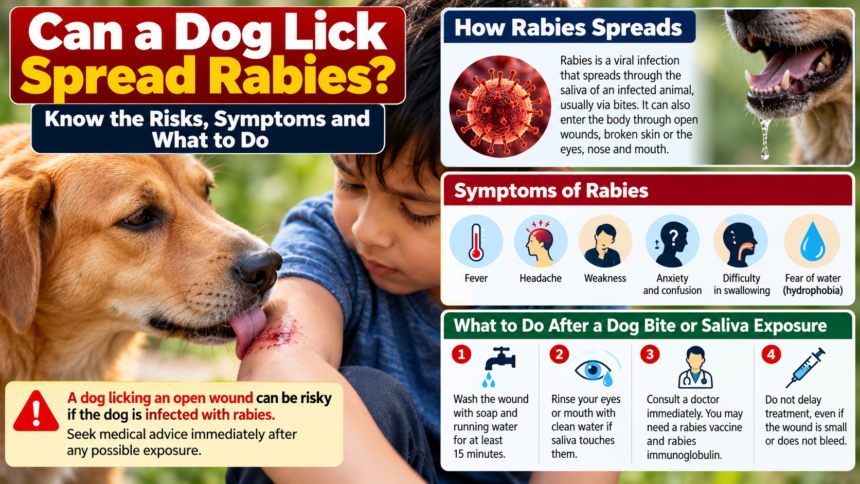
Rabies is a life-threatening viral disease that can spread to humans through the saliva of an infected animal. Although dog bites are a common route of transmission, a bite is not the only possible source of infection. If infected saliva enters the body through an open wound, broken skin or the moist surfaces of the eyes, nose or mouth, rabies transmission may occur.
The World Health Organization (WHO) advises people to seek prompt medical assessment after potentially dangerous contact with an infected animal. Understanding the risks and taking immediate action can help prevent this deadly disease.
Is It Dangerous If a Dog Licks an Open Wound?
A dog licking broken skin or an open wound can pose a rabies risk if the animal is infected. The same concern applies when potentially infected saliva comes into contact with the eyes, nose or mouth.
However, not every dog lick leads to rabies. If the skin is completely intact and there has been no contact with the eyes or mouth, the risk is different from exposure involving broken skin or mucous membranes. A healthcare professional should assess the type of contact and determine whether preventive treatment is necessary.
Parents should be particularly careful when children interact with stray dogs or other animals. Children may allow animals to lick their faces or hands without recognising the potential danger.
Rabies Symptoms: Why You Should Never Wait
Rabies symptoms may develop weeks or months after exposure, depending on several factors. Early signs can include fever, headache and general weakness. As the disease progresses, it can affect the nervous system and cause anxiety, confusion, difficulty swallowing and hydrophobia, an intense fear associated with water.
Once clinical symptoms appear, rabies is almost always fatal. This makes prompt preventive treatment essential after a possible exposure.
Do not wait for symptoms to develop before seeking medical care. Anyone bitten by a potentially rabid animal, exposed to its saliva through broken skin or licked on the eyes or mouth should seek immediate medical assessment.
What to Do After a Dog Bite or Saliva Exposure
Taking the correct steps immediately after possible rabies exposure can significantly reduce the risk of infection.
1. Wash the affected area thoroughly. Clean the wound with soap and running water for at least 15 minutes. Prompt and thorough washing helps remove contamination.
2. Rinse the eyes or mouth if exposed. If animal saliva enters the eyes or mouth, rinse the affected area promptly with plenty of clean water.
3. Seek medical attention immediately. A doctor will assess the exposure and determine whether rabies vaccination and rabies immunoglobulin are required.
4. Do not delay treatment. Even a small wound or an injury that does not bleed may require medical assessment. Do not wait to see whether the animal develops symptoms or whether you feel unwell.
Completing the prescribed course of rabies vaccination is essential. Follow the healthcare professional’s instructions regarding all required doses and any additional preventive treatment.
How to Protect Children and Pets From Rabies
Children should always be supervised when interacting with animals, particularly stray dogs. Parents should discourage animals from licking children’s faces, mouths or injured skin and should teach children to avoid contact with unfamiliar animals.
Pet dogs should also receive rabies vaccinations according to a veterinarian’s recommendations. Responsible pet care and awareness of animal behaviour can help reduce the risk of exposure.
Rabies is preventable when appropriate measures are taken promptly after exposure. Washing the affected area, obtaining immediate medical advice and completing any recommended preventive treatment are the most important steps to protect against this serious infection.
Disclaimer: This article is intended for general health awareness and educational purposes only. It is not a substitute for professional medical advice, diagnosis or treatment. If you suspect rabies exposure, wash the affected area immediately and seek urgent medical care. Do not delay treatment while searching for information online.