
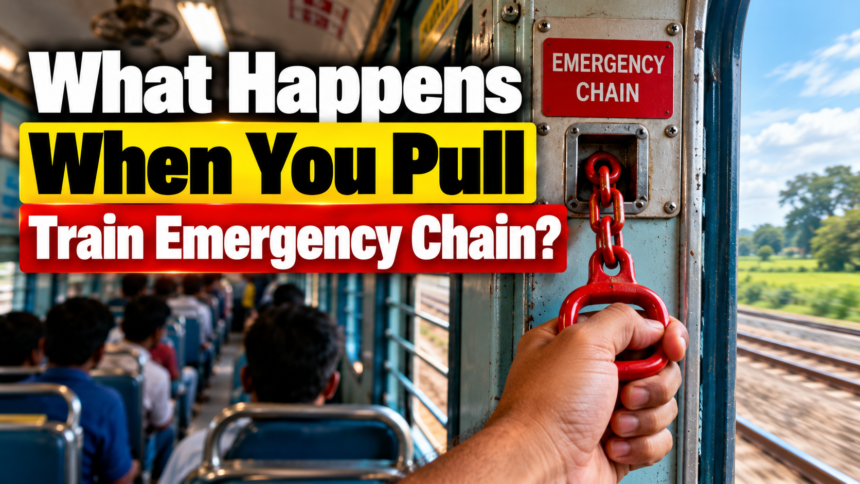
Train journeys often create lasting memories, especially for passengers who enjoy watching the scenery from a window seat. Most people also know that every train coach has an emergency chain that can bring the train to a stop. However, the process is not as immediate as it may appear in films.
When a passenger pulls the emergency chain, a mechanism activates the train’s braking system. But how does it work, how does the driver respond, and how do railway staff identify the coach involved?
How Does the Train Emergency Chain Work?
According to the operating mechanism described in Indian Railways’ procedures for air-braked trains, the emergency chain is connected to the brake pipe through a special valve. Pulling the chain opens the valve, allowing air to escape and reducing pressure in the braking system.
This pressure drop alerts the loco pilot through the braking system’s pressure gauge. The driver responds by controlling the train and bringing it to a safe stop.
The train does not stop instantly. Because of its speed, weight and momentum, it needs time and distance to come to a complete halt.
How Do Railway Staff Find the Coach?
Once the emergency chain is pulled, the loco pilot must respond to the situation and alert the relevant railway staff. The procedure described in the supplied information includes sounding the horn three times to notify the guard and security personnel.
The sound of escaping air can also help staff locate the affected coach. Railway personnel then inspect the situation, reset the chain mechanism and check the braking system before the train resumes its journey.
The interruption is intended to address an emergency, not to provide passengers with a way to stop the train whenever they choose.
Can You Pull the Chain If You Miss Your Station?
No. Pulling the emergency chain because you missed your station, boarded the wrong train or forgot your luggage is not a valid reason.
An unnecessary stop can delay the train involved and affect other trains operating behind it. Such disruptions can inconvenience a large number of passengers and interfere with railway operations.
The emergency chain should be used only when there is a genuine emergency requiring the train to stop, such as a serious medical situation, an accident or a fire.
What Is the Penalty for Pulling the Chain Without a Valid Reason?
Pulling the emergency chain without a legitimate reason can lead to legal action. Section 141 of the Railways Act, 1989, addresses the unauthorised use of communication means on a train, including alarm chains.
As stated in the supplied information, the penalty may include imprisonment for up to one year, a fine of ₹1,000, or both. Passengers should therefore avoid using the chain for personal convenience or amusement.
Disclaimer: This article is intended for general informational purposes only. Railway procedures and applicable penalties should be verified against the latest official Indian Railways guidance and the relevant legal provisions. In an actual emergency, passengers should alert railway staff and follow official safety instructions.