
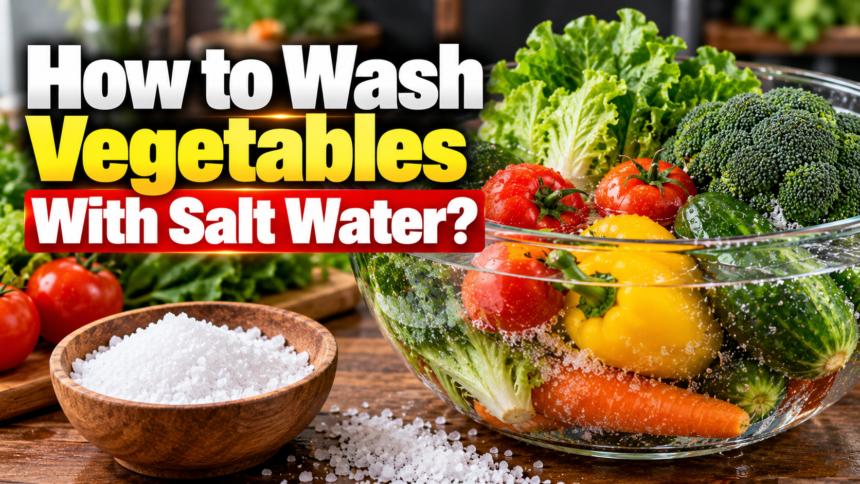
Fresh vegetables are an important part of a healthy diet, but cleaning them properly before cooking is equally important. Although rinsing vegetables under tap water helps remove dirt and debris, some people prefer soaking them in salt water as an additional cleaning step.
Pesticides are used in farming to protect crops from insects and pests, and some residues may remain on the surface of vegetables after harvesting. Following a careful washing routine can help reduce surface dirt and certain residues before the vegetables are prepared.
How to Prepare a Salt Water Solution
To make a salt water solution, fill a large bowl with clean water and add one or two teaspoons of ordinary salt per litre. Stir until the salt dissolves completely.
First, rinse the vegetables under running water to remove loose dirt. Then place them in the prepared solution and leave them to soak for around 10 to 15 minutes. This method can help loosen dirt and may encourage small insects hiding between leaves or vegetable layers to come out.
However, salt water should not be considered a reliable way to remove all pesticide residues. Its effectiveness depends on the type of vegetable and the substance present.
The Right Way to Wash Vegetables After Soaking
Once the soaking period is over, gently rub the vegetables with clean hands. Leafy vegetables can be swirled carefully in the water to help dislodge dirt trapped between their leaves.
Remove the vegetables from the bowl and rinse them thoroughly under fresh, running tap water. This final rinse helps remove loosened dirt and any remaining salt.
Allow the vegetables to drain in a clean basket before storing them. If necessary, use a clean cloth or paper towel to remove excess moisture. For better storage, keep the vegetables in clean conditions and follow suitable refrigeration practices for those that require it.
Which Vegetables Can Be Cleaned This Way?
Rinsing vegetables carefully is useful for a wide range of produce. Particular attention should be given to vegetables with folds, layers or soil trapped on their surfaces.
- Leafy greens: Spinach, fenugreek leaves and lettuce.
- Layered vegetables: Cabbage and cauliflower.
- Firm-skinned vegetables: Cucumber, brinjal and capsicum.
- Root vegetables: Vegetables grown directly in the soil, which may carry soil and dirt on their surfaces.
For leafy greens, separate the leaves where necessary and rinse them carefully. Root vegetables should be scrubbed under running water to remove visible soil.
Important Precautions When Washing Vegetables
Salt water can help loosen surface dirt, but it does not guarantee the removal of pesticides or other contaminants. For routine cleaning, the most important step is to wash produce thoroughly under clean, running water.
Avoid using soap, household detergents or bleach on fruits and vegetables. Follow safe food-handling practices, and peel vegetables when appropriate, while remembering that peeling does not remove every possible contaminant.
Use a bowl large enough to submerge the vegetables properly if you choose to soak them. Do not leave delicate leafy greens in water for longer than necessary, as extended soaking can affect their texture and quality. Always rinse them with fresh water before cooking or eating.
Disclaimer: This article is intended for general informational purposes only and is not a substitute for professional food-safety or medical advice. Washing methods may vary depending on the type of produce and the contaminants present. Follow recognised food-safety guidance when preparing and storing vegetables.