
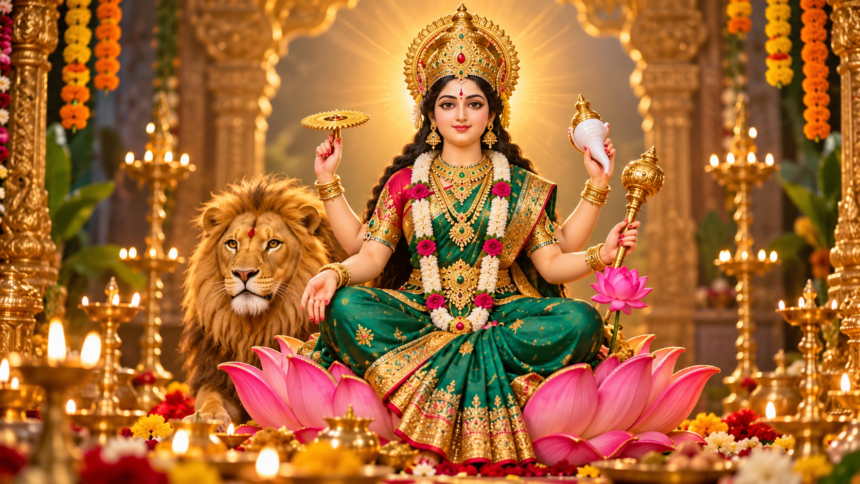
The nine-day festival of Sharad Navratri concludes with the worship of Maa Siddhidatri, the ninth form of Goddess Durga. She is revered in the Navadurga tradition as the giver of spiritual accomplishments, divine wisdom and fulfilment. Devotees worship her on Maha Navami, seeking blessings for prosperity, peace, knowledge and spiritual growth.
The final day of Navratri is marked by prayers, devotional chants and traditional offerings. Maa Siddhidatri is particularly associated with the eight classical siddhis described in Hindu religious texts. Here are the date, auspicious colour, traditional bhog, puja procedure, important mantras and the story associated with the Goddess for Navratri Day 9 in 2026.
Navratri Day 9 2026: Date, Colour and Bhog
- Date: Monday, October 19, 2026
- Day colour: Peacock green, traditionally associated with harmony, renewal, growth and prosperity.
- Traditional bhog: Halwa, puri and black chana are commonly offered to the Goddess. Sesame seeds and sweets made with til are also used in certain traditions.
Maha Navami marks the conclusion of the nine forms of Goddess Durga worshipped during Navratri. Devotees observe the day according to their family traditions, offering prayers and seeking the Goddess’s blessings.
Who Is Maa Siddhidatri? Significance and Religious Beliefs
Maa Siddhidatri is the ninth and final manifestation of Goddess Durga. Her name comes from two Sanskrit words: siddhi, which refers to spiritual attainment, perfection or supernatural ability, and datri, meaning the giver. She is therefore worshipped as the divine source of siddhis and spiritual understanding.
In traditional images, the Goddess is depicted with four arms holding a chakra (discus), shankha (conch shell), gada (mace) and lotus. She is generally shown seated on a lotus or riding a lion. Her worship is also associated with the Sahasrara, or crown chakra, which symbolises higher consciousness and spiritual awakening.
According to Hindu religious traditions, Maa Siddhidatri grants the eight classical ashta-siddhis:
- Anima: The ability to become extremely small.
- Mahima: The ability to become extremely large.
- Garima: The ability to attain immense weight.
- Laghima: The ability to become extremely light.
- Prapti: The attainment of desired things.
- Prakambya: The ability to fulfil intentions or desires.
- Ishitva: Divine authority or mastery.
- Vashitva: The power of control or influence.
These descriptions belong to traditional religious beliefs and interpretations of spiritual powers.
Maa Siddhidatri is also connected with the divine energies of Brahma, Vishnu and Shiva. One well-known legend describes Lord Shiva worshipping the Goddess to obtain siddhis. According to the account, a part of his body became united with hers, giving rise to Ardhanarishwara, a divine form representing the unity of Shiva and Shakti.
Her worship on Maha Navami symbolises the completion of the Navadurga journey and is traditionally associated with wisdom, spiritual fulfilment and prosperity.
Maa Siddhidatri Puja Vidhi for Maha Navami
Devotees can follow these customary steps while performing Maa Siddhidatri puja on the ninth day of Navratri.
1. Morning preparations: Begin the day with a bath and wear clean clothes. Peacock green, purple and light blue are among the colours suggested in some devotional practices.
2. Prepare the puja area: Clean the place of worship and arrange an idol or picture of Maa Siddhidatri. Images showing the Goddess seated on a lotus are commonly used. Devotees may face east or northeast while praying.
3. Make traditional offerings: Offer roli, kumkum, akshat (unbroken rice), fresh flowers and a chunri as part of the worship.
4. Prepare bhog and prasad: Halwa, puri, black chana, kheer, coconut and sesame-based preparations may be offered according to family customs and local traditions.
5. Chant the mantras: Recite the Goddess’s mantras with devotion and concentration.
6. Read scriptures and perform aarti: Devotees may read the Durga Chalisa or Durga Saptashati before concluding the ritual with Maa Siddhidatri’s aarti.
Puja practices can differ between regions and families, so devotees may follow the customs traditionally observed in their homes.
Maa Siddhidatri Mantras With Meaning
Devotees chant Maa Siddhidatri’s mantras to express devotion and seek blessings for wisdom, spiritual progress and fulfilment.
1. Maa Siddhidatri Mool Mantra
ॐ देवी सिद्धिदात्र्यै नमः॥
Transliteration: Om Devi Siddhidatryai Namah
Meaning: I bow to Goddess Siddhidatri, the divine giver of spiritual accomplishments, wisdom and fulfilment.
2. Beej Mantra
ॐ ह्रीं क्लीं ऐं सिद्धये नमः॥
Transliteration: Om Hreem Kleem Aim Siddhaye Namah
Meaning: This invocation calls upon sacred seed syllables associated with divine energy, seeking spiritual attainment, wisdom, success and blessings.
3. Maa Siddhidatri Prayer Mantra
सिद्ध गन्धर्व यक्षाद्यैरसुरैरमरैरपि।
सेव्यमाना सदा भूयात् सिद्धिदा सिद्धिदायिनी॥
Transliteration: Siddha Gandharva Yakshadyairasurairamarapi | Sevyamana Sada Bhuyat Siddhida Siddhidayini ||
Meaning: May the Goddess, revered by Siddhas, Gandharvas, Yakshas, Asuras and Devas, continue to bless devotees with spiritual accomplishments and success.
4. Dhyana Mantra
या देवी सर्वभूतेषु माँ सिद्धिदात्री रूपेण संस्थिता।
नमस्तस्यै नमस्तस्यै नमस्तस्यै नमो नमः॥
Transliteration: Ya Devi Sarvabhuteshu Maa Siddhidatri Rupena Samsthita | Namastasyai Namastasyai Namastasyai Namo Namah ||
Meaning: I repeatedly bow to the Goddess who resides in all beings in the form of Maa Siddhidatri.
Maa Siddhidatri Katha: The Legend of Ardhanarishwara
According to a traditional account associated with the Devi Purana, Lord Shiva worshipped the supreme Goddess to obtain the powers required for creation. Pleased with his devotion, the Goddess appeared as Maa Siddhidatri and granted him the eight classical siddhis: Anima, Mahima, Garima, Laghima, Prapti, Prakambya, Ishitva and Vashitva. Some religious accounts, including traditions associated with the Brahmavaivarta Purana, describe a broader collection of siddhis.
The legend further states that part of Shiva’s body merged with the Goddess, forming Ardhanarishwara. This divine representation symbolises the inseparable relationship between Shiva and Shakti and the complementary masculine and feminine principles of the universe.
Within the Navadurga tradition, Maa Siddhidatri represents the culmination of the spiritual journey that begins with the worship of Maa Shailputri on the first day of Navratri. Her association with the crown chakra signifies higher awareness and spiritual awakening. Devotees worship her on Maha Navami with the belief that sincere prayers can guide them towards wisdom, inner growth and the fulfilment of righteous aspirations.
Disclaimer: This article provides general information about Hindu religious traditions, devotional practices and commonly observed rituals. Customs, mantras and interpretations may vary across regions and communities. Devotees may follow the practices traditionally observed in their families.