
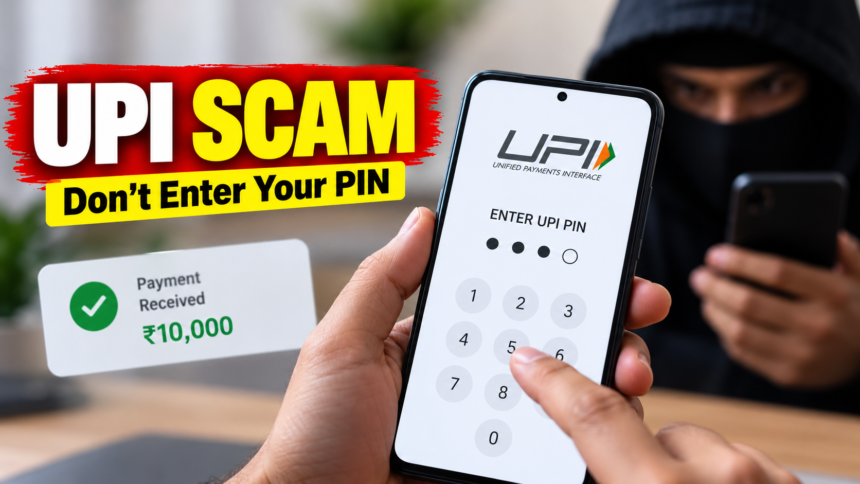
Digital payments have made everyday transactions quicker and easier across India. Millions of people use the Unified Payments Interface (UPI) to transfer money, pay at shops, purchase products online and split bills. However, the increasing use of digital payment services has also given cybercriminals new ways to target unsuspecting users.
One common UPI fraud involves scammers asking people to enter their UPI PIN to receive money. Such frauds often target individuals selling used mobile phones, furniture, household appliances, clothes and other items through online marketplaces or social media.
Fraudsters may pose as genuine buyers, claim that they have initiated a payment and then send a QR code or payment request. They instruct the seller to complete the process by scanning the code or entering their UPI PIN.
The most important precaution is to remember that you do not need to enter your UPI PIN to receive money. Your PIN is generally used to authorise payments from your bank account. If someone asks you to enter it to collect money, receive a refund or claim a reward, stop and verify the request before taking any action.
How Do UPI Payment Scams Work?
Many online payment scams rely on social engineering, a technique in which criminals manipulate people into authorising transactions themselves. Instead of directly accessing banking details, scammers create situations that persuade victims to follow misleading instructions.
For example, imagine that you have listed an old television, smartphone or piece of furniture for sale online. A person contacts you, expresses interest in the product and agrees to your asking price without much negotiation. They may also claim that they are buying it for a relative or arranging an immediate pickup.
After establishing contact, the supposed buyer says they are ready to transfer the money. They then share a QR code, payment request or link and tell you to scan it and enter your UPI PIN to receive the payment.
This is where the transaction can turn into a scam. If the QR code or payment request is intended to collect money from your account, entering your PIN may authorise a payment to the fraudster instead of adding money to your account.
The victim may believe they are accepting the buyer’s payment, while the actual transaction sends money out of their bank account. The scam can succeed because the instructions appear to be part of an ordinary payment process.
Scammers Also Use Fake Refunds and Reward Offers
The same method can be used in other situations. Criminals may pretend to process a refund, return a security deposit, release prize money or complete an online transaction.
They may create a sense of urgency by claiming that the payment will fail unless the victim follows their instructions immediately. In some cases, the fraudster may send a convincing message or payment screenshot to make the request appear genuine.
Users should never share their UPI PIN, OTP or other confidential banking information with another person. They should also avoid approving unfamiliar payment requests or entering their PIN simply because someone claims that it is necessary to receive money.
How to Stay Safe From UPI Fraud
Before completing a digital transaction, check whether the action involves sending money or receiving it. Read the payment details carefully and verify the recipient before authorising any debit.
When selling products online, do not trust a buyer solely because they agree to pay quickly or send a payment screenshot. Confirm the transaction directly through your own UPI application or bank account rather than relying on messages or claims made by the other person.
If a stranger sends a QR code and asks you to scan it to receive money, treat the request with caution. Never enter your UPI PIN unless you are deliberately authorising a payment and have checked the transaction details.
Disclaimer: This article is intended for general informational purposes and awareness of digital payment fraud. UPI features and transaction procedures may vary by application and bank. Users should follow official banking and payment-service security guidance and contact their bank promptly if they suspect a fraudulent transaction.