
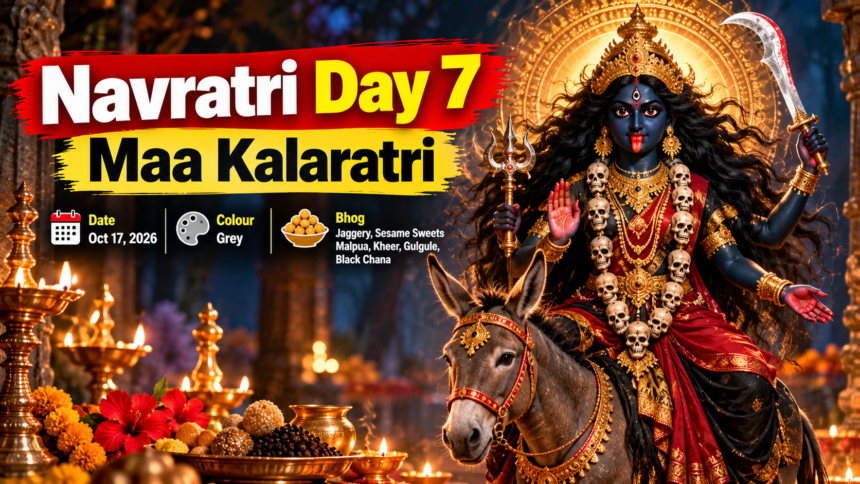
New Delhi: The seventh day of Navratri is dedicated to Maa Kalaratri, one of the fiercest forms of Goddess Durga. Worshipped for her power to overcome darkness, fear and negativity, the goddess holds an important place in Navratri traditions. In 2026, the seventh day falls on Saturday, October 17, according to the festival calendar provided.
Devotees observe the day with prayers, traditional offerings and the chanting of sacred mantras. Jaggery, sesame-based sweets, malpuas, kheer, gulgule and black chana are among the foods that may be offered as bhog. Grey is the associated colour of the day, symbolising resilience and inner strength during difficult times.
Maa Kalaratri is traditionally depicted with a dark complexion, dishevelled hair and three radiant eyes. She rides a donkey and is shown with four hands, two carrying weapons and the other two displaying gestures of blessing and protection. Despite her fierce appearance, she is also known as Shubhankari, representing auspiciousness and benevolence.
Navratri Day 7: Date, Colour and Bhog
- Date: Saturday, October 17, 2026
- Goddess: Maa Kalaratri
- Colour of the day: Grey
- Traditional bhog: Jaggery, sesame-based sweets, malpua, kheer, gulgule and black chana
Grey is associated with stability, resilience and the ability to face challenges. Devotees may prepare traditional sweets and other offerings according to their family customs and regional practices.
Maa Kalaratri is worshipped for protection from fear, negative influences and obstacles. Some Hindu traditions also associate her worship with relief from difficulties connected with Shani, or Saturn.
Maa Kalaratri Puja Vidhi: How to Worship on Day 7
Devotees generally begin the day by waking up early, bathing and wearing clean clothes. Blue, black and other dark shades are considered suitable for worship in some traditions.
Preparing the puja area: Place an idol or picture of Maa Kalaratri on a wooden platform covered with a clean cloth. Devotees may sit on a red or black woollen mat while performing the rituals.
Purification and offerings: Gangajal may be sprinkled around the worship area and over the idol or picture as part of the customary purification ritual. Offerings can include roli, akshat (uncooked rice), fragrance, pan-supari and flowers such as red hibiscus, raat rani or blue and Krishna kamal, depending on availability and local customs.
Lighting the diya and performing aarti: Light a ghee diya and offer prayers to the goddess. Camphor aarti may be performed at the end of the puja, followed by prayers for courage, protection and the removal of obstacles.
Devotees should follow the customs observed in their families and communities when performing the rituals.
Maa Kalaratri Mantras and Their Meaning
Chanting Maa Kalaratri’s mantras is an important part of the day’s worship. Devotees recite them while seeking courage, spiritual strength and the goddess’s blessings.
Primary mantra
ॐ ऐं ह्रीं क्लीं कालरात्र्यै नमः।
Transliteration: Om Aim Hreem Kleem Kalaratryai Namah.
Another mantra associated with the goddess is:
ॐ देवी कालरात्र्यै नमः।
Transliteration: Om Devi Kalaratryai Namah.
Meaning: These mantras express reverence for Maa Kalaratri and seek her blessings, protection and strength.
Goddess mantra
या देवी सर्वभूतेषु माँ कालरात्रि रूपेण संस्थिता।
नमस्तस्यै नमस्तस्यै नमस्तस्यै नमो नमः॥
Transliteration: Ya Devi Sarvabhuteshu Maa Kalaratri Rupena Samsthita, Namastasyai Namastasyai Namastasyai Namo Namah.
Meaning: The mantra offers repeated salutations to the divine Goddess who resides in all living beings in the form of Mother Kalaratri, symbolising the power to overcome darkness and ignorance.
Maa Kalaratri Katha: The Legend of Raktabeej
According to popular Hindu mythology, Goddess Parvati assumed a fierce form to confront powerful demons threatening the divine order. The legends surrounding Goddess Durga include battles against Shumbha and Nishumbha, as well as the demon Raktabeej.
Raktabeej possessed a special boon that made him exceptionally difficult to defeat: every drop of his blood that fell to the ground gave rise to another version of him. As a result, each injury threatened to multiply the number of demons rather than weaken him.
In the account associated with the goddess’s fierce manifestation, Maa Kalaratri drank Raktabeej’s blood before it could touch the ground. By preventing further manifestations from appearing, she was able to defeat him and restore peace.
The story is also understood as a symbolic lesson about self-control. Negative thoughts and harmful habits can become harder to overcome when they are repeatedly encouraged. Maa Kalaratri’s fierce form represents the determination required to break such cycles and regain control.
The seventh day of Navratri honours the courage, strength and protective power associated with Maa Kalaratri. Through prayers, offerings and the remembrance of her legends, devotees celebrate the triumph of good over evil and the determination needed to face fear and negativity.
Disclaimer: This article is intended for general informational and cultural purposes. Religious practices, mantras, offerings and interpretations may vary between regions, families and traditions. The information presented reflects traditional Hindu beliefs and should not be treated as a guarantee of specific outcomes.