
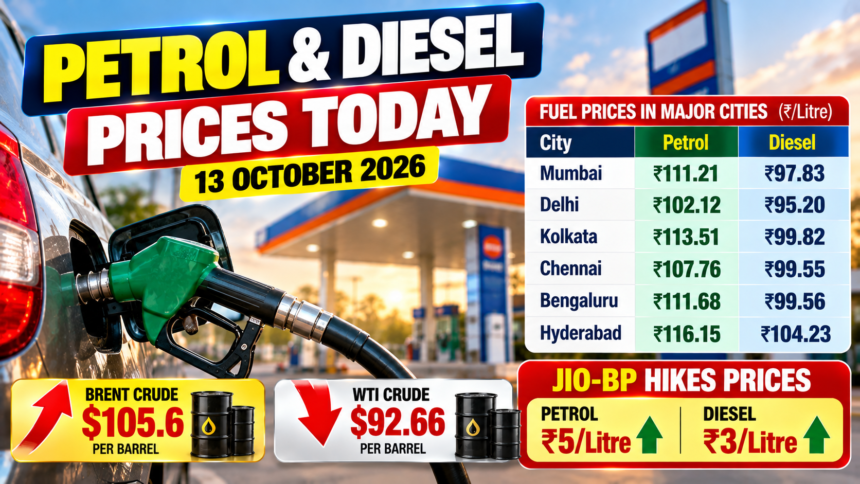
Petrol and diesel prices remained unchanged across major Indian cities on October 13, 2026, despite international crude oil prices staying above $105 per barrel. However, private fuel retailer Jio-bp increased petrol prices by ₹5 per litre and diesel prices by ₹3 per litre from October 11. The move followed a similar price hike by Nayara Energy earlier in October.
Meanwhile, state-owned oil marketing companies, including Indian Oil Corporation, Bharat Petroleum Corporation Limited (BPCL) and Hindustan Petroleum Corporation Limited (HPCL), continued to keep regular petrol and diesel rates unchanged.
Petrol and Diesel Rates in Major Cities
Here are the reported retail fuel prices in six major Indian cities.
| City | Petrol (₹/litre) | Diesel (₹/litre) |
|---|---|---|
| Mumbai | 111.21 | 97.83 |
| Delhi | 102.12 | 95.20 |
| Kolkata | 113.51 | 99.82 |
| Chennai | 107.76 | 99.55 |
| Bengaluru | 111.68 | 99.56 |
| Hyderabad | 116.15 | 104.23 |
Fuel prices differ between cities because of variations in local taxes and other pricing factors. Consumers should check the latest rates applicable to their locations before refuelling.
Global Crude Oil Prices Remain Under Pressure
International crude oil prices continued to fluctuate on October 13 amid changing expectations about global supplies and geopolitical developments.
Brent crude was trading at approximately $105.60 per barrel, while US West Texas Intermediate (WTI) crude fell to $92.66 per barrel. Expectations of additional Russian oil supplies contributed to the decline in WTI prices.
US President Donald Trump also announced a proposed energy ceasefire between Russia and Ukraine, along with an arrangement for additional Russian diesel supplies. However, tensions in the Middle East, attacks on Saudi Arabia and fresh incidents involving oil tankers continued to raise concerns about potential disruptions to global oil supplies.
India imports around 90% of its crude oil requirements, making domestic fuel prices and the country’s import bill sensitive to international market movements.
Oil Companies Face Pressure on Marketing Margins
Although international crude prices eased slightly, state-owned oil marketing companies continued to face financial pressure as domestic petrol and diesel prices remained largely unchanged.
According to estimates from ICRA, state-run oil marketing companies faced marketing margins of minus ₹8 per litre on petrol and minus ₹9 per litre on diesel in September. These negative margins translated into combined daily losses of approximately ₹530 crore.
If international crude prices remain elevated, India’s oil import expenses could increase further, potentially adding to the pressure on fuel retailers’ margins.
What Do Current Fuel Prices Mean for Consumers?
For motorists, the unchanged prices at most state-run fuel stations mean there has been no immediate widespread increase in petrol and diesel costs. However, fuel prices remain relatively high, and developments in the international crude market could influence future pricing decisions.
The rupee-dollar exchange rate is another important factor. Since India purchases most of its crude oil from overseas, a weaker rupee can make imports more expensive and add pressure to domestic fuel costs.
Consumers should also remember that prices can vary across cities because of differences in state taxes and local charges. Checking the latest rates before visiting a petrol pump can help motorists avoid confusion, particularly where private fuel retailers have revised their prices.
Disclaimer: This article is intended for general informational purposes only and is based on the figures and information provided in the source material. Petrol and diesel prices may change depending on international crude oil rates, currency movements, taxes and individual fuel retailers’ pricing decisions. Please verify the latest rates with an authorised fuel retailer before making refuelling or financial decisions.