
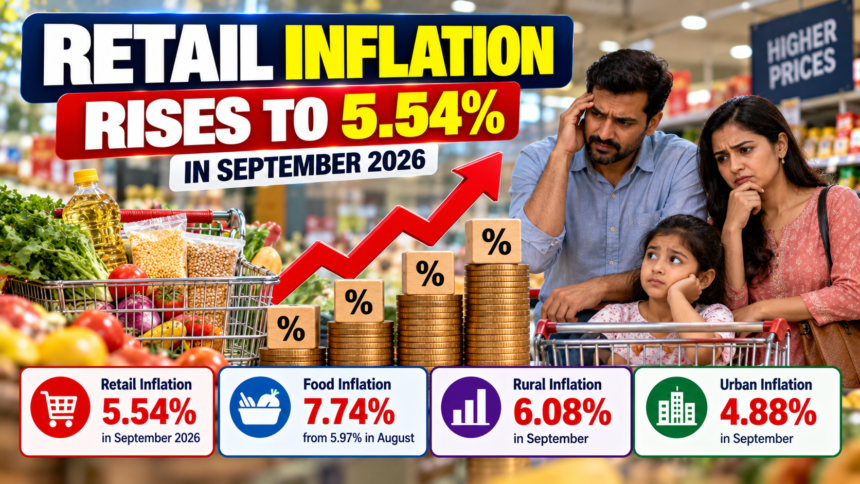
Retail inflation in India increased to 5.54% in September 2026, driven largely by rising food prices, according to government data released on Monday. The Consumer Price Index (CPI)-based inflation rate was 4.83% in August, making September’s reading the highest under the new index series introduced in January.
Food inflation also accelerated during the month, rising to 7.74% from 5.97% in August. The increase could put additional pressure on household budgets during the festive season, when families typically spend more on groceries, clothing, sweets and gifts.
The latest figures come amid changes in monetary policy, with the Reserve Bank of India (RBI) having raised its benchmark repo rate by 25 basis points to 5.50%, according to the supplied report.
Retail Inflation Increases in Rural and Urban Areas
The Ministry of Statistics and Programme Implementation reported that India’s annual retail inflation reached 5.54% in September 2026.
Rural areas recorded a higher inflation rate than urban regions. Rural retail inflation rose to 6.08% in September, compared with 5.24% in August. In urban areas, inflation increased to 4.88% from 4.31% during the same period.
The figures indicate that price pressures were more pronounced in rural markets, where inflation remained above the national average.
Food Prices Remain the Main Driver of Inflation
Higher food prices were a major contributor to the rise in consumer inflation. According to the Consumer Food Price Index (CFPI), annual food inflation climbed to 7.74% in September from 5.97% in August.
Rural food inflation stood at 8.06%, while the corresponding rate in urban areas was 7.18%.
The broader Consumer Price Index for the combined rural and urban category increased to 109.49 in September from 108.74 in August. Similarly, the combined Consumer Food Price Index rose to 112.17 from 110.73, according to a report by the IANS news agency.
The increase in food inflation means households may face higher expenses on essential food items. With festive spending also taking place during this period, rising prices could add to the financial burden on consumers.
How the Latest Inflation Data Could Affect RBI Policy
Inflation trends remain important for the Reserve Bank of India as it balances price stability with economic growth. A sustained increase in consumer prices can influence decisions about interest rates and monetary policy.
The latest rise in food inflation highlights the importance of monitoring price movements in essential commodities. Future policy decisions will depend on how inflation evolves and how economic conditions change.
However, a single month’s inflation reading does not, by itself, determine the RBI’s next policy action.
How Was the September Inflation Data Collected?
The National Statistical Office (NSO) collected price information from 1,407 urban markets, including online markets, and 1,465 villages across states and Union Territories.
The reported response rate for September was 100% in both rural and urban markets, providing comprehensive coverage for the month’s price assessment.
The latest figures offer an overview of inflation trends across the country, with food prices remaining a key factor behind the increase in the retail inflation rate.
Disclaimer: This article is intended for general informational purposes only and is based on the figures and statements provided in the source material. Inflation data, economic conditions and monetary policy decisions may change as new information becomes available. Readers should refer to official releases from the Ministry of Statistics and Programme Implementation and the Reserve Bank of India for verified updates. This article does not constitute financial or investment advice.