
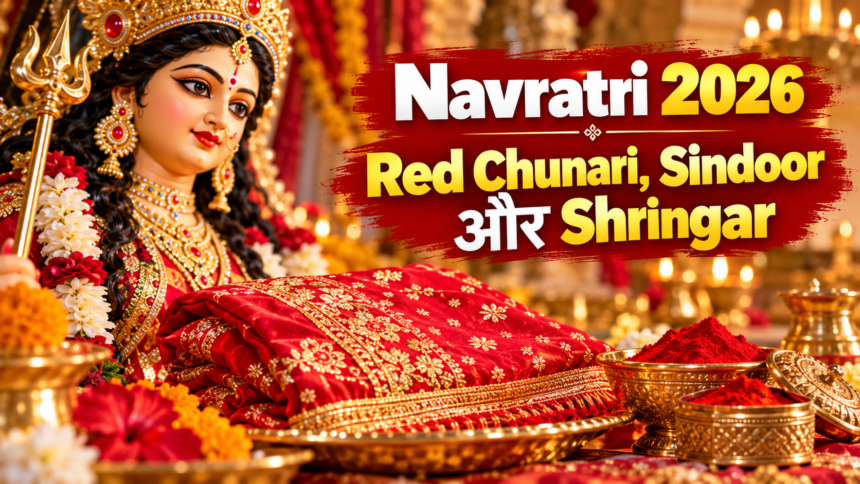
New Delhi: Red chunari, sindoor and shringar are among the traditional offerings associated with the worship of Maa Durga during Navratri. Devotees use these items to express faith and respect, with each carrying cultural and religious significance linked to Shakti, auspiciousness and devotion.
As Sharadiya Navratri begins on October 11, 2026, many households will prepare for daily puja by arranging traditional offerings and decorating the Goddess. Understanding the meaning behind these rituals offers a closer look at the customs followed during the nine-day festival.
Why Do Devotees Offer a Red Chunari to Maa Durga?
A chunari is a traditional scarf or veil offered to Maa Durga as a mark of reverence. During worship, devotees often place it over the Goddess’s idol or image as part of her adornment.
Red is widely associated with Shakti, the power of the divine feminine, and is traditionally considered a symbol of strength and auspiciousness in Hindu culture. Offering a chunari is also a way for devotees to express affection and devotion towards the Goddess.
Some families present a chunari at the beginning of Navratri, while others offer it during Ashtami, Navami or another significant day. The timing may depend on a personal vow, temple practice or family tradition.
Although red is a popular choice, the colour and design of the chunari can vary according to regional customs and the form of worship.
What Does Sindoor Symbolise in Maa Durga Worship?
Sindoor, also known as vermilion, is used in several Hindu religious traditions. During the worship of Maa Durga, it may be offered to the Goddess or included among the materials used for her shringar, alongside kumkum, flowers and other puja items.
The practice is traditionally associated with auspiciousness, Shakti and devotion. Sindoor also holds a special place in certain regional celebrations. In Bengal, Sindoor Khela is observed on Vijayadashami, when married women apply vermilion to Maa Durga and exchange it with one another as the festival comes to a close.
This celebration is different from the regular offering of sindoor during Navratri puja. The exact procedure can vary between communities, and devotees generally follow the customs of their family or temple.
What Is Shringar and Why Is It Performed During Navratri?
Shringar refers to adorning a deity with clothing, jewellery, flowers and other decorative or ritual items. During Navratri, Maa Durga’s shringar may include a chunari, sindoor or kumkum, flower garlands, ornaments, perfume and other materials used in accordance with traditional worship practices.
For devotees, shringar is more than a decorative ritual. It represents an act of honouring the Goddess and expressing devotion through carefully prepared offerings. In temples, priests may perform the shringar, while families often follow simpler versions of the practice at home.
There is no single list of shringar items followed by every household. The choice of materials and the way they are arranged depend on regional traditions, the form of the deity and individual family customs.
Can You Offer a Red Chunari on Any Day of Navratri?
Devotees may offer a red chunari on different days of Navratri, including the first day, Ashtami and Navami. The preferred occasion can depend on family traditions, temple customs or a personal religious vow.
However, offering a red chunari is not compulsory for every form of worship. Similarly, devotees do not necessarily need to offer every shringar item together. Prayer, flowers and other customary offerings can also form part of a household’s Navratri observance.
As Sharadiya Navratri 2026 approaches, these familiar rituals offer an opportunity to understand the traditions behind the festival. The red chunari expresses reverence for Shakti, sindoor reflects established devotional customs, and shringar allows worshippers to honour Maa Durga through adornment.
Although practices differ across India, their shared purpose is to express faith, respect and devotion to the Goddess.
Disclaimer
This article is intended for general informational and cultural purposes. The meanings and practices associated with red chunari, sindoor and Maa Durga’s shringar are based on traditional Hindu beliefs and customs. Rituals may vary across regions, communities, temples and families. Readers should follow their established traditions or consult a trusted religious guide for specific ritual instructions.