
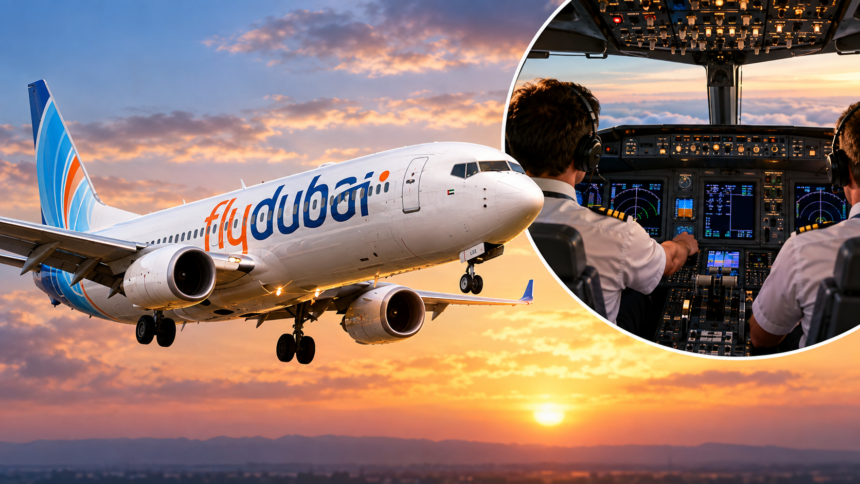
The identities of the two additional pilots who helped regain control of a flydubai aircraft during a mid-air cockpit attack are still unknown, three days after the incident. Flydubai has confirmed only that the two pilots were members of its crew and were travelling as passengers on the same flight.
The airline has not provided an explanation for why their names have not been disclosed.
Why Were Two Extra Pilots Travelling as Passengers?
Passenger Daniel Schlichter, who was sitting in the second row, recalled the frightening incident and described the presence of the two pilots as a remarkable stroke of luck.
According to Schlichter, the two pilots were travelling on the aircraft because they were scheduled to operate the return flight from Tel Aviv to Dubai. When airline crew members travel as passengers because they are required to operate another flight later, they are commonly described as “deadheading.”
The two pilots were therefore not part of the operating flight crew when the aircraft departed. However, their presence became extremely important once the situation in the cockpit turned dangerous.
Pilot Took Control After Cockpit Attack
Schlichter said passengers suddenly heard shouting coming from the cockpit and were told that the co-pilot was repeatedly attacking Captain Smit Machchhar. He recalled seeing blood around the cockpit area.
Despite suffering serious injuries, Machchhar opened the cockpit door. A passenger then intervened, grabbing the alleged attacker, identified as Hamam Al-Hamami, and pulling him away from the cockpit. Other passengers also joined the effort to restrain him.
During the chaos, one of the two additional pilots moved towards the cockpit.
Schlichter said the pilot made his way through the crowd, reportedly moving over passengers who were trying to hold the alleged attacker. He eventually reached the pilot’s seat and took control of the aircraft.
The second additional pilot then entered the cockpit, and the two pilots closed the door. Schlichter later praised the first pilot’s actions, saying he immediately took command and appeared to understand what needed to be done.
Flight Stabilised After More Than 10 Minutes
The aircraft had reportedly been descending rapidly during the incident, while part of its rudder was also said to have broken. According to Schlichter, the two pilots spent around 10 minutes or possibly longer working to stabilise the aircraft.
During that period, passengers inside the cabin did not know what was happening in the cockpit. Eventually, a “Mayday” emergency call was issued, and the crew began searching for a suitable place to land.
The lack of information left passengers increasingly concerned about the aircraft’s condition.
Passengers Feared a Possible Hijacking
Even after the aircraft had been brought under control, the pilots did not immediately address the passengers. This increased the tension inside the cabin.
Schlichter said some passengers began fearing that the aircraft could have been hijacked and might be diverted towards Iran. According to his account, the concern was partly linked to the aircraft’s proximity to the region.
Around 45 minutes later, the pilots finally informed passengers that the aircraft would land in Tabuk, Saudi Arabia. They also reassured everyone that the situation was under control.
The passengers ultimately trusted the pilots, and the aircraft landed safely in Tabuk.
Captain Smit Machchhar has since received widespread praise for his actions during the incident. Prime Minister Narendra Modi also spoke with the Indian pilot following the episode.
Disclaimer: This article is based on the information and accounts available regarding the incident at the time of publication. Details surrounding the event, including information about the crew and investigation, may change as further information becomes available. Readers should refer to official statements from the airline and relevant authorities for the latest confirmed updates.