
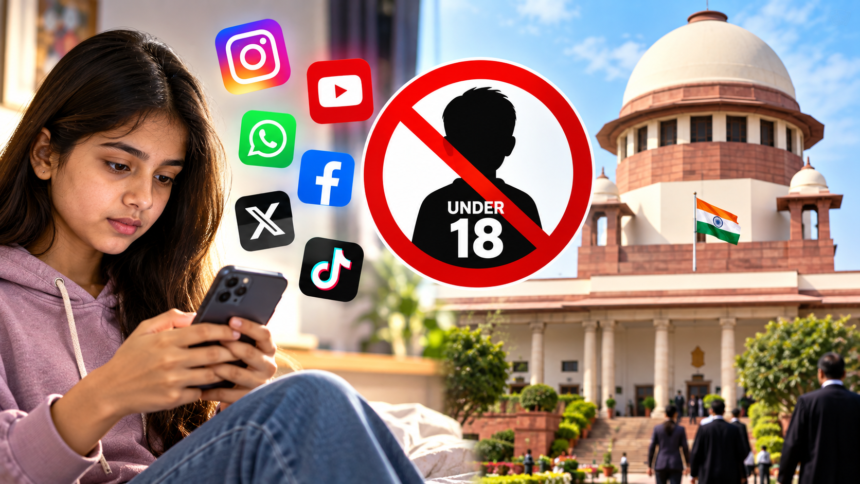
Reports about a possible ban on social media accounts for users below 18 have sparked discussion across India. However, there is currently no blanket ban in force preventing everyone under 18 from using social media.
At the same time, the issue is being actively examined by the government and the Supreme Court. The Centre has told the Supreme Court that it will consider changes to the Information Technology (Intermediary Guidelines and Digital Media Ethics Code) Rules to address the creation of social media accounts by minors.
This means claims suggesting that an immediate nationwide under-18 social media ban has already come into effect are misleading. The focus at present is on creating stronger safeguards for children and determining how platforms should comply with Indian law.
Why Is the Supreme Court Examining Social Media Use by Minors?
The Supreme Court is hearing a petition filed by the Just Rights for Children Alliance, which has sought safeguards for children using social media and other digital platforms.
The petition has raised concerns over the ability of minors to independently agree to the terms and conditions of social media platforms. The matter also points to the fact that Indian law does not generally allow minors below 18 to independently enter into binding contracts.
During the hearing, Justice Joymalya Bagchi said that safeguards for minors should not remain merely guidelines and asked Solicitor General Tushar Mehta to examine whether stronger statutory provisions could be introduced under the intermediary rules. The Centre said it would examine the matter.
One proposal under consideration involves parental consent, under which parents or guardians could have a role in allowing minors to access certain digital platforms and services.
What Is the Government Considering?
The latest developments indicate that the government is considering a legal framework requiring social media intermediaries to follow Indian laws concerning minors.
Reports on the Supreme Court proceedings say the Centre has agreed to examine changes to the intermediary rules that could prevent children under 18 from independently opening social media accounts. The exact form and implementation of any such rules will depend on the government’s further action.
The government has also previously stated that India’s existing IT framework places obligations on digital platforms to deal with unlawful and harmful content, including material that can harm children.
Focus Remains on Children’s Online Safety
The debate has largely centred on protecting children from harmful online material and other risks associated with digital platforms.
Former Chief Justice of India D.Y. Chandrachud has also spoken about risks linked to harmful digital content and child exploitation. In a 2026 lecture, he highlighted concerns surrounding pornography, deepfakes and the impact of unregulated digital content on young people.
Former cricketer and Rajya Sabha member Harbhajan Singh has separately raised concerns in Parliament about obscene content being served to children on social media platforms, particularly Instagram, and called for stronger safeguards.
For now, users should distinguish between a proposal or proposed regulatory change and an actual nationwide ban. There is no blanket under-18 social media ban currently in force, but the Supreme Court proceedings and the Centre’s response show that tighter rules for minors are being actively considered.
Disclaimer: This article explains the latest reported developments surrounding social media access for minors in India. Any future restrictions, parental-consent requirements or changes to platform rules will depend on official government notifications and legal proceedings. Readers should rely on official announcements for the final rules and their effective date.