
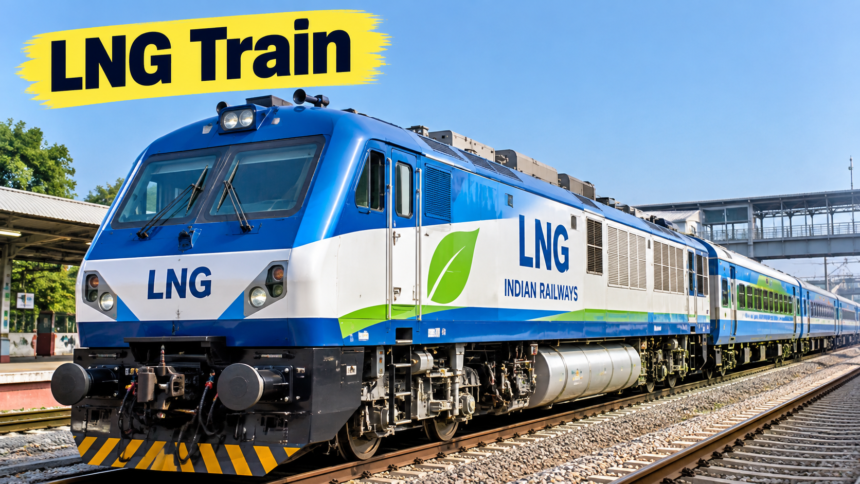
Indian Railways has taken a step toward adopting cleaner fuel technology with the introduction of its first liquefied natural gas (LNG)-powered train. The train has started operating from Sabarmati and is currently running between Sabarmati and Mehsana Junction in Gujarat.
India has now joined countries including the US, Russia, China, Canada and Spain, where LNG technology is already being used for railway operations. The new system uses dual-fuel technology, allowing the train to operate using both LNG and diesel.
How LNG Technology Works in Trains
Liquefied natural gas is produced by cooling natural gas to extremely low temperatures until it becomes liquid. The process considerably reduces the gas’s volume, making it easier to store in specially designed tanks and transport over long distances.
For the LNG-powered train, Indian Railways has introduced an LNG-based fuel system in the power cars. The dual-fuel engine can use both LNG and diesel, with the combination depending on fuel availability.
The train carries LNG in a specialized cryogenic tank that keeps the fuel at the extremely low temperature required to maintain it in liquid form. During operation, the LNG undergoes re-gasification and is then supplied to the engine along with diesel.
Diesel Consumption Could Fall by 40–50%
The dual-fuel system is designed to replace a significant portion of diesel consumption with LNG. According to the information provided, diesel usage can be reduced by around 40% to 50%.
LNG also costs less than diesel, which can help reduce fuel expenses. At the same time, replacing part of the diesel with LNG can lower smoke and harmful gas emissions, supporting cleaner railway operations.
The technology is particularly suited to high-speed and DEMU trains, where improved fuel efficiency can provide operational benefits.
Longer Distance Between Refuelling Stops
The train’s higher liquid-fuel storage capacity allows it to travel more than 200 km without requiring frequent refuelling. The dual-fuel system also helps reduce strain on the engine, supporting smoother acceleration along with improved speed and efficiency.
With the introduction of LNG technology, Indian Railways is exploring an alternative fuel system that can reduce dependence on diesel while making train operations more fuel-efficient and environmentally friendly.
Disclaimer
This article is based on the information available in the source material and is intended for general informational purposes only. Details regarding railway technology, fuel consumption and operations may be subject to change based on official updates from Indian Railways.