
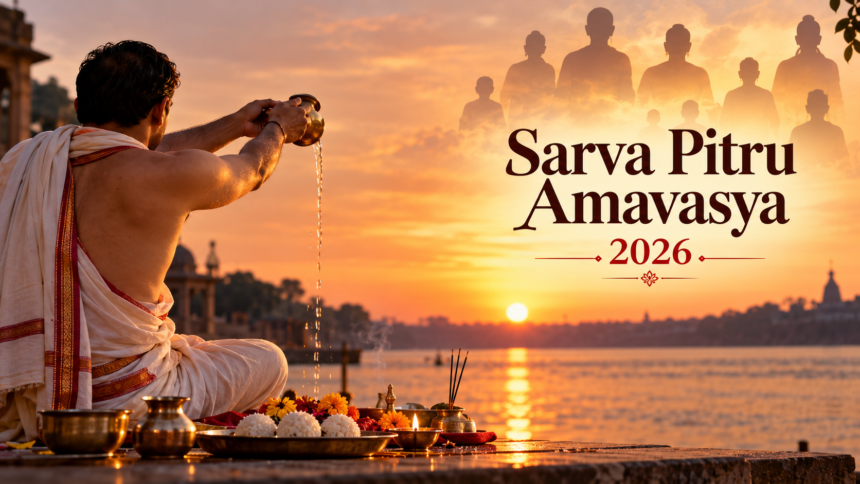
Sarva Pitru Amavasya marks the final day of Pitru Paksha and holds special significance for families who observe ancestral rituals. In 2026, Sarva Pitru Amavasya will be observed on Saturday, October 10.
Also known as Mahalaya Amavasya, Sarvapitri Amavasya and Pitra Moksha Amavasya, the day is traditionally dedicated to remembering ancestors and performing Shraddha. It is particularly important for families who do not know the exact death Tithi of an ancestor or were unable to perform the annual Shraddha on the appropriate lunar date.
Sarva Pitru Amavasya 2026 Date and Tithi
Sarva Pitru Amavasya will fall on October 10, 2026, during the Ashwin Krishna Amavasya Tithi.
For New Delhi, the Amavasya Tithi is expected to begin at around 9:37 PM on October 9 and end at approximately 9:21 PM on October 10.
Since Shraddha Muhurat is determined using local sunrise and other Panchang calculations, the exact timings can differ depending on the location.
Pitru Paksha 2026 will begin on September 27 and conclude with Sarva Pitru Amavasya on October 10.
Why Is Sarva Pitru Amavasya Significant?
The term Sarva Pitru refers to the remembrance of all ancestors. Unlike the other days of Pitru Paksha, which are generally associated with the specific lunar Tithi of an ancestor’s death, Sarva Pitru Amavasya provides an opportunity for a collective ancestral observance.
The day is especially significant when the death date of an ancestor is unknown or when the family could not perform Shraddha on the corresponding Tithi.
For many families, the final day of Pitru Paksha therefore provides an opportunity to remember multiple generations of ancestors together and continue family traditions of ancestral remembrance.
Shraddha, Tarpan and Pind Daan Rituals
The main rituals associated with Sarva Pitru Amavasya include Shraddha, Tarpan and Pind Daan, along with food offerings and charity according to family customs.
Tarpan involves offering water in remembrance of ancestors. Shraddha may include food offerings and other prescribed rituals, while Pind Daan involves offering pindas as part of ancestral worship.
The exact method can vary according to regional customs, community practices and family traditions. Many families therefore follow the procedure recommended by their priest or the customs traditionally followed by their household.
For Parvan Shraddha during Pitru Paksha, the daytime period covering Kutup Muhurat, Rohina Muhurat and Aparahna Kaal is traditionally considered suitable for the ritual. Tarpan is generally performed at the conclusion of the Shraddha ritual rather than as a separate fixed-time puja.
Who Can Perform Shraddha on Sarva Pitru Amavasya?
Sarva Pitru Amavasya is traditionally associated with ancestors whose death Tithi is unknown or whose Shraddha could not be performed on the appropriate Pitru Paksha day.
Families may also observe the day as a collective remembrance of their ancestors. The specific rituals and procedures can differ according to regional and family traditions.
Those planning the observance should check their local Panchang and, where necessary, consult a knowledgeable priest for the appropriate Muhurat and ritual procedure.
Remembering Ancestors on the Final Day of Pitru Paksha
Pitru Paksha is traditionally a period of remembrance, allowing families to honour those who came before them and preserve ancestral traditions across generations.
Sarva Pitru Amavasya brings this period to a close. For many families, the significance of the day lies not only in performing rituals but also in remembering parents, grandparents and earlier generations and expressing gratitude for their place in the family’s history.
Whether the observance involves detailed rituals or follows a simpler family tradition, Sarva Pitru Amavasya provides an occasion to remember ancestors and keep their memories alive.
Disclaimer: This article is intended for general informational purposes and is based on the Panchang details and traditional practices provided in the source information. Amavasya timings, Shraddha Muhurat and ritual procedures may vary according to location, Panchang calculations, regional customs and family traditions. Devotees should consult their local Panchang or a qualified priest for location-specific timings and guidance.