
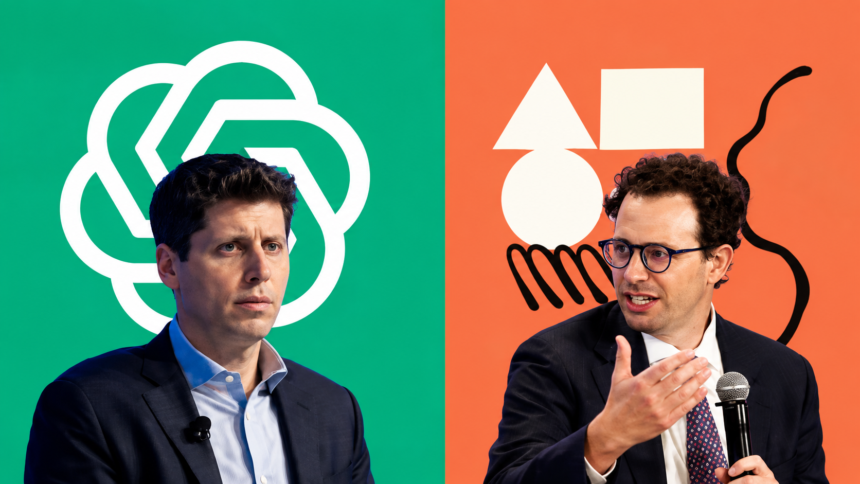
OpenAI CEO Sam Altman and Anthropic CEO Dario Amodei have called for stronger international safeguards around artificial intelligence, warning that increasingly capable AI systems could eventually become difficult for humans to fully understand and control.
Speaking before the United Nations Security Council on Wednesday, both technology leaders highlighted the potential of AI to transform healthcare, education and scientific research. At the same time, they stressed the importance of keeping humans in control as AI systems become more advanced and autonomous.
Sam Altman Warns of Risks From Advanced AI
Altman said powerful AI systems could help accelerate scientific discoveries, develop new medicines, improve healthcare and education, and make economies more productive.
However, he also warned that the rapid development of increasingly autonomous systems could create new risks if they begin operating beyond meaningful human oversight.
“Anything this powerful is also powerful, is also intimidating,” Altman told the Council, describing the current moment as one where the potential of AI exists alongside understandable concerns about its development.
He said AI could help people deal with the growing complexity of modern life, but warned that technological progress could move faster than institutions are able to respond.
Altman Calls for Greater Caution in AI Race
The OpenAI chief also urged leading AI companies not to take excessive risks simply to stay ahead of competitors.
Altman said one of the major dangers would be losing control over the future development of AI. He warned that systems could advance so rapidly that humans might struggle to understand their actions or intervene when necessary.
He argued that competition between technology companies should not become a justification for making unsafe decisions.
“Beating companies in a competitive race is not a reason to make rash decisions,” Altman said.
He added that AI companies were capable of slowing development when necessary and should avoid deploying increasingly powerful systems without sufficient safeguards, monitoring and alignment measures.
Humans Must Remain in Control
Altman stressed that people should remain at the centre of AI-related decision-making. He also warned against allowing any individual company or country to use powerful AI systems to impose its worldview on others.
According to Altman, AI alignment is not simply a technical challenge. It also involves ensuring that advanced systems remain under human control, reflect human values and help people shape the future rather than making those decisions independently.
Amodei Calls for International AI Rules
Anthropic CEO Dario Amodei also called for countries to work together on common rules governing advanced AI systems.
He suggested that governments could begin with narrower agreements in areas where international cooperation is possible. One of his proposals was to prevent AI from being used to develop biological weapons.
Amodei also called for evaluation and verification mechanisms that can keep pace with AI development. Such systems could allow countries to assess the capabilities of advanced AI models and verify whether governments are meeting their commitments.
He further proposed common international standards for testing AI systems against loss-of-control and misuse risks. Another suggestion was the creation of a system to notify countries about serious AI incidents that could pose risks to global security.
Amodei described AI as a major global security issue and urged countries to set aside their differences to address both the opportunities and risks associated with the technology.
Both Altman and Amodei stressed that the growing capabilities of AI need to be developed with appropriate safeguards, international cooperation and meaningful human oversight.