
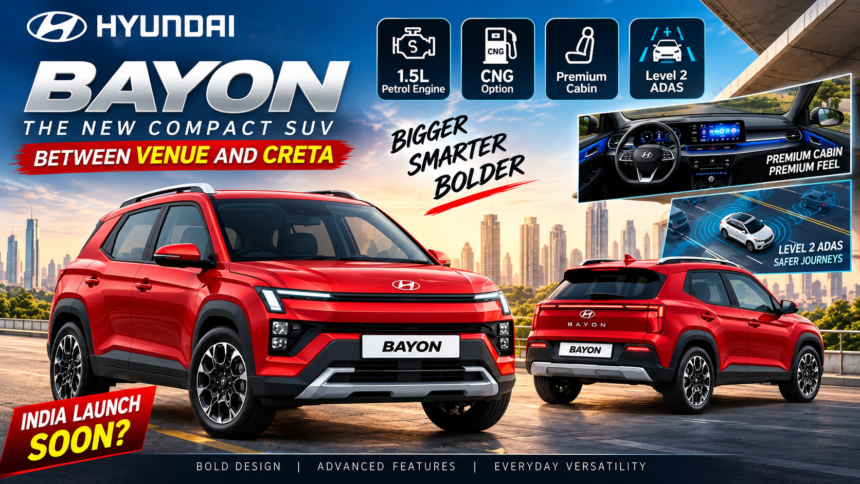
Hyundai is preparing to expand its SUV portfolio in India with the upcoming Hyundai Bayon, which is expected to arrive in October. The new SUV is likely to sit between the Venue and Creta in Hyundai’s lineup.
Teasers, official sketches and images of test vehicles have already offered a glimpse of the Bayon’s exterior design and expected features. The SUV is expected to combine a boxy design with a premium interior, a 1.5-litre petrol engine, a possible factory-fitted CNG option and Level 2 ADAS technology.
Hyundai Bayon Design and Exterior Features
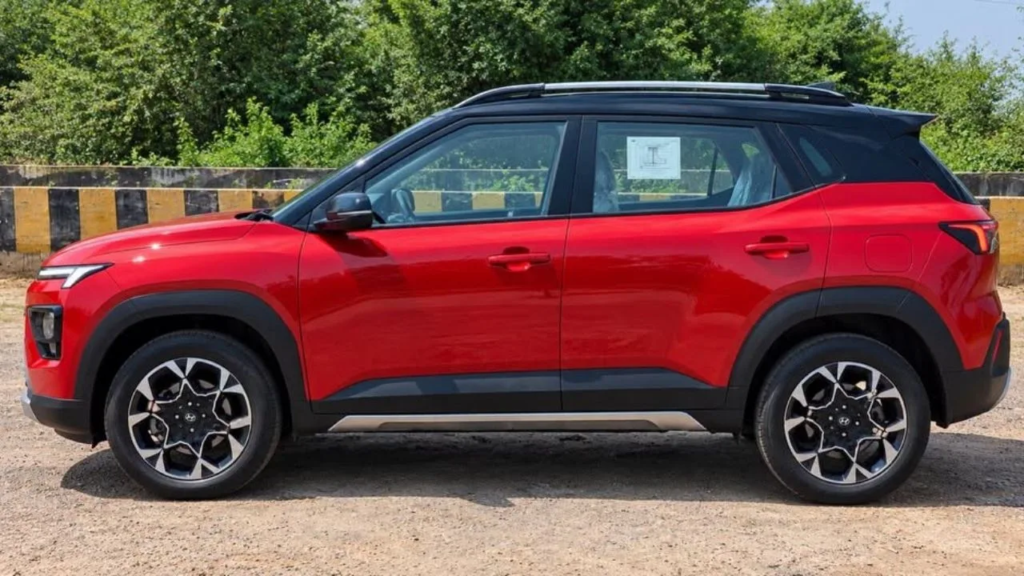
The front-end design of the Hyundai Bayon is expected to be one of its key highlights. Hyundai has previewed an ‘H-Edge’ lighting signature, which integrates the turn indicators with the LED daytime running lights.
The SUV is expected to feature a split-headlamp arrangement along with all-LED lighting. This setup could give the Bayon a distinctive appearance compared with Hyundai’s other SUVs. Its upright, boxy profile is also expected to contribute to a strong road presence.
At the side, the Bayon is expected to get dual-tone machine-cut alloy wheels with a geometric design. Large windows should help create a more open appearance for the cabin, while thick cladding around the wheel arches is expected to add to its rugged styling.
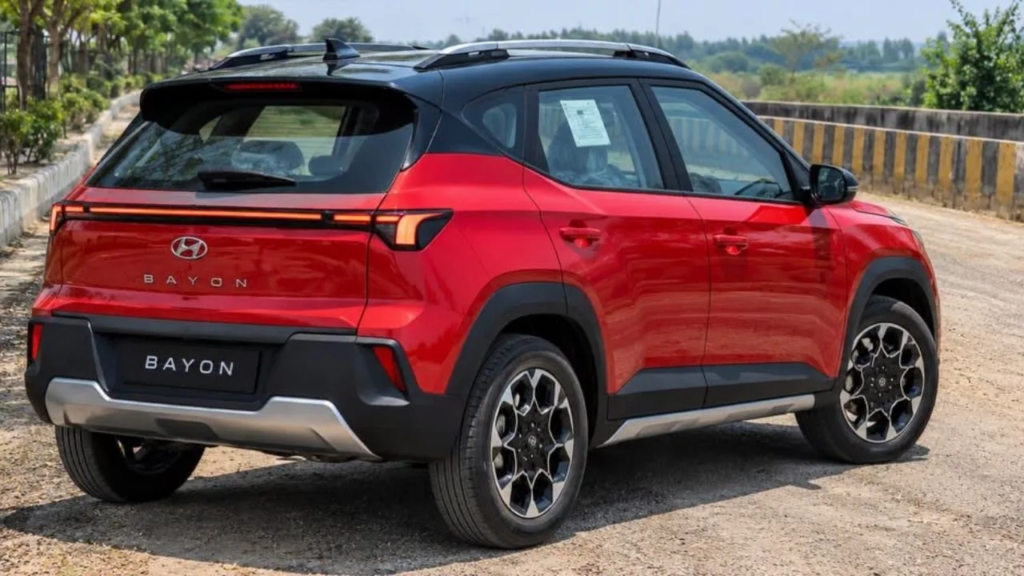
The H-Edge design theme is also expected at the rear, where the LED tail lamps will follow a similar lighting pattern.
Premium Interior and Level 2 ADAS
Inside, Hyundai is expected to give the Bayon a modern, technology-focused cabin. The dashboard could feature a layered design combined with a curved dual-display setup.
The SUV may also receive a three-spoke steering wheel with paddle shifters, along with a redesigned centre console. Other expected equipment includes textured or soft-touch materials on the door pads, wireless phone charging and vertically positioned AC vents.
Depending on the final production specification, the Bayon could also offer automatic climate control, a panoramic sunroof, electrically adjustable front seats, leatherette upholstery and ventilated seats.
One of the major highlights could be Level 2 ADAS. If Hyundai includes this technology in the production version, it would become one of the key technology features of the SUV.
1.5-Litre Petrol Engine and CNG Option
Earlier reports had suggested that the Hyundai Bayon could use a 1.2-litre turbo-petrol engine described as hybrid-ready. However, more recent information indicates that this engine is not expected to be offered with the Bayon.
Instead, the SUV is expected to use a 1.5-litre naturally aspirated petrol engine, similar to the unit available with the Creta. Transmission options are expected to include a manual gearbox and an IVT.
Another notable possibility is a factory-fitted CNG version. Hyundai is reportedly preparing the Bayon with a CNG option, with the CNG tank expected to be placed underneath the vehicle rather than inside the passenger cabin or boot.
Disclaimer: The details mentioned in this article are based on currently available information, teasers and reports about the upcoming Hyundai Bayon. Final specifications, features, engine options, technology, CNG availability and launch details may change before the official introduction. Readers should refer to Hyundai’s official announcements for confirmed information.