
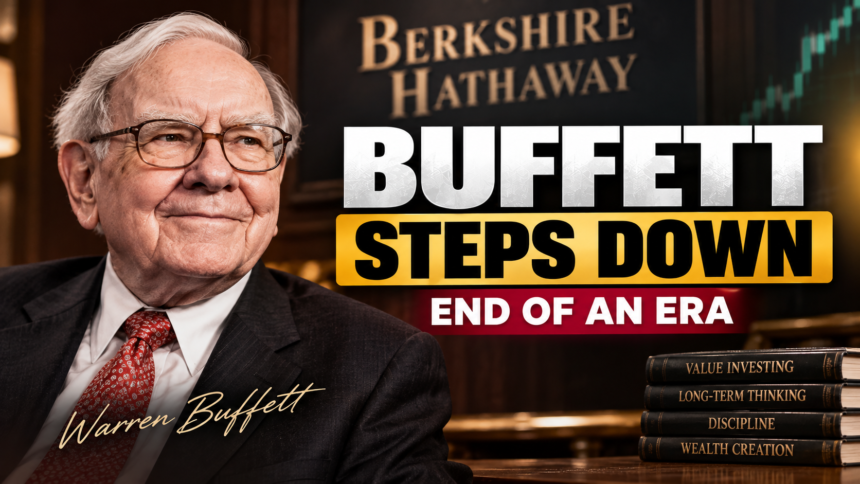
Warren Buffett has stepped down as chairman of Berkshire Hathaway after more than five decades in the role. The 96-year-old investor has been named chairman emeritus and will remain on Berkshire’s board of directors. His son, Howard G. Buffett, has taken over as chairman under the company’s succession plan.
The leadership change marks another stage in Berkshire Hathaway’s transition. Greg Abel took over as chief executive earlier in 2026, while Warren Buffett continues to serve as a director and offer his perspective to the company.
Although Buffett is no longer chairman, his approach to investing remains widely discussed. Over the years, he has repeatedly emphasised understanding businesses, thinking like an owner, maintaining discipline during market swings and taking a long-term approach.
Invest Within Your Circle of Competence
One of the central ideas associated with Buffett’s investment philosophy is staying within an area that an investor understands.
Rather than attempting to participate in every new market trend, the approach focuses on businesses whose operations, economics and competitive position can be understood. Buffett has described the importance of knowing the boundaries of one’s competence rather than trying to understand every industry.
This principle places greater emphasis on understanding a company’s business model and financial characteristics before committing capital.
Think Like a Business Owner
Buffett’s approach also treats a stock as an ownership interest in an underlying company rather than simply a tradable market instrument.
That means investors can examine the financial condition of the business, the quality of its management and its ability to generate earnings over time. Daily price movements become only one part of the picture rather than the sole basis for an investment decision.
The long-term objective is to identify understandable businesses whose earnings can grow over an extended period, an idea Buffett has discussed in Berkshire shareholder letters.
Be Cautious During Market Euphoria
Another recurring theme in Buffett’s investment philosophy is maintaining discipline when market sentiment becomes extreme.
Periods of fear can create lower prices for companies, while periods of strong optimism can push valuations higher. Buffett’s approach has generally emphasised evaluating the underlying value of a business rather than simply following prevailing market sentiment.
This requires investors to distinguish between the price being quoted in the market and their assessment of what the underlying business is worth.
Give Compounding Time to Work
Buffett has long emphasised the importance of holding investments for extended periods when the underlying businesses continue to meet an investor’s expectations.
A long holding period can allow business earnings and reinvested capital to compound over time. It can also reduce the frequency of trading decisions and the potential impact of transaction costs and taxes.
The principle is closely connected with Buffett’s broader emphasis on patience and avoiding unnecessary reactions to short-term market movements.
Maintain a Margin of Safety
Another important concept associated with value investing is purchasing an asset at a price that provides a margin between the estimated value and the amount paid.
The idea is to create some protection against uncertainty, including errors in valuation or unexpected changes in a company’s business environment. A margin of safety does not eliminate investment risk, but it is intended to provide room for mistakes in assumptions.
Buffett’s investment philosophy has therefore focused on understanding the business, assessing its value and considering the price paid rather than relying only on market momentum.
Disclaimer
The investment principles discussed in this article are a summary of concepts associated with Warren Buffett and Berkshire Hathaway and are provided for general educational purposes. They should not be considered personalised investment advice or a recommendation to buy or sell any security. Investment decisions involve risk, and investors should conduct their own research or consult a qualified financial professional based on their individual circumstances.