
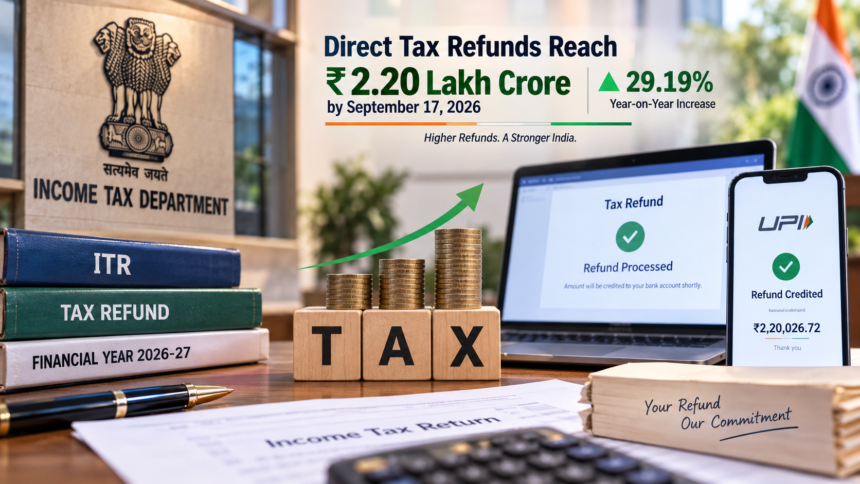
India’s direct-tax refunds reached ₹2,20,026.72 crore by September 17, 2026, marking a 29.19% increase compared with the corresponding period of the previous financial year. The figure includes refunds issued to both corporate and non-corporate taxpayers.
The comparable refund amount during the same period of FY 2025-26 stood at ₹1,70,310.28 crore. This means refunds were around ₹49,716 crore higher this year.
For individual taxpayers waiting for an income tax refund, however, the overall refund figure does not determine when the money will reach their bank account. Each return must go through verification and processing before the refund is released.
Why Is an Income Tax Refund Delayed?
A tax refund generally becomes due when the amount of tax already paid is higher than the final tax liability determined after processing the return. This can happen because of excess TDS deducted from salary, pension or interest income, or tax deducted from payments received by freelancers and small businesses.
The Income Tax Department begins processing after the return has been e-verified. In many cases, a correctly filed and verified return can move through the process without any issue. However, differences in tax-credit records, outstanding demands or problems with bank details can delay the final payment.
The status shown on the income tax e-Filing portal is therefore important. A taxpayer should check the specific reason for the delay rather than compare their refund timeline with someone else’s.
| Refund status | What it generally means | What to check |
|---|---|---|
| Pending for e-verification | Processing has not started | Complete e-verification |
| Successfully e-verified / Under processing | Return is with CPC but processing is incomplete | Check portal and registered email |
| Refund adjusted | Refund may have been adjusted against an earlier demand | Review the demand and intimation |
| Refund failed | Bank credit could not be completed | Check and validate bank details |
Bank information is particularly important when a refund has already been processed but could not be credited. Incorrect or unvalidated bank details, a mismatch between the name in bank records and PAN details, an invalid IFSC or a closed account can result in a failed refund.
What Should You Do If Your Income Tax Refund Has Not Arrived?
Taxpayers should first log in to the income tax e-Filing portal and check the status of the relevant return. The return lifecycle can indicate whether it is awaiting verification, under processing, processed with an adjustment, or affected by a failed refund.
If the return is still being processed, taxpayers should check their registered email and the portal for any communication from the department. Where a tax-credit mismatch is involved, details should be compared with Form 26AS, AIS and the information reported in the return.
An outstanding tax demand can also affect a refund. If the refund has been adjusted, the taxpayer should read the relevant intimation to understand why the adjustment was made.
For a refund marked as “failed”, simply waiting may not resolve the problem. The bank account details should first be corrected and validated. If the refund is available for reissue, the taxpayer can then submit a Refund Reissue Request through the portal.
The Income Tax Department’s guidance indicates that refunds are generally credited within around four to five weeks after e-verification, although individual cases can take longer.
Government Focus on Faster Refund Processing
Faster return processing and timely refunds have remained areas of focus for the tax administration. During Income Tax Day celebrations in New Delhi on July 24, 2026, Finance Minister Nirmala Sitharaman highlighted quicker return processing, faster refunds and improvements in grievance handling.
CBDT Chairman Ravi Agrawal also referred to progress in return processing, refunds and grievance resolution during the event.
Earlier government data had also highlighted improvements in the speed of return processing. The Department of Revenue’s 2024 year-end review said that more than ₹2.35 lakh crore had been refunded during the period covered by that review and that over 3.87 crore income tax returns were processed within seven days.
These figures do not mean every taxpayer will receive a refund within the same period. Processing of a return and successful credit of the refund are separate stages, and issues involving tax credits, outstanding demands or bank accounts can affect the final timeline.
What Does the Latest Refund Data Mean for Taxpayers?
The ₹2.20 lakh crore refund figure shows that direct-tax refunds issued up to September 17 were substantially higher than during the comparable period last year. However, the national refund figure cannot provide an exact payment date for an individual taxpayer.
For someone waiting for an ITR refund, the most useful step is to check the return’s current status and identify whether any action is required. E-verification, tax-credit information, outstanding demands and bank-account validation should all be checked where relevant.
If the return is under normal processing, the taxpayer may simply need to wait for completion. If the refund has failed, the bank details should be corrected first and a refund reissue request submitted where applicable.
FAQs
How long does an income tax refund usually take after e-verification?
The Income Tax Department’s guidance indicates that refunds are generally credited within around four to five weeks after e-verification, although the actual time can vary.
What does “Refund Failed” mean?
It generally means that the refund was processed but the bank could not credit the amount. The taxpayer should check bank validation, IFSC, account status and PAN-linked details.
Can an old tax demand reduce my current refund?
Yes. A refund can be adjusted against an outstanding tax demand. Taxpayers should review the relevant intimation and demand details.
Why is my refund still pending after e-verification?
E-verification allows processing to begin, but CPC may still be processing the return or checking tax-credit information, outstanding demands or other details.
What should I do if my refund has failed?
First correct and validate the bank-account details. If the refund is eligible for reissue, submit a Refund Reissue Request through the income tax e-Filing portal.
Disclaimer: The information published on Bollywood remind is intended for general informational and educational purposes only and should not be considered financial, legal, or investment advice. Tax rules, processing procedures and other information may change over time. Taxpayers should verify the latest details through the official Income Tax Department portal or consult a qualified professional before making decisions.