
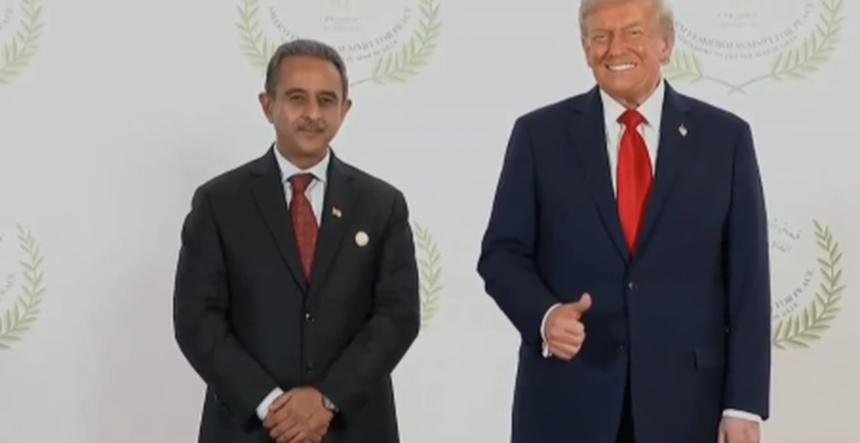
India’s foreign policy and economic decisions will continue to be guided by the country’s own interests, Minister of State for External Affairs Kirti Vardhan Singh said on Saturday, responding to questions over the US legislation concerning sanctions on Russia and its possible impact on India.
Singh said the interests of Indian citizens would remain the government’s foremost consideration and that New Delhi would not allow external pressure to influence its decisions.
“The people of India are the top priority for our government. We will take every measure that benefits our public,” he said.
His comments came after the enactment of the Lindsey O. Graham Sanctioning Russia and Iran Act of 2026, which was signed into law by US President Donald Trump. The legislation gives the US President the authority to impose tariffs of up to 100 per cent on countries that meet specified conditions related to purchases of Russian crude oil or natural gas. However, the law does not automatically apply a 100 per cent tariff to any specific country.
India Reaffirms Independent Foreign Policy
Singh said India would continue to make decisions based on its national priorities rather than follow the policy choices of other countries.
“We will take decisive steps to ensure the strength and stability of our nation and its population,” he said, adding that India maintains an independent foreign policy and acts in accordance with its own national interests.
The minister also reiterated New Delhi’s position on the tariffs, describing the measures as unfair. He said India would continue to take decisions without being influenced by pressure from any other country.
“We have consistently maintained that the tariffs being imposed are unfair, and we do not operate under pressure from any other nation,” Singh said.
Energy Security Remains a Key Consideration
India’s energy requirements will also remain an important factor in determining its future choices, Singh said. According to the minister, the country will continue to explore energy supplies that are commercially viable and economically suitable.
“Energy is a primary concern for us; we will source energy for our country and our people from wherever we find commercially viable and economical options,” he said.
The US legislation has particular relevance for India and China, which are among the major buyers of Russian crude. The law provides a legal mechanism for potential tariffs on imports from countries involved in specified purchases of Russian energy.