
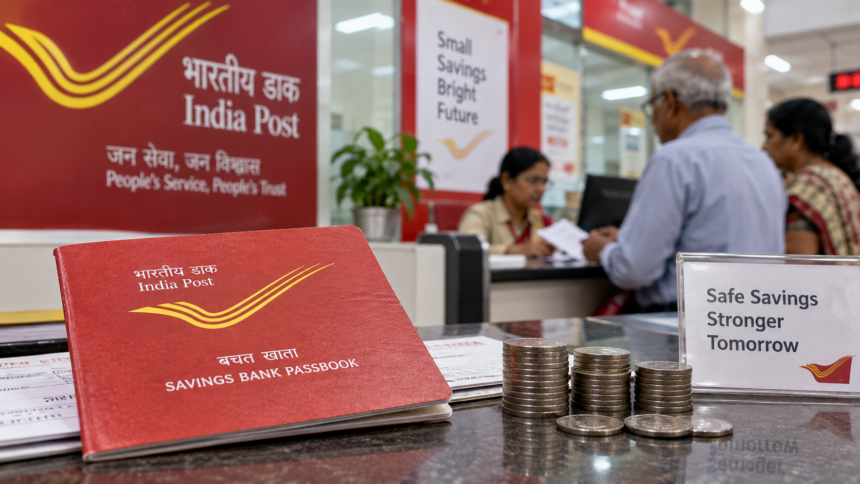
Post offices are no longer limited to postal services. They also offer several savings and investment options, including Fixed Deposit-like Time Deposit accounts. These schemes are widely used by people looking for government-backed savings options.
The Post Office Time Deposit (TD) works in a similar way to a bank fixed deposit. An investor deposits a lump sum for a selected period and receives the principal along with the applicable interest when the account matures.
Post Office Time Deposit Interest Rates
The National Savings Time Deposit scheme offers investment periods of one, two, three and five years. The minimum amount required to open a TD account is ₹1,000, while additional deposits can be made in multiples of ₹100. There is no maximum deposit limit.
For the period from January 1, 2024, to March 31, 2024, the applicable interest rates were 6.90% for a one-year TD, 7.00% for two years, 7.10% for three years and 7.50% for five years.
The scheme also has provisions covering eligibility, pledging of the account, premature closure and extension after maturity.
How Much Can You Invest in a Post Office FD?
For a one-year, or 365-day, Post Office Time Deposit, the interest rate mentioned in the article is 6.90%. Across the different TD tenures, the rates range from 6.90% to 7.50%, with the highest rate of 7.50% applicable to the five-year deposit mentioned above.
There is no upper limit on the amount that can be deposited in a Post Office Time Deposit. This means investors can deposit an amount according to their financial requirements, subject to the scheme’s applicable rules.
Do Senior Citizens Get Higher Interest?
Unlike many banks, which offer additional interest rates to senior citizens, the Post Office Time Deposit does not provide a separate higher rate based on the depositor’s age.
The applicable TD interest rate remains the same for customers across age groups. This means senior citizens receive the same interest rate as other investors for the selected deposit tenure.