
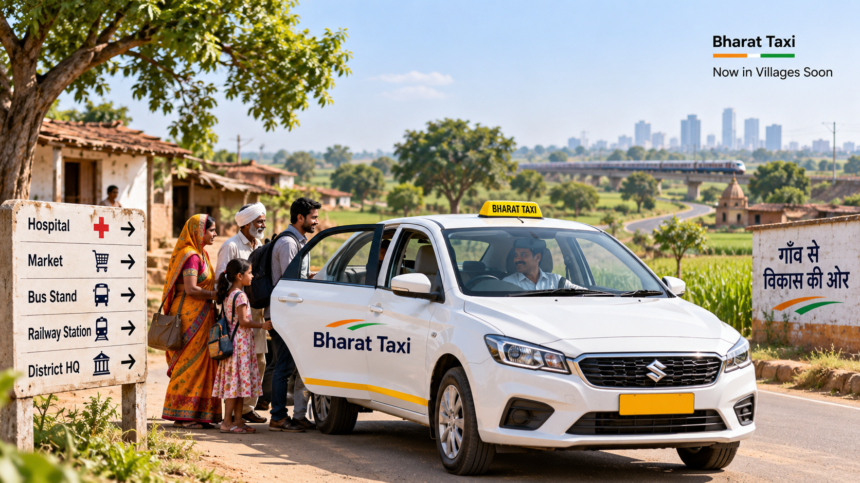
Bharat Taxi is preparing to expand beyond major cities and take its cooperative taxi service to rural areas. The service is currently being tested through pilot programmes in Delhi-NCR, Gujarat, Mumbai, Lucknow and Kanpur in Uttar Pradesh.
The company is now looking at expanding its operations to more districts of Uttar Pradesh, with a broader plan to establish the Bharat Taxi model across all 75 districts of the state.
Bharat Taxi to Connect Villages With Essential Destinations
The proposed rural expansion is aimed at improving local transportation options for people living in villages and smaller towns. Through the Bharat Taxi network, passengers could use the service for travelling to hospitals, markets, railway stations, bus stands and district headquarters.
Bharat Taxi is using Primary Agricultural Credit Societies (PACS) as part of its operating network. The cooperative-based approach is intended to help extend the service beyond urban centres and into rural communities.
Zero Commission Model for Drivers
One of the key features of Bharat Taxi is its zero-commission model. Instead of deducting a commission from every trip, the model treats drivers as partners within the cooperative business structure.
Under this arrangement, drivers are connected with the business without a platform commission being deducted from each ride. The model is designed around supporting driver earnings while maintaining continuity of service for passengers.
No Surge Pricing During Peak Demand
Bharat Taxi also aims to keep fares stable when demand increases. Passengers are not expected to face fare increases simply because it is a peak travel period or demand is temporarily high.
The pricing approach could be particularly relevant for people who need regular transportation between villages, towns and district centres.
Bharat Taxi Plans Wider Reach Across Uttar Pradesh
The company is preparing to take the Bharat Taxi model to all 75 districts of Uttar Pradesh. The expansion would cover both urban locations and villages, creating a cooperative taxi network across the state.
If implemented as planned, the service would provide another local transportation option for people travelling between districts or heading to railway stations, bus stations, airports, hospitals, markets and other important destinations.