
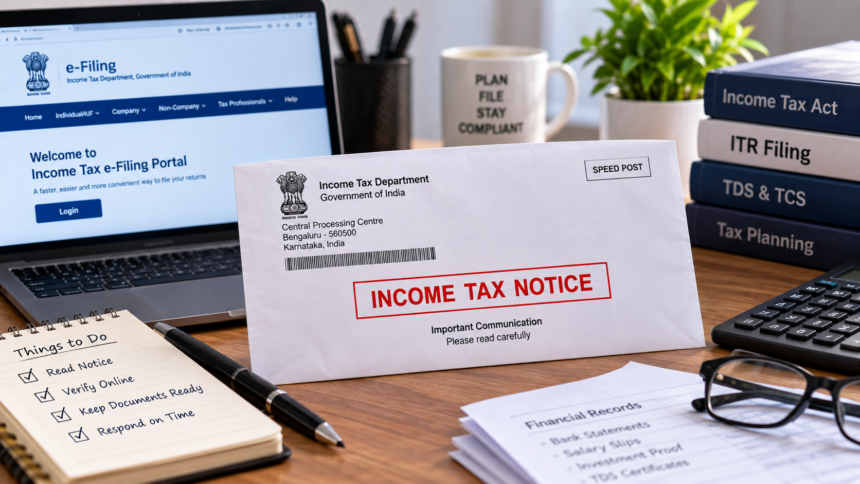
Receiving an income tax notice can naturally make a taxpayer concerned, particularly when it arrives unexpectedly. However, getting a notice does not necessarily mean that there has been a serious problem. In many cases, the Income Tax Department sends notices when it finds discrepancies or requires clarification regarding information submitted by a taxpayer.
Issues related to bank transactions, income details or an income tax return can result in a notice. Taxpayers can address the matter by carefully understanding the reason for the notice and submitting the required response within the specified time.
Common Reasons for an Income Tax Notice
There can be several reasons why the Income Tax Department may issue a notice. One possibility is incorrect or incomplete information in the Income Tax Return (ITR). A difference between the income reported in the ITR and information available from bank transactions can also lead to a notice.
Other situations that may result in a notice include high-value cash transactions, differences in TDS details and delays in filing an income tax return. The exact reason will depend on the circumstances of the individual taxpayer and should be checked in the notice.
What to Do After Receiving the Notice
The first step is to read the notice carefully. It generally explains why it has been issued and may mention an error in the return, an income mismatch or a requirement to submit particular documents.
Taxpayers should also check the relevant section of the Income Tax law mentioned in the notice. Understanding the section and the reason stated in the communication can help determine what action is required.
Verify Whether the Notice Is Genuine
Before sharing any personal or financial information, taxpayers should verify the authenticity of the notice. Fake income tax notices can also circulate, so checking the communication through the official Income Tax Department website or e-filing portal is important.
Once the notice has been verified as genuine, the taxpayer should take the required action without unnecessary delay.
Keep Supporting Documents Ready
The documents required will depend on the issue mentioned in the notice. Taxpayers should generally keep their filed ITR, bank statements, salary slips or other income records, investment documents and TDS certificates available.
Having these records organised can make it easier to identify any discrepancy and prepare an appropriate response to the department.
Respond Within the Given Deadline
Every income tax notice can have a specified deadline for responding. Taxpayers should ensure that the required response is submitted within the stipulated period, whether the process requires an online or offline submission.
Ignoring the notice or missing the deadline can result in further action, including penalties or other legal consequences, depending on the matter.
If the notice involves complicated information or requires a detailed explanation, taxpayers may consider seeking assistance from a chartered accountant or tax professional. An expert can help examine the documents, understand the issue and prepare the appropriate response.
An income tax notice should therefore be treated as a communication requiring attention rather than an immediate reason for panic. Carefully checking the details, verifying the notice and responding within the prescribed time can help taxpayers address the matter properly.