
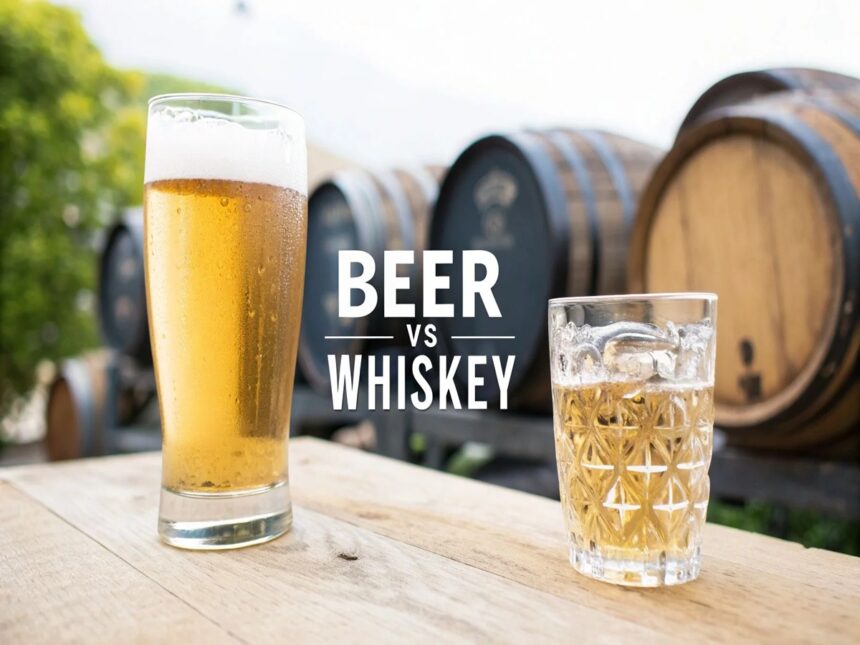
Beer or whisky—which is the safer choice for your health? While many people assume beer is healthier because it contains less alcohol, experts say the answer is more complicated. Both drinks contain alcohol, and regular or excessive consumption can negatively affect the body.
Although people often compare beer and whisky based on alcohol content, calories and digestion, health experts emphasise that neither should be considered a healthy drink. Here is how the two compare.
Beer vs Whisky: The Alcohol Difference
Beer generally contains around 4–6% alcohol by volume (ABV). Because it is relatively mild, people may consume larger quantities without realising how much alcohol they are actually taking in.
Whisky, in contrast, typically contains around 40% ABV. Even a small serving therefore delivers a considerable amount of alcohol.
This creates an important distinction: choosing a lower-strength drink does not necessarily mean consuming less alcohol. Drinking several beers can result in as much—or more—alcohol intake than a small serving of whisky.
Which Has More Calories?
Calories are another reason beer and whisky are often compared.
A pint of beer can contain roughly 150–200 calories, depending on the type and brand. Beer also contains carbohydrates, and frequent consumption can contribute to excess calorie intake and weight gain.
A 30-ml serving of whisky contains roughly 70 calories and has virtually no carbohydrates or sugar when consumed neat.
However, fewer calories do not make whisky a healthier option. The alcohol itself remains the major health concern.
Does Beer Have Any Health Benefits?
Beer contains certain plant compounds, including polyphenols. Some research has explored their potential antioxidant effects and possible influence on cardiovascular markers.
However, these compounds should not be viewed as a reason to drink beer. Any potential benefits are outweighed by the established health risks associated with alcohol consumption.
What About Whisky?
Whisky contains compounds such as ellagic acid, which has antioxidant properties and has been studied for its potential effects on oxidative stress and inflammation.
But this does not mean drinking whisky provides medicinal benefits. The presence of potentially beneficial compounds does not cancel out the harmful effects of alcohol.
Beer vs Whisky: Which Is Worse for Digestion?
Beer contains carbohydrates and carbonation, which can contribute to bloating, gas and digestive discomfort in some people.
Whisky contains very few carbohydrates, but that does not make it harmless to the digestive system. Alcohol can affect the gut and may contribute to inflammation and changes in the gut microbiome.
So, when it comes to digestive health, neither drink can be considered a safe option.
Which Is More Harmful to the Liver?
The liver has to process alcohol regardless of whether it comes from beer, whisky or another alcoholic beverage.
Regular heavy drinking can increase the risk of fatty liver disease, liver inflammation, cirrhosis and other alcohol-related liver problems. The amount of pure alcohol consumed is more important than whether it comes from beer or spirits.
What Do Experts Say About Cancer Risk?
This is one of the biggest concerns surrounding alcohol consumption. Alcohol is classified by the World Health Organization as a Group 1 carcinogen, meaning there is strong evidence that it can cause cancer.
The risk generally increases with greater alcohol consumption. Therefore, switching from whisky to beer does not eliminate alcohol-related cancer risk.
So, Is Beer Healthier Than Whisky?
Not necessarily.
Beer may have a much lower alcohol concentration, while whisky contains considerably more alcohol in a given volume. But if someone drinks several beers because they consider them “lighter”, their total alcohol consumption can become substantial.
Similarly, whisky’s lower calorie and carbohydrate content does not make it a healthy drink.
The Bottom Line
When comparing beer vs whisky, there is no clear winner from a health perspective. Both contain alcohol, and alcohol consumption can affect the liver, digestive system and cardiovascular health while increasing the risk of several cancers.
If you drink, limiting the amount and frequency is important. From a purely health perspective, however, avoiding alcohol altogether offers the lowest risk.
And pairing alcohol with high-fat or calorie-dense foods can further increase overall calorie intake and contribute to unhealthy eating patterns.