
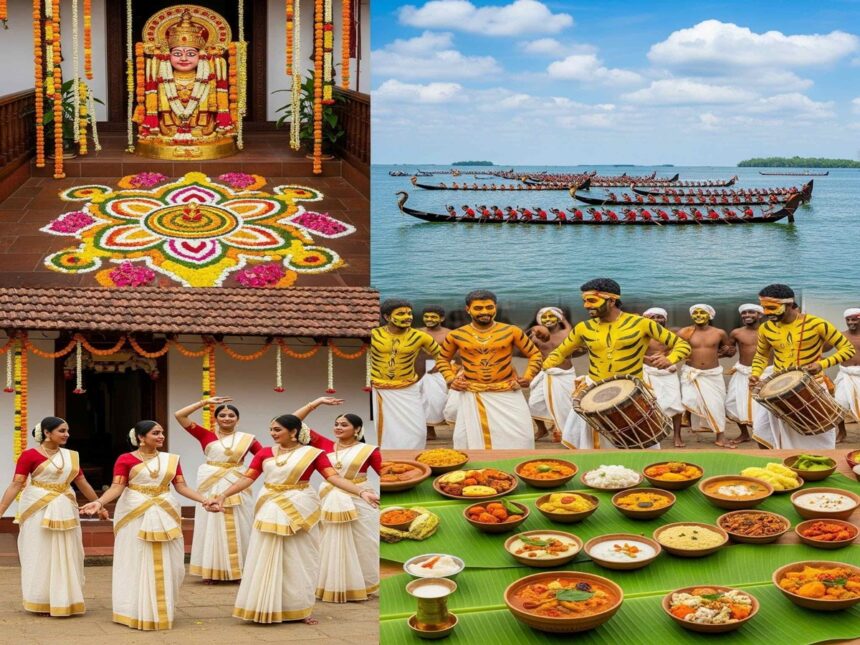
Onashamsakal! Onam celebrations in Kerala are closely associated with the spectacular Onam Sadhya, a vegetarian feast served traditionally on a banana leaf. Featuring a colourful mix of curries, vegetables, pickles, snacks, rice and desserts, the Sadhya is much more than a festive meal—it represents prosperity, community and Kerala’s rich food heritage.
The exact number of dishes differs depending on the family, region and occasion. However, a lavish Sadhya is often associated with 26 different preparations, each contributing its own flavour, aroma and texture.
From the crispness of pappadam and banana chips to the creamy sweetness of Payasam, the feast brings together a carefully balanced combination of sweet, sour, salty, bitter, spicy and astringent flavours.
26 Traditional Dishes Served in an Onam Sadhya
Here are some of the most popular dishes that can feature in a traditional 26-item Onam Sadhya:
1. Pappadam
Crispy and light, pappadam adds a much-loved crunch to the banana-leaf feast. It is usually enjoyed alongside rice and curries.
2. Upperi
Upperi refers to Kerala-style banana chips. Thinly sliced bananas are fried, traditionally in coconut oil, until crisp and golden.
3. Sharkara Varatti
A sweeter variation of banana chips, Sharkara Varatti consists of fried banana pieces coated with jaggery and aromatic spices. Its sticky texture and rich sweetness make it a festive favourite.
4. Inji Curry
Made using ginger, tamarind and jaggery, Inji Curry delivers a distinctive combination of heat, sweetness and tanginess. A small serving can add plenty of flavour to the meal.
5. Mango Curry
Mango-based pickle or curry provides a sharp, tangy note that complements the milder preparations on the banana leaf.
6. Naranga Curry
Prepared with lemon, spices and other seasonings, Naranga Curry offers a refreshing sourness that helps balance the richer flavours of the Sadhya.
7. Pachadi
Pachadi is generally prepared with yoghurt, coconut and a chosen fruit or vegetable. Pineapple versions tend to be sweeter, while bitter-gourd varieties offer a more pronounced bitter and sour flavour.
8. Olan
Olan is a mild preparation made with ash gourd and red beans cooked in coconut milk. Its delicate flavour provides a soothing contrast to the spicier curries.
9. Erissery
Erissery commonly combines pumpkin, red beans and coconut. Mildly seasoned and earthy, it brings a comforting flavour to the traditional spread.
10. Avial
One of Kerala’s most iconic dishes, Avial combines a variety of vegetables with coconut, curry leaves and coconut oil. It is hearty, aromatic and an essential part of many Sadhya menus.
11. Thoran
Thoran is a dry vegetable preparation cooked with grated coconut. Cabbage, beans, carrots and other vegetables can be used, depending on the recipe.
12. Chor
Rice forms the centre of the Sadhya. A generous serving is paired with dal, ghee, Sambar, Rasam and several other curries during the meal.
13. Parippu Curry
This simple lentil curry is traditionally mixed with rice and ghee. Its gentle and comforting flavour helps balance the stronger accompaniments.
14. Chena Mezhukkupuratti
Yam is cooked and seasoned before being sautéed in coconut oil. The preparation typically has a tender centre with a lightly crisp exterior.
15. Sambar
Sambar combines lentils, vegetables, tamarind and spices. Every household can have its own version, making this familiar dish slightly different from one kitchen to another.
16. Pulissery
Pulissery is a yoghurt-based preparation that can include vegetables such as cucumber or pumpkin along with coconut and tempered spices. Its mild sourness adds freshness to the meal.
17. Kaalan
Kaalan has a thicker consistency and stronger tanginess than many other yoghurt-based dishes. Yam or raw banana is commonly combined with yoghurt, coconut and spices.
18. Moru Kachiyathu
This warm buttermilk preparation is seasoned with ingredients such as ginger, garlic, shallots and spices. It adds a comforting, aromatic element to the savoury section of the feast.
19. Kichadi
Kichadi is another yoghurt-based accompaniment, although it generally has a more savoury and spiced character than Pachadi. Okra, cucumber and bitter gourd are among the ingredients that may be used.
20. Rasam
Light, peppery and tangy, Rasam is usually made with tamarind, tomato, curry leaves and spices. It is commonly mixed with rice towards the later stages of the Sadhya.
21. Kootu Curry
Kootu Curry is a hearty combination of raw banana, black chickpeas and coconut. Its thicker consistency and robust flavour make it one of the more substantial vegetable dishes.
22. Neyy
Ghee, or Neyy, is traditionally poured over rice and Parippu. Its rich aroma enhances the otherwise simple combination of rice and lentils.
23. Inji Thayir
This yoghurt-based side dish combines ginger with spices and other ingredients such as sesame. The cooling quality of yoghurt is balanced by the warmth of ginger.
24. Poovan Pazham
Small, naturally sweet bananas known as Poovan Pazham are often served towards the dessert portion of the Sadhya. They can also be combined with Payasam.
25. Palada Pradhaman
Palada Pradhaman is among Kerala’s most famous festive desserts. Made with rice ada, milk, sugar and dry fruits, it has a creamy consistency and rich sweetness.
26. Pazham Pradhaman
This traditional dessert gets its flavour from ripe bananas, jaggery and coconut. Cashews and coconut pieces can add additional texture to the rich Payasam.
How Is Onam Sadhya Traditionally Served?
Sadhya is traditionally served on a fresh banana leaf, with different dishes arranged in specific sections. Diners generally eat using their right hand, mixing the rice with different curries and accompaniments as the meal progresses.
The sequence allows diners to experience the contrasting flavours and textures of the various preparations, eventually moving towards the sweet dishes.
While a grand Sadhya can feature dozens of items, families often prepare a smaller selection at home. The number of dishes is less important than the tradition of preparing and sharing the meal together.
What Does Onam Sadhya Represent?
The Sadhya is deeply connected to the spirit of Onam, Kerala’s harvest festival. The celebration is traditionally associated with the legendary King Mahabali, whose annual return is believed to bring happiness, prosperity and abundance.
The communal feast reflects these values. People sit together, food is served generously and everyone participates in the same meal, highlighting the themes of equality, togetherness, gratitude and sharing.
From spicy pickles and crunchy snacks to comforting curries and indulgent Payasams, the Onam Sadhya brings Kerala’s culinary traditions together on a single banana leaf. Whether it features 26 dishes or a simpler family spread, it remains one of the most cherished and delicious symbols of Onam.