
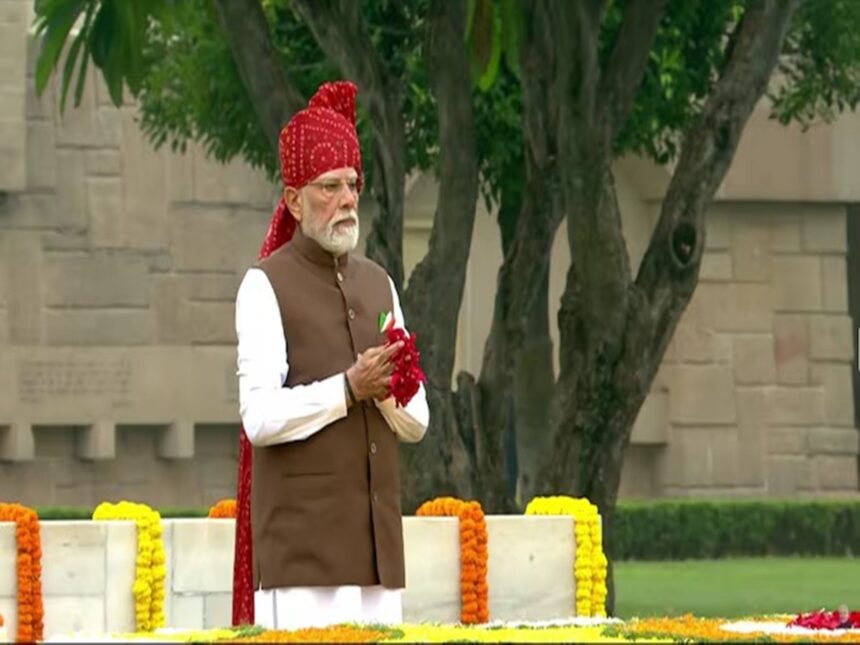
Prime Minister Narendra Modi has called for deeper collaboration between government departments, universities and young people to bring fresh thinking and unconventional ideas into policymaking.
The Prime Minister chaired a high-level meeting with Secretaries to the Government of India at his residence at 7, Lok Kalyan Marg, where he discussed long-term priorities and emerging challenges across several key areas.
PM Modi Seeks Fresh Ideas From Young Indians
During the meeting, Modi highlighted the importance of involving universities and the younger generation in government discussions. He said broader engagement with young people could introduce new perspectives and unconventional solutions to policy challenges.
The meeting brought together the Cabinet Secretary, senior officials from the Prime Minister’s Office and Secretaries from important ministries and departments.
The officials discussed their experiences, sector-specific priorities, implementation challenges and issues requiring greater coordination.
Focus on Infrastructure, Security and Governance
The discussions covered the future action plans of ministries and departments working in areas including infrastructure and connectivity, security and external affairs, and governance.
Modi stressed that government officials should look beyond immediate targets, statistics and day-to-day challenges. He urged Secretaries to adopt a long-term approach and consider how present decisions can contribute to shaping India’s future.
The meeting was the third such interaction, following discussions with two earlier groups of Secretaries.
Breaking Down Government Silos
The Prime Minister also highlighted the need to eliminate silos within government.
According to Modi, silos are not simply an organisational issue but can also arise from the mindset with which institutions operate. He noted that these divisions can exist both horizontally between departments and vertically within organisations.
He urged officials to take greater ownership of their responsibilities while working with a stronger sense of collective purpose.
Citing the experience of the COVID-19 pandemic and the West Asia crisis, Modi noted that officials from different departments had demonstrated effective coordination during challenging situations. He said such cooperation should become a normal feature of government functioning rather than something activated only during a crisis.
AI Should Complement Human Expertise
Artificial intelligence was another important topic discussed during the meeting.
Modi called for greater and more effective use of AI while emphasising that human judgement and intervention must remain an important part of decision-making.
He encouraged officials to explore new approaches that combine the capabilities of AI with human knowledge and expertise.
PM Modi Calls Data a National Asset
The Prime Minister also described data as an important national resource with significant value for India’s future.
He pointed out that the government spends considerable resources on collecting, storing and managing data, but its usefulness can be limited when information remains divided across departments and systems.
Differences in how data is collected, stored and managed for different purposes can make it difficult to use effectively. Modi therefore called for greater interoperability and better integration of government data systems.
Push for Research, Innovation and Defence
The meeting also focused on strengthening research and innovation, particularly in the defence sector.
Modi stressed the need to further develop India’s domestic defence industry and improve its competitiveness in international markets. He also called for innovative defence-related courses and stronger human-resource development to create the skills required by the sector.
Maritime Sector Needs a Comprehensive Strategy
The Prime Minister also reviewed India’s maritime development and called for a broader strategy to strengthen the sector.
He recalled the decision to grant infrastructure status to shipbuilding and stressed the need to assess whether the intended objectives are being achieved in a mission-oriented manner.
Modi reiterated that India should move beyond simply developing ports and focus on port-led development, with maritime infrastructure contributing more directly to economic activity.
He also highlighted the importance of improving connectivity between manufacturing facilities and export-oriented units. Better links, he said, would help India’s manufacturing and export sectors make fuller use of the country’s expanding maritime infrastructure.
Whole-of-Government Approach Emphasised
Concluding the meeting, PM Modi underlined the importance of coordinated governance, innovation, collective ownership and long-term planning.
The discussions reflected the government’s focus on breaking departmental barriers, using technology and data more effectively, encouraging young minds to contribute to policymaking and building stronger coordination across sectors.
The Prime Minister’s message was clear: addressing India’s increasingly complex challenges will require government departments to work together while embracing new ideas, emerging technologies and a long-term vision for the country’s development.