
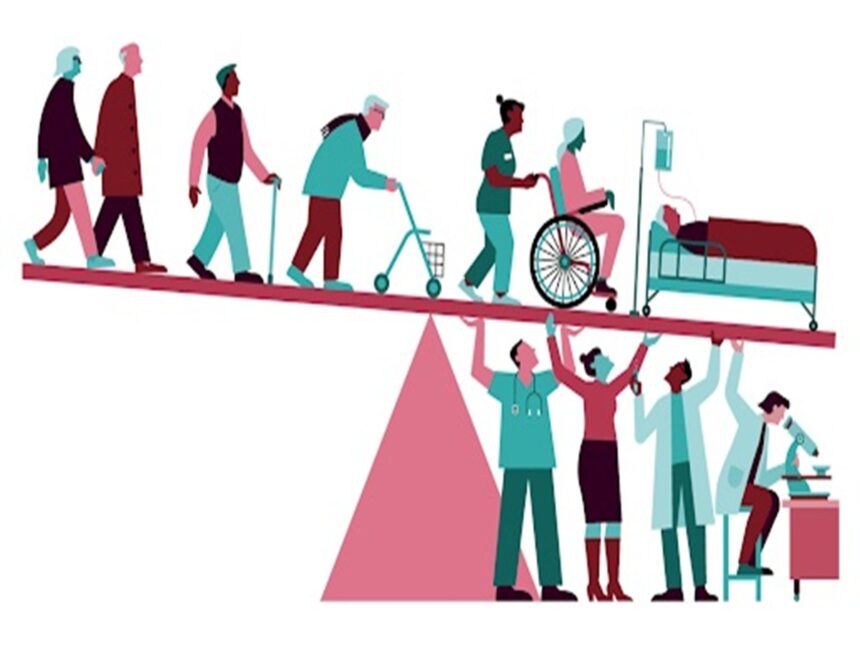
India’s ageing population: As life expectancy rises and the number of older adults grows, the country needs to rethink how healthcare is delivered. The focus must shift from treating individual illnesses to providing continuous, coordinated and preventive care that helps seniors remain healthy and independent.
India is entering a significant demographic transition. For decades, the country’s healthcare priorities centred largely on reducing maternal and child mortality, controlling infectious diseases and expanding access to essential medical services.
Those priorities remain important, but a new challenge is rapidly emerging: caring for a much larger ageing population.
By 2036, India is expected to have nearly 230 million people aged 60 and above. Longer lives are an achievement, but ageing can also bring multiple health concerns, including chronic diseases, frailty, cognitive decline and reduced mobility.
These conditions frequently occur together, making elderly healthcare considerably more complex than treating a single disease.
India Needs to Rethink Elderly Healthcare
Healthcare for older adults cannot depend solely on occasional hospital visits or treating illnesses after they become serious.
Instead, the emphasis needs to move towards prevention, continuity of care, coordination between specialists and preservation of quality of life.
India has already made considerable progress in expanding healthcare access through national health programmes and improving financial protection for hospitalisation.
At the same time, hospitals and healthcare organisations across the country are increasingly recognising the need for dedicated geriatric services.
A comprehensive elderly-care system should bring several services together, including:
- Medical treatment
- Rehabilitation
- Nutrition support
- Mental health services
- Cognitive care
- Palliative care
- Physiotherapy
- Caregiver education and support
- Long-term and home-based care
Such an integrated model can help address the multiple and interconnected challenges that often accompany ageing.
Every Older Adult Needs Individualised Care
Ageing does not affect everyone in the same way. Two people of the same age can have completely different physical, mental and functional health needs.
This makes comprehensive geriatric assessment an important starting point.
Such an assessment should look beyond a patient’s immediate medical complaint and evaluate areas such as:
- Physical health
- Cognitive function
- Nutritional status
- Mobility
- Functional independence
- Medication use
- Mental wellbeing
These factors are closely connected in older adults. A problem in one area can quickly affect another.
Chronic Diseases Need Long-Term Management
Older people are more likely to live with multiple chronic conditions, including hypertension, heart failure and chronic obstructive pulmonary disease (COPD).
Managing these conditions effectively requires regular monitoring rather than treatment only when symptoms worsen.
Specialised memory and cognitive-care programmes are also becoming increasingly important as India faces a growing burden of dementia and Alzheimer’s disease.
Early identification of cognitive problems can help families and healthcare professionals plan appropriate support and treatment.
Preventing Falls Can Protect Independence
Falls are another major concern for elderly people.
A fall can result in fractures, hospitalisation, loss of mobility and, in some cases, a prolonged decline in independence.
For this reason, healthcare systems should incorporate fall-risk assessments and bone-health programmes into routine elderly care.
Prevention can be particularly valuable because avoiding a serious injury is often easier than rebuilding strength and independence after a major fracture.
Medication Reviews Are Often Overlooked
Another important aspect of geriatric healthcare is regular medication assessment.
Older patients frequently take several medicines for different conditions. While each prescription may be appropriate individually, the combination can sometimes increase the risk of side effects, interactions or other complications.
Regular medication reviews can help doctors identify unnecessary or potentially harmful combinations and ensure that treatment remains appropriate as a patient’s health changes.
Technology Can Bring Elderly Care Closer to Home
Technology is also changing how older adults can be monitored and supported.
Remote patient monitoring can allow doctors to track certain chronic conditions even when patients are not physically present at a hospital or clinic.
Digital tools for cognitive assessment may also help identify early signs of mental decline, potentially allowing intervention before problems become more severe.
Another major advantage comes from integrated electronic medical records.
When a patient’s information is accessible across specialties, professionals such as cardiologists, oncologists, rheumatologists, nutritionists, geriatricians and physiotherapists can coordinate their decisions instead of treating the patient separately in disconnected systems.
Geriatric Care Must Become a Healthcare Priority
The basic concept of comprehensive elderly care is not complicated. The bigger challenge is building the infrastructure and workforce needed to deliver it at scale.
India needs to treat geriatric medicine as a specialised discipline, with greater investment in training doctors and healthcare professionals who understand the distinctive needs of older adults.
Preventive screening should also become part of primary healthcare instead of being concentrated mainly in large tertiary hospitals.
At the same time, India needs to expand long-term care, home healthcare and chronic disease management services, which remain limited compared with the country’s growing elderly population.
Health Insurance Must Go Beyond Hospitalisation
Financial protection is another important part of the equation.
Healthcare expenses for older adults often extend far beyond a single hospital admission. Chronic diseases may require regular consultations, medicines, rehabilitation, monitoring and home-based support.
Therefore, insurance coverage needs to evolve beyond hospitalisation and provide greater support for long-term disease management and ongoing elderly care.
The Next Healthcare Challenge for India
India has already demonstrated that large-scale healthcare transformation is possible when government programmes, healthcare providers and citizens work together.
The country’s next major test will be preparing for an ageing population that will require a very different model of care.
Building stronger geriatric training programmes, home-care networks, preventive screening systems and chronic disease-management infrastructure will be crucial.
The goal should not simply be to help Indians live longer. It should be to ensure that those additional years are lived with better health, dignity, independence and quality of life.