
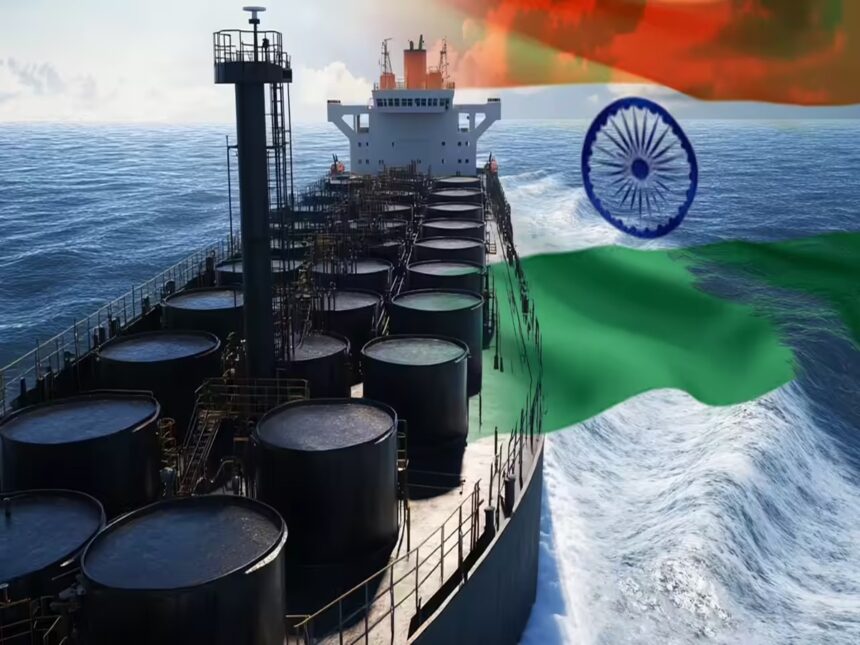
Strategic Petroleum Reserves India: India is moving ahead with plans to expand its strategic petroleum reserve network, with new storage projects being pursued in Chandikhol, Bikaner and Bina as the country seeks to strengthen its energy security and reduce vulnerability to global oil supply disruptions.
According to a parliamentary committee report, 400 acres of land have already been acquired at Chandikhol in Odisha for a proposed strategic oil storage facility. Projects at Bikaner in Rajasthan and Bina in Madhya Pradesh are also being examined as part of the broader expansion plan.
The Petroleum Ministry shared the latest status in its action-taken response to the Standing Committee on Petroleum and Natural Gas, which was tabled in Parliament on August 12.
Chandikhol SPR Project Moves Forward
The government has acquired 400 acres at Chandikhol for expanding India’s strategic crude oil storage capacity.
The Request for Proposal (RFP) for the project is currently under examination and is expected to be issued once the proposal is finalised.
The Chandikhol facility is part of India’s second phase of strategic petroleum reserve development and is expected to significantly increase the country’s emergency crude storage capacity.
Bikaner and Bina Caverns Also Under Consideration
The government is simultaneously evaluating underground storage facilities at Bikaner in Rajasthan and Bina in Madhya Pradesh.
The feasibility study for the proposed Bikaner caverns has already been completed. At Bina, the pre-feasibility assessment has been completed, while a Detailed Feasibility Report (DFR) is expected to be taken up next.
These projects are intended to provide India with additional options for storing crude oil and improving its ability to deal with supply shocks.
Padur-II Project Reaches Key Stage
Progress has also been reported on the Padur-II strategic petroleum reserve project.
The Concessionaire Agreement between Indian Strategic Petroleum Reserves Limited (ISPRL) and the selected bidder was signed on October 1, 2025.
The final closure process, which involves meeting the stipulated conditions precedent, is currently underway.
Mangalore Could Add Another 1.75 MMT of Capacity
Beyond the Phase-II projects, ISPRL has completed a feasibility study for creating an additional 1.75 million tonnes (MMT) of crude storage capacity at Mangalore.
The company has already acquired approximately 155 acres of land for the proposed development. It is also working to secure Special Economic Zone (SEZ) notification for 66 acres of the acquired land.
The additional Mangalore capacity would further expand India’s emergency oil-storage infrastructure beyond the facilities already approved under Phase II.
Panel Calls for Faster Implementation
The parliamentary committee has urged the Petroleum Ministry to keep the various projects on schedule.
It has specifically called for timely completion of the RFP process, SEZ notification and financial closure, while also stressing that allocated funds should be used efficiently.
The committee has additionally pushed for India to move towards the international benchmark of maintaining a 90-day crude oil stockpile within the country.
It said achieving such a reserve as soon as practically possible would strengthen India’s energy security and provide greater protection against unexpected disruptions in global oil supplies.
Government Reviewing More Sites for Oil Storage
The government has said it is continuously assessing potential locations and opportunities for expanding India’s crude oil and petroleum product storage infrastructure.
The selection of new sites is based on several factors, including technical feasibility, commercial viability and strategic importance.
Such expansion is becoming increasingly important for India because the country relies heavily on imported crude oil to meet domestic energy requirements. Larger strategic reserves can provide a buffer during supply disruptions, geopolitical crises or sudden volatility in international oil markets.
How Much Strategic Oil Storage Does India Have?
India currently operates strategic petroleum reserve facilities through ISPRL at three locations.
The combined capacity is approximately 5.33 million metric tonnes (MMT):
- Visakhapatnam, Andhra Pradesh: 1.33 MMT
- Mangaluru, Karnataka: 1.5 MMT
- Padur, Karnataka: 2.5 MMT
These underground facilities are designed to hold crude oil that can be released during major supply disruptions or emergencies.
Phase-II SPR Programme to Add 6.5 MMT
Under the second phase of India’s strategic petroleum reserve programme, the government gave in-principle approval in June 2018 for two additional storage facilities with a combined capacity of 6.5 MMT.
The proposed facilities include:
- Chandikhol, Odisha: 4 MMT
- Padur, Karnataka: 2.5 MMT
Based on India’s crude oil consumption during 2019-20, the additional Phase-II capacity has been estimated to provide approximately 12 days of additional crude oil cover.
India Targets Stronger Energy Security
The expansion of strategic petroleum reserves is part of India’s wider effort to strengthen energy security.
With new projects being considered at Bikaner and Bina, progress at Chandikhol and Padur-II, and additional storage being explored at Mangalore, India is gradually building a larger emergency oil buffer.
The parliamentary committee’s push for a 90-day crude oil reserve highlights the scale of the challenge ahead. Faster implementation of these projects, efficient use of funds and careful selection of future storage sites will be critical if India is to move closer to that target.
A larger strategic reserve would give the country greater flexibility during international supply disruptions and help protect the economy from sudden shocks in the global oil market.