
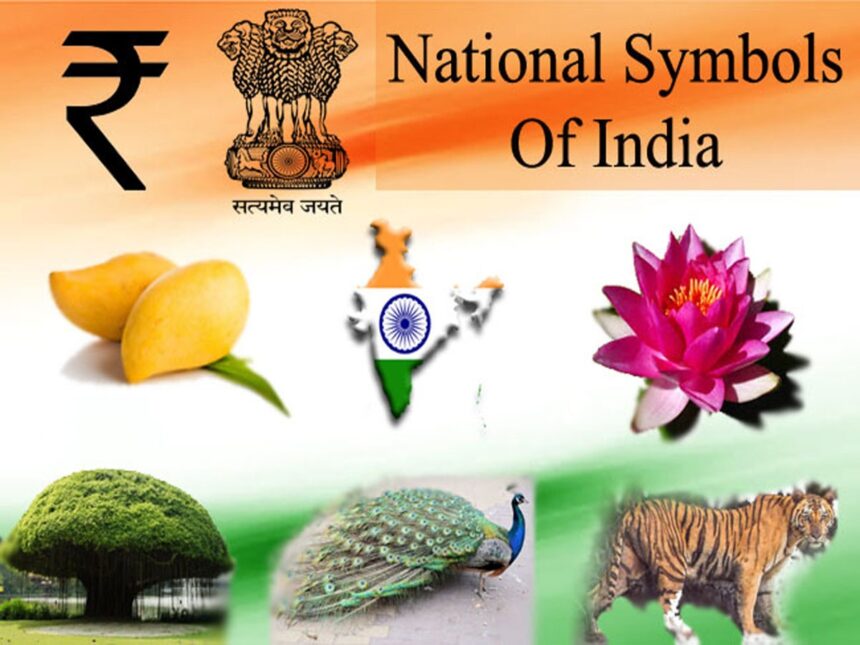
India’s national symbols reflect the country’s history, cultural heritage, natural diversity and shared identity. From the Ashoka Chakra on the Tricolour to the Bengal tiger, Indian peacock, lotus and Jana Gana Mana, each symbol carries a distinct story and represents an important aspect of the nation.
As India prepares to celebrate its Independence Day on August 15, these national symbols offer an opportunity to look back at the values and traditions that have shaped the country since independence in 1947.
India’s freedom came after decades of struggle and the sacrifices of countless freedom fighters. Today, national symbols serve as reminders of that journey while representing the ideals and identity of modern India.
But why were these particular symbols chosen? Here is a closer look at their significance.
Ashoka Chakra: Symbol Of Dharma And Constant Progress
The Ashoka Chakra is the navy-blue wheel positioned at the centre of India’s national flag. It contains 24 spokes and is associated with the Dharma Chakra, which has links to Emperor Ashoka and Buddhist traditions.
The wheel represents dharma, or righteousness, as well as the continuous movement of life. Its presence on the Tricolour conveys the message that the nation should continue moving forward instead of becoming stagnant.
The Ashoka Chakra replaced the spinning wheel, or charkha, that featured on earlier versions of India’s national flag.
The 24 spokes are also commonly associated with principles of ethical and righteous living, reinforcing the idea of progress guided by values.
Bengal Tiger: India’s National Animal
The Bengal tiger became India’s national animal in 1973, coinciding with the launch of Project Tiger, the country’s major tiger conservation initiative.
Known for its power, strength and majestic appearance, the tiger has deep roots in Indian culture. It has appeared in mythology, traditional artwork and historical representations for centuries.
As a national symbol, the Bengal tiger represents India’s rich wildlife heritage while also highlighting the need to protect endangered species and preserve the country’s natural ecosystems.
Indian Peacock: Symbol Of Beauty And Grace
The Indian peacock was officially recognised as India’s national bird in 1963.
Its spectacular appearance, colourful feathers and cultural importance helped make it a natural choice for the honour. Peacocks have a long-standing presence in Indian mythology, poetry, folklore and visual art.
The bird is widely associated with beauty, elegance and grace. It is also native to the Indian subcontinent and has been closely connected with the country’s cultural traditions for generations.
As a national symbol, the peacock therefore represents both India’s biodiversity and its artistic and cultural richness.
Lotus: India’s National Flower
The lotus holds a special place in Indian culture and is recognised as the country’s national flower.
The flower has been part of Indian art, architecture, literature and religious traditions for centuries. Its symbolic importance comes partly from the way it grows: the lotus rises from muddy water yet blooms as a striking and beautiful flower above the surface.
This characteristic has traditionally been associated with purity, resilience and spiritual development.
The lotus also features prominently in Hindu and Buddhist traditions and is frequently seen in representations of various deities. Its cultural and spiritual importance makes it a powerful symbol of India’s heritage.
Jana Gana Mana: India’s National Anthem
India’s national identity is also represented through its national anthem, Jana Gana Mana.
Written by Nobel laureate Rabindranath Tagore, the anthem was formally adopted by the Constituent Assembly on January 24, 1950, shortly before India became a republic.
The anthem reflects India’s geographical and cultural diversity, referring to different parts of the country while bringing them together around a common national identity.
Its adoption marked an important moment in India’s journey as an independent republic.
What India’s National Symbols Represent
India’s national symbols are more than official emblems or cultural icons. Together, they reflect different dimensions of the country.
The Ashoka Chakra represents righteousness and forward movement. The Bengal tiger reflects strength and wildlife conservation. The Indian peacock represents beauty and biodiversity, while the lotus conveys purity, resilience and spiritual growth. Jana Gana Mana celebrates India’s diversity and collective identity.
Together, these symbols connect India’s ancient heritage with its modern national identity and serve as reminders of the values, sacrifices and traditions that continue to shape the country.