
Bofors Case Verdict: The Supreme Court has brought an end to one of India’s longest-running corruption cases by dismissing the final pending appeal challenging the Delhi High Court’s 2005 decision that quashed criminal proceedings against the Hinduja brothers in the Bofors pay-off case.
With the latest ruling, the decades-old legal battle over the controversial Bofors gun deal has officially concluded, nearly 40 years after the scandal first surfaced.
Supreme Court Rejects Final Appeal
A bench comprising Justices J.B. Pardiwala and Vinod K. Chandran refused to entertain the remaining appeal filed by advocate Ajay K. Agrawal, effectively closing all legal proceedings connected to the Bofors case.
The court also declined a request to postpone the hearing, making it clear that the matter had already been pending for several years.
This decision follows the Supreme Court’s earlier 2018 order dismissing the Central Bureau of Investigation’s (CBI) appeal against the Delhi High Court judgment due to an unexplained delay in filing the petition.
Court Questions Why Case Continued for So Long
During the hearing, the petitioner sought additional time to remove the names of respondents who had passed away.
Justice Pardiwala questioned why the matter was still before the court, noting that the Delhi High Court had already quashed the proceedings years earlier.
When informed that the case originated from the 1986 Bofors defence deal, the bench observed that several decades had already passed since the controversy began and declined to adjourn the matter further.
What Did the Delhi High Court Rule in 2005?
The legal dispute stems from the Delhi High Court’s judgment dated May 31, 2005, which quashed criminal proceedings against Srichand Hinduja, Gopichand Hinduja and Prakash Hinduja, along with Swedish defence manufacturer AB Bofors.
In its ruling, the High Court also criticized the CBI’s handling of the investigation, observing that the prolonged probe had resulted in significant expenditure of public money.
Later, in 2018, the Supreme Court dismissed the CBI’s challenge after finding that the agency had failed to adequately justify a delay of 4,522 days in filing its appeal.
Earlier that year, the apex court had also questioned whether a private individual could continue pursuing an appeal in a criminal case when the investigating agency itself had not successfully challenged the High Court’s decision.
What Was the Bofors Scandal?
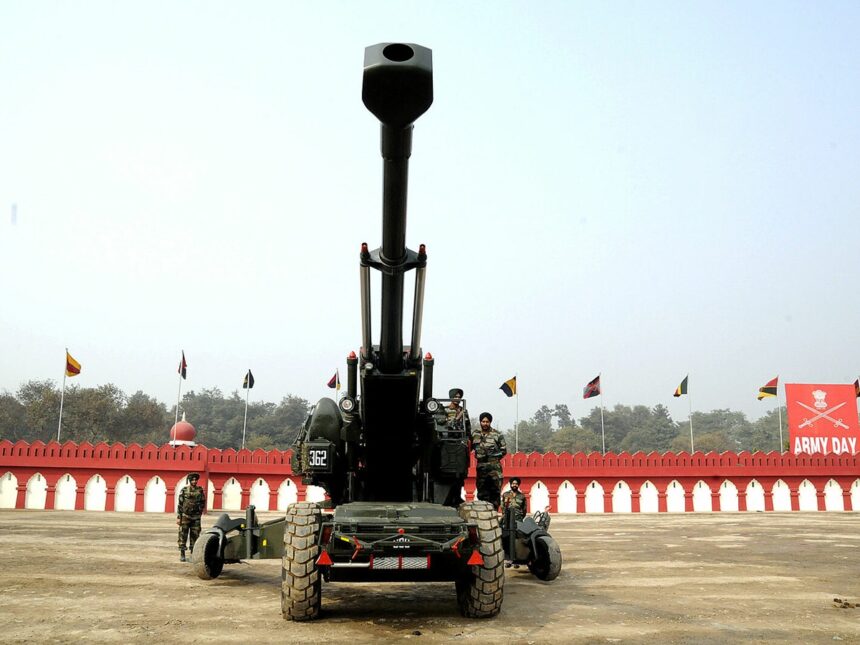
The Bofors controversy originated from a ₹1,437-crore defence contract signed on March 24, 1986, between the Government of India and Swedish arms manufacturer AB Bofors for the supply of 400 howitzer guns to the Indian Army.
The issue exploded into a national controversy in 1987 after Swedish Radio reported that illegal commissions had allegedly been paid to Indian politicians, defence officials and intermediaries to secure the contract.
The allegations sparked one of India’s biggest political scandals and placed the then Rajiv Gandhi-led government under intense scrutiny.
The controversy dominated political discourse ahead of the 1989 Lok Sabha elections and is widely considered to have contributed significantly to the Congress party’s electoral defeat.
CBI Investigation and Charges
The Central Bureau of Investigation (CBI) registered a First Information Report (FIR) in January 1990, naming several individuals, including former Bofors president Martin Ardbo, alleged middleman Win Chadha, and others on charges such as:
- Criminal conspiracy
- Cheating
- Forgery
- Corruption
As the investigation expanded, Italian businessman Ottavio Quattrocchi and the Hinduja brothers were also named, with the latter being included in a supplementary chargesheet filed in October 2000.
A Four-Decade-Old Legal Battle Comes to an End
With the Supreme Court rejecting the final remaining appeal, all legal proceedings related to the Bofors pay-off case have now concluded.
The ruling officially closes one of India’s most high-profile corruption cases, bringing an end to a legal and political saga that shaped the country’s public discourse for nearly four decades.