
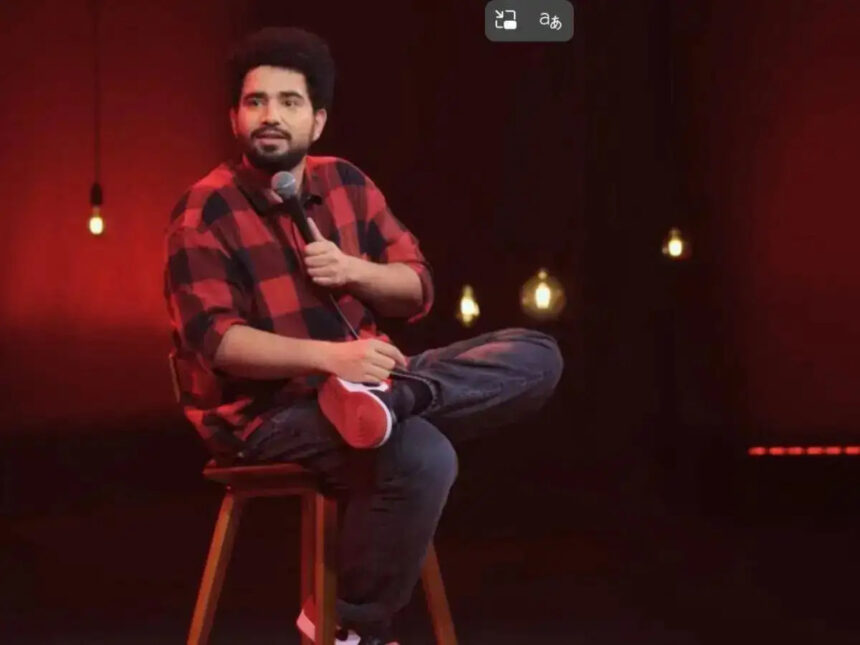
The Supreme Court of India on Tuesday imposed a ₹10 lakh cost on comedian Samay Raina, observing that he had allegedly made incorrect statements before the court and failed to comply with earlier directions issued during proceedings related to the India’s Got Latent controversy.
A bench comprising Chief Justice of India Surya Kant, Justice Joymalya Bagchi, and Justice J.V. Mohana directed Raina to deposit the amount within two weeks, warning that failure to do so could result in coercive legal action.
During the hearing, the bench strongly criticized the comedian’s conduct, remarking that he had “taken the court for a ride.”
Case Linked to India’s Got Latent Controversy
The observations came while the Supreme Court was hearing petitions connected to the controversy surrounding remarks made during the first season of India’s Got Latent.
The petitions were filed by digital creators Ranveer Allahbadia, Ashish Chanchlani, along with the Cure SMA Foundation, following public backlash over comments made on the show.
The matter has since evolved into a broader legal discussion on the responsibilities of online content creators, digital platforms, and compliance with judicial directions.
Alleged Failure to Contact Cure SMA Foundation
During the proceedings, Senior Advocate Aparajita Singh informed the court that Samay Raina had allegedly failed to follow through on assurances made earlier.
According to Singh, Raina neither contacted the Cure SMA Foundation nor reached out to individuals affected by Spinal Muscular Atrophy (SMA) despite previous commitments made before the court.
Questioning the comedian’s conduct, Singh expressed concern over the message it sends to young audiences and emphasized that the court’s directions had not been honoured.
Solicitor General Raises Fresh Concerns
Representing the Central Government, Solicitor General Tushar Mehta also highlighted concerns regarding Raina’s recent public performances.
Mehta told the court that during one of his latest comedy shows, Raina appeared to indirectly refer to the ongoing legal proceedings by mentioning that he had started hanging “nimbu-mirchi” (lemon and chillies) before performances—a remark that was interpreted by some as a subtle reference to the controversy.
Although the comedian did not directly name anyone, the Solicitor General argued that the context was apparent.
Mehta added that he initially chose not to bring the issue before the court but decided to do so after learning that Raina had allegedly failed to comply with the court’s earlier directions involving the SMA Foundation.
Samay Raina’s Counsel Assures Cooperation
Appearing on behalf of the comedian, Raina’s legal counsel submitted that the failure to contact the foundation was not intentional or motivated by arrogance.
The counsel assured the bench that efforts would be made to advise the comedian to comply with the court’s directions at the earliest.
Supreme Court Criticises Attitude Towards Indian Law
Expressing strong displeasure, the Chief Justice observed that some individuals mistakenly believe they can avoid the reach of Indian courts simply by staying outside the country.
The bench remarked that such an approach reflected a sense of arrogance and warned that no individual is beyond the jurisdiction of Indian law.
The court’s observations underscored the importance of respecting judicial orders irrespective of where a person is located.
Court Orders ₹10 Lakh Deposit Within Two Weeks
The Supreme Court has directed Samay Raina to deposit the ₹10 lakh cost within two weeks.
The bench made it clear that if the amount is not deposited within the stipulated period, appropriate coercive steps may be initiated in accordance with law.
India’s Got Latent Row Continues to Draw Legal Attention
The India’s Got Latent controversy continues to generate significant legal and public attention, raising larger questions about freedom of expression, accountability of digital influencers, content regulation, and compliance with judicial directions.
With multiple petitions still under consideration, the case is expected to remain an important development in the evolving legal framework governing online content creators in India.