
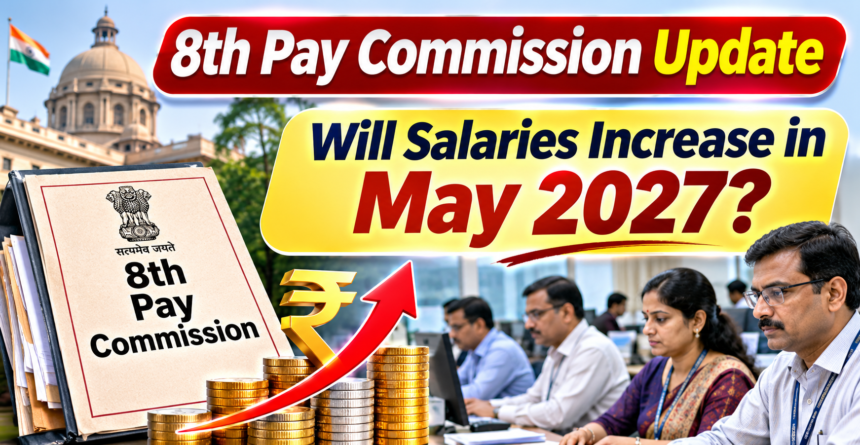
Central government employees and pensioners are eagerly waiting for clarity on the 8th Pay Commission, particularly about when its recommendations will be announced and when revised salaries and pensions could reach their bank accounts.
One of the key questions is whether employees will start receiving higher salaries from May 2027 or whether the implementation process will take longer.
The 8th Pay Commission has been given 18 months to prepare and submit its recommendations. Based on this timeline, its report is expected around May 2027. However, submitting the report will not automatically trigger an immediate salary or pension increase. The government will first need to examine the recommendations and complete the approval process.
There is also the possibility of interim reports, which may provide early updates on selected issues before the final report is submitted.
When Is the 8th Pay Commission Report Expected?
The 8th Pay Commission was constituted on November 3, 2025, under the chairpersonship of Justice Ranjana Prakash Desai. The three-member commission has been given 18 months to prepare its recommendations and submit them to the government. Accordingly, the report is expected by May 2027.
BankBazaar CEO Adhil Shetty has indicated that the Commission may submit interim reports on specific subjects if necessary. Such reports could provide preliminary recommendations on matters related to salaries, allowances and service conditions before the final report is completed.
The Commission has a wide-ranging mandate that includes reviewing employees’ pay structures, allowances, pensions and service conditions. Depending on the work involved, it may also seek additional time to complete its recommendations.
Can an Interim Report Bring an Immediate Salary Increase?
The possibility of an interim report has raised expectations among central government employees and pensioners. However, the submission of such a report does not automatically mean that revised salaries or pensions will be introduced immediately.
An interim report may contain initial recommendations on selected subjects while the Commission continues working on its broader review. Whether these recommendations lead to an early change in pay or pension will depend on the government’s decision.
Employees and pensioners should therefore understand that an interim report is different from an official government order approving revised salaries or pensions.
What Happens After the Commission Submits Its Report?
Even if the 8th Pay Commission submits its recommendations by May 2027, employees may have to wait for the government to complete several steps before receiving the revised benefits.
The process is expected to involve the following stages:
- Submission of recommendations: The Commission will present its report to the central government.
- Government review: Officials will examine the proposals concerning salaries, pensions and allowances.
- Financial assessment: The government will evaluate the additional expenditure required to implement the recommendations.
- Final approval: The government will decide whether to accept, modify or reject the proposed recommendations.
- Implementation: Once the decisions are approved, the government will issue the necessary orders for revised salary and pension payments.
As a result, the actual payment of increased salaries and pensions may take place after the report has been submitted and the necessary approvals have been completed.
Will the 8th Pay Commission Be Effective from January 1, 2026?
January 1, 2026, is an important date in discussions surrounding the 8th Pay Commission. Central Pay Commission revisions have traditionally followed an approximately 10-year cycle, making this date a possible starting point for the next pay structure.
However, the date from which revised pay is considered effective and the date on which employees actually receive the increased amount are two different matters.
If the government approves implementation from an earlier date, employees could become eligible for arrears covering the period between the effective date and the actual implementation. The payment schedule and calculation of these arrears will depend on the government’s final decision.
For now, January 1, 2026, is being discussed as a possible effective date, but it should not be treated as a confirmed date for receiving revised salaries or pensions.
Disclaimer: This article is based on the information and expectations available in the supplied report. The final implementation date, salary revisions, pension changes and arrears will depend on official government decisions and notifications.