
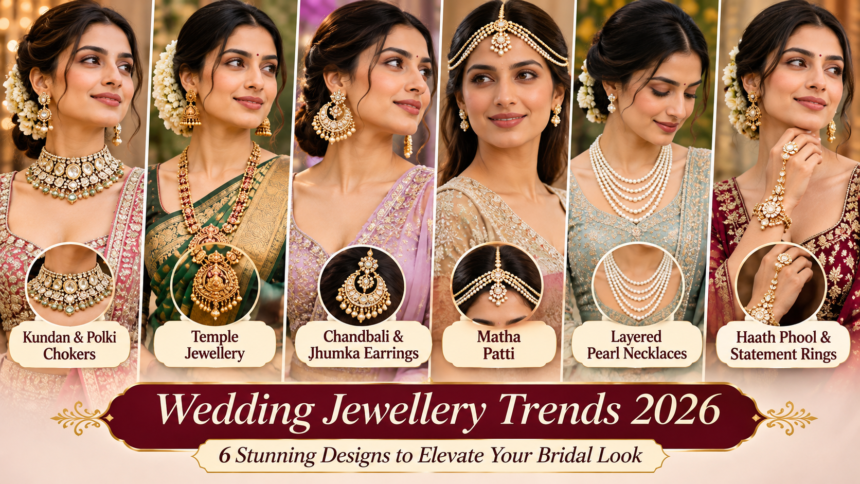
Wedding jewellery plays an important role in completing an ethnic look. Choosing the right accessories according to your outfit’s colour, fabric, neckline and design can make a significant difference to your overall appearance. From traditional gold pieces to delicate pearl jewellery, the right combination can enhance your wedding wardrobe.
Different outfits call for different jewellery styles. Temple necklaces pair beautifully with silk sarees, while embroidered lehengas look elegant with Kundan chokers and matha pattis. Similarly, pastel and sequin outfits can be complemented with pearl necklaces or diamond-inspired accessories.
If you are planning your wedding wardrobe for the 2026 season, here are six jewellery trends worth exploring, along with styling tips and suggestions for different occasions.
6 Trending Jewellery Designs for Women This Wedding Season
1. Kundan and Polki Chokers for Embroidered Lehengas
Kundan and Polki chokers are excellent choices for women who prefer traditional statement jewellery. Designed to sit close to the collarbone, chokers look particularly attractive with deep and sweetheart necklines.
Kundan jewellery features stones set in gold foil, while Polki jewellery uses uncut diamonds that create a distinctive traditional appearance. Both styles add a regal touch to embroidered lehengas and wedding outfits.
Styling tip: Let the choker remain the centre of attention by pairing it with statement earrings and avoiding excessive additional jewellery.
2. Temple Jewellery for Traditional Silk Sarees
Temple jewellery is known for its traditional motifs inspired by goddesses, lotus flowers and peacocks. Long necklaces featuring these designs complement classic silk sarees, including Kanjivaram and Banarasi styles.
Their traditional detailing works well with the rich fabric and decorative borders of these sarees, making them suitable for wedding ceremonies and daytime celebrations.
Styling tip: Pair a temple necklace with a matching waist belt to keep your saree pleats in place while maintaining a coordinated ethnic look.
3. Chandbalis and Jhumkas for Every Wedding Function
Chandbalis and jhumkas are among the most versatile traditional earring styles. Chandbalis feature a crescent-moon-inspired shape and usually have a broad design, while jhumkas are recognised by their dome-shaped structure, often finished with delicate beads or pearl drops.
Both designs can complement different types of wedding outfits, including sarees, suits and lehengas. Their traditional appeal makes them suitable for almost every wedding celebration.
Styling tip: If you prefer keeping your hair open, choose smaller earrings to prevent them from getting tangled in your hair.
4. Matha Patti for an Elegant Bridal-Inspired Look
A matha patti is a traditional head ornament worn along the hairline, usually featuring a decorative pendant positioned at the centre of the forehead. Although it has traditionally been associated with bridal jewellery, it has also become a popular accessory for wedding guests.
It can add a traditional finishing touch without requiring another heavy necklace, particularly when paired with an outfit that has a simple neckline.
Styling tip: Position the centre pendant along your hair parting and secure both sides behind your ears for a balanced appearance.
5. Layered Pearl Necklaces for Day Weddings
Pearl jewellery is an excellent option for those who prefer subtle accessories over elaborate gold sets. Layered pearl necklaces, particularly two- or three-strand designs of varying lengths, can add dimension to an otherwise simple neckline.
These necklaces work especially well with soft-coloured outfits in shades such as ivory, powder blue, blush and sage green. Their understated appearance makes them suitable for daytime wedding ceremonies.
Styling tip: Complete the look with small pearl or simple stud earrings. Avoid oversized earrings that may compete with the layered necklace.
6. Haath Phool and Statement Rings for Festive Celebrations
A haath phool is a traditional hand ornament that connects a ring to a bracelet through delicate chains running across the back of the hand. It is a popular accessory for festive occasions and can beautifully highlight mehendi designs.
This jewellery style works with colourful lehengas, shararas and sarees, particularly outfits with short or sleeveless designs. It can also complement both heavily embellished and relatively simple traditional clothing.
Styling tip: Wear bangles on the opposite hand to keep the overall jewellery combination balanced.
Which Jewellery Design Should You Choose for Your Wedding Outfit?
If you are unsure about which jewellery style will complement your outfit, the following comparison can help you make the right choice.
| Jewellery Design | Suitable Neckline | Ideal Occasion |
|---|---|---|
| Kundan or Polki choker | Deep or sweetheart | Wedding ceremony |
| Temple necklace | High neck or V-neck | Day ceremony |
| Chandbali or jhumka | Any neckline | Every wedding function |
| Matha patti | Simple neckline | Reception |
| Layered pearl necklace | Round or boat neck | Day wedding |
| Haath phool | Any neckline | Mehendi and sangeet |
Final Take: Choose Jewellery That Complements Your Outfit
The best wedding jewellery is the one that complements your outfit rather than overpowering it. Kundan and Polki chokers are ideal for embroidered lehengas, while temple necklaces bring a traditional touch to silk sarees. Chandbalis and jhumkas offer versatile styling options, whereas matha pattis add a bridal-inspired finish.
For daytime celebrations, layered pearl necklaces can create a softer appearance, while haath phools are a beautiful choice for mehendi and sangeet functions.
Before selecting your accessories, consider your outfit’s neckline, fabric and overall design. A well-coordinated jewellery combination can make your wedding look elegant, balanced and stylish.