
Experiencing delayed or irregular periods can be stressful, especially when your menstrual cycle does not follow a consistent pattern. While your period may arrive on time one month, it could be delayed by several days the next. Factors such as work-related stress, inadequate sleep, sudden weight changes, PCOS and thyroid disorders can affect menstrual regularity.
Although yoga cannot guarantee that your periods will arrive on time or correct underlying hormonal conditions, regular practice may help manage stress, improve flexibility and support overall well-being. Certain yoga poses also help relax the abdominal and pelvic muscles, making them useful for women experiencing menstrual discomfort.
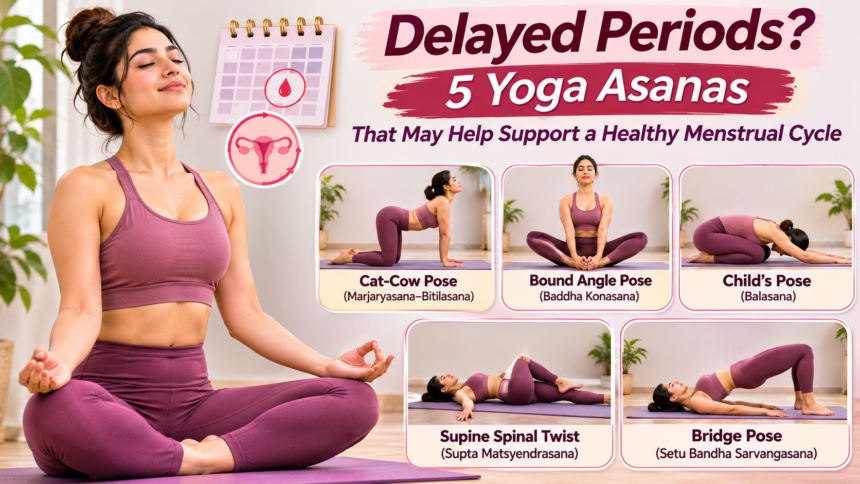
Here are five yoga asanas that you can include in your daily routine to support menstrual health.
5 Yoga Asanas That May Help Support Menstrual Health
1. Cat-Cow Pose (Marjaryasana-Bitilasana)
Cat-Cow Pose is a gentle movement that helps improve spinal flexibility and release tension around the lower back and abdomen. It is a suitable warm-up exercise for women looking to include gentle movement in their daily routine.
How to Perform Cat-Cow Pose:
- Start on your hands and knees, keeping your wrists directly below your shoulders and knees below your hips.
- Inhale while lowering your abdomen, lifting your chest and looking slightly upward to enter Cow Pose.
- Exhale as you round your spine and gently bring your chin towards your chest to perform Cat Pose.
- Repeat the movement slowly 10–12 times.
Regular practice may help ease lower-back stiffness and provide relief from abdominal discomfort.
2. Bound Angle Pose (Baddha Konasana)
Also known as Butterfly Pose, Baddha Konasana is a popular yoga posture that gently stretches the inner thighs and opens the hips. It helps improve flexibility around the pelvic region and can be included in a relaxing yoga routine.
How to Perform Bound Angle Pose:
- Sit comfortably with your spine straight.
- Bend both knees and bring the soles of your feet together.
- Hold your feet with both hands.
- Gently move your knees up and down, similar to the movement of butterfly wings.
- Continue breathing normally while maintaining the position.
This pose may help relieve tension around the hips and improve flexibility. However, it should not be considered a treatment for PCOS or irregular menstruation.
3. Child’s Pose (Balasana)
Child’s Pose is a restorative yoga posture that encourages relaxation and helps release tension in the back, shoulders and abdominal area. It can be particularly helpful when stress and anxiety are affecting your daily routine.
How to Perform Child’s Pose:
- Begin by kneeling on your yoga mat.
- Slowly move your hips backwards towards your heels.
- Extend your arms forward and lower your forehead towards the mat.
- Relax your body and take slow, deep breaths.
- Hold the position for 1–2 minutes, depending on your comfort.
Practising this pose can help calm the mind, reduce physical tension and encourage relaxation.
4. Supine Spinal Twist (Supta Matsyendrasana)
Supine Spinal Twist is a gentle stretching exercise that helps improve spinal mobility and release tension in the lower back. It can also be useful for women experiencing stiffness and discomfort around the abdomen.
How to Perform Supine Spinal Twist:
- Lie flat on your back with your legs extended.
- Bend your right knee and gently bring it across your body towards the left side.
- Keep your right arm extended outward.
- Hold the position for approximately 30 seconds.
- Return to the starting position and repeat on the opposite side.
This gentle twist may help ease lower-back stiffness and improve overall flexibility.
5. Bridge Pose (Setu Bandha Sarvangasana)
Bridge Pose is a beginner-friendly yoga posture that strengthens the glutes, back and pelvic muscles. It also stretches the chest and helps improve flexibility around the hips.
How to Perform Bridge Pose:
- Lie on your back with your knees bent and feet flat on the floor.
- Keep your feet comfortably apart and place your arms beside your body.
- Press your feet into the floor and slowly lift your hips.
- Hold the position for 20–30 seconds while breathing normally.
- Slowly lower your hips back to the mat.
- Repeat the movement 3–4 times.
Practising Bridge Pose regularly can help strengthen the muscles around the pelvis and improve overall physical fitness.
Benefits of Yoga for Menstrual Health
Including gentle yoga in your routine before or during menstruation may offer several benefits. Regular practice can help relax the body, ease menstrual discomfort and improve flexibility.
Some potential benefits include:
- Relief from menstrual discomfort: Gentle movements and stretches may help ease cramps and lower-back tension.
- Stress management: Relaxing yoga poses and controlled breathing can help reduce stress and anxiety.
- Better flexibility: Certain asanas improve mobility around the hips, spine and pelvic region.
- Improved relaxation: A calming yoga routine may help support better sleep and emotional well-being.
- Mood management: Relaxation techniques can help women manage stress and emotional discomfort during their menstrual cycle.
Important Tips to Follow While Practising Yoga
To make your yoga routine comfortable and safe, keep a few precautions in mind. Practise on an empty stomach, preferably in the morning, and avoid pushing your body beyond its comfort level.
If menstruation has already started, choose gentle movements according to your comfort rather than forcing yourself into demanding postures or intense inversions. Combine yoga with adequate sleep, stress management and a balanced diet.
Most importantly, consult a gynaecologist if your periods remain absent for more than 2–3 months, or if you experience severe pain, unusually heavy bleeding or symptoms associated with PCOS. Yoga should complement medical care rather than replace it.
Conclusion
Delayed periods can be concerning, but understanding the possible causes is an important step towards maintaining menstrual health. Gentle yoga practices such as Cat-Cow Pose, Bound Angle Pose, Child’s Pose, Supine Spinal Twist and Bridge Pose can support relaxation, flexibility and overall well-being.
While these asanas cannot guarantee regular periods or treat hormonal disorders, making yoga part of your daily routine may help you manage stress and menstrual discomfort. Along with a balanced diet, sufficient sleep and appropriate medical guidance, consistent self-care can contribute to better overall health.