
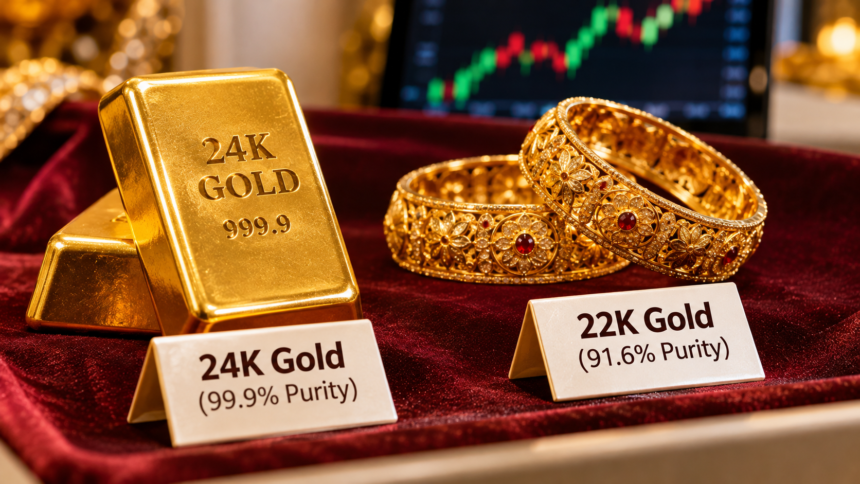
Gold prices continue to experience fluctuations in the domestic and international markets. After declining for nine consecutive trading sessions, gold prices started recovering on Monday following a two-day break. The 24-carat gold futures contract on the Multi Commodity Exchange (MCX) gained 2.75%, rising by ₹3,347 to ₹1,25,125 per 10 grams by noon. In the previous trading session, it had closed at ₹1,21,778 per 10 grams.
According to Bullions.co.in, the price of 24-carat gold stood at ₹1,25,670 per 10 grams, while international gold prices reached $3,619.50 per ounce. In Delhi’s bullion market, gold was priced at ₹1,29,300 per 10 grams, including applicable taxes.
With gold remaining an important asset for Indian households, many buyers are wondering whether 24K or 22K gold is a better choice for long-term savings in 2026. Understanding the differences in purity, durability and value can help buyers make a suitable decision.
What Is the Difference Between 24K, 22K, 18K and 14K Gold?
The term karat (K) indicates the purity of gold. A higher karat value means a greater proportion of pure gold in the metal.
The commonly available gold purity categories include:
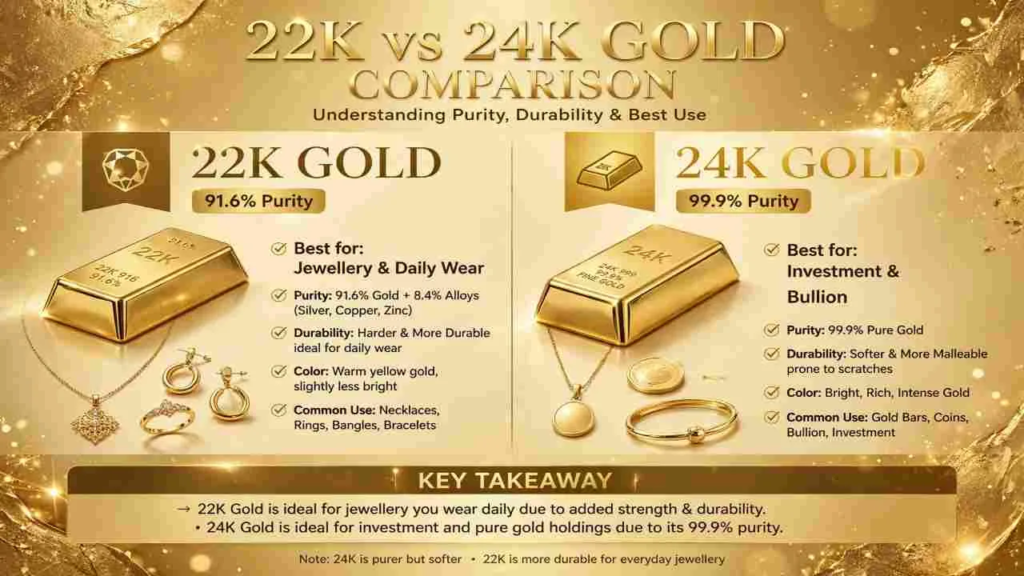
- 24K gold: Approximately 99.9% pure gold.
- 22K gold: Contains 91.6% pure gold.
- 18K gold: Contains 75% pure gold.
- 14K gold: Contains 58.5% pure gold.
Pure gold is naturally soft, which makes it difficult to use for certain types of jewellery. Therefore, other metals such as copper and silver are mixed with gold to improve its strength and durability.
As the proportion of pure gold increases, its purity and value generally increase, but its resistance to everyday wear and damage decreases.
Why Is 24K Gold Considered Better for Investment?
24-carat gold is the purest commonly available form of gold, containing approximately 99.9% gold without significant mixing of other metals. Its bright yellow appearance and high purity make it particularly attractive to investors.
However, pure gold is relatively soft and can bend or get damaged easily. For this reason, it is generally preferred in the form of gold coins, bars and digital gold rather than regular jewellery.
For people interested in saving or building wealth through gold, 24K gold can be a suitable option. Its high purity also contributes to its resale value, making it an important choice for investment purposes.

Why Is 22K Gold Popular for Jewellery in India?
In India, 22-carat gold remains a preferred option for traditional jewellery, particularly wedding ornaments and heavy designs.
It contains 91.6% pure gold, while the remaining portion consists of other metals added to improve its strength. This makes it more durable than 24K gold while retaining a high level of purity.
Jewellery items such as necklaces, bangles and mangalsutras are commonly made using 22K gold. It maintains its attractive appearance and generally offers good resale value.
However, 22K gold can still be relatively soft for intricate diamond jewellery or designs featuring heavy gemstones.
18K and 14K Gold: Better Options for Everyday Jewellery
Apart from 22K and 24K gold, 18K and 14K varieties are also popular, especially among people looking for jewellery suitable for regular use.
According to the e-Bullion website, 18K gold contains 75% pure gold. Its combination of purity and strength makes it suitable for diamond jewellery, designer ornaments and modern jewellery styles.
On the other hand, 14K gold contains 58.5% pure gold and offers greater durability. It is generally more affordable than higher-purity alternatives and is popular in Western markets, where durability is often given considerable importance.
For everyday accessories such as rings and bracelets, 14K gold can be a practical option because it offers better resistance to wear and scratches.
24K vs 22K vs 18K Gold: Which One Should You Choose?
The right gold purity depends on whether you are purchasing jewellery for regular use, special occasions or long-term investment.
For investment and wealth preservation, 24K gold is generally preferred because of its higher purity. Those purchasing traditional jewellery for weddings and festivals may find 22K gold more suitable.
Meanwhile, 18K and 14K gold can be better choices for modern designs and everyday jewellery because of their improved durability.
Some investors also consider silver alongside gold to diversify their investment portfolios.
Ultimately, every gold category has its own advantages. Before making a purchase, buyers should consider their purpose, budget, purity requirements and long-term financial goals.
Disclaimer
This article is intended for general information and consumer awareness. Gold prices mentioned are based on the market information provided and may change with market conditions. Gold investments and jewellery purchases involve different costs, including applicable taxes and making charges. Buyers should verify current prices, purity and hallmark details before purchasing. This content should not be considered personalised investment or financial advice.