
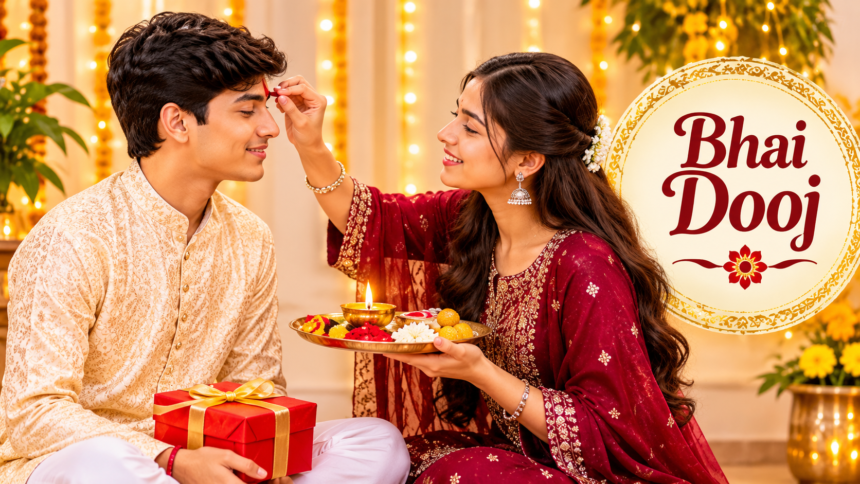
Bhai Dooj is a special occasion celebrating the bond between brothers and sisters. On this day, sisters apply tilak on their brothers’ foreheads and pray for their happiness, prosperity and long life. However, the festival is also widely known as Yama Dwitiya in several parts of India. This name is associated with an ancient Hindu legend about Yama, the god of death, and his sister Yamuna.
The story explains the religious significance of the festival and why sisters perform the tilak ceremony for their brothers. As Bhai Dooj 2026 approaches, here is everything you need to know about its traditional significance, the story behind Yama Dwitiya, the festival date and the auspicious tilak timings.
Who Were Yama and Yamuna?
According to Hindu mythology, Yama and Yamuna were the children of Surya Dev, the Sun god. Yama is worshipped as the god of death, while Yamuna is associated with the sacred river Yamuna.
Despite sharing a close sibling bond, the two rarely had an opportunity to meet. Yama remained occupied with his responsibilities, while Yamuna lived separately. Their story eventually became the foundation of the tradition celebrated as Bhai Dooj.
The Story of Yama Visiting His Sister Yamuna
According to the legend, Yamuna often wished to meet her brother and repeatedly invited him to visit her home. However, Yama was unable to accept her invitations because of his numerous responsibilities.
Finally, on the Dwitiya of Kartik Shukla Paksha, which falls on the second day after Diwali, Yama visited his sister.
Overjoyed by his arrival, Yamuna welcomed him warmly. She performed his aarti, applied a tilak on his forehead and prepared a special meal for him. Yama was deeply moved by the affection and hospitality shown by his sister.
Before leaving, he offered Yamuna a boon as a gesture of appreciation and asked her what she wished for.
Why Is Bhai Dooj Also Called Yama Dwitiya?
In response to her brother’s offer, Yamuna requested that every brother who visited his sister on this auspicious day, received a tilak from her and shared a meal at her home should be protected from untimely death.
Yama accepted her wish and granted the boon. According to the same belief, devotees who take a holy dip in the river Yamuna on this day also receive his blessings and protection.
This legend explains why Bhai Dooj is also called Yama Dwitiya. The word ‘Dwitiya’ refers to the second day of a lunar fortnight, on which the festival is observed.
The tradition continues in several parts of North India. Devotees also visit Vishram Ghat in Mathura, which is closely associated with the legend, to take a holy dip in the Yamuna.
Bhai Dooj 2026 Date and Tilak Muhurat
According to Drik Panchang, Bhai Dooj, also known as Yama Dwitiya, will be celebrated on Wednesday, November 11, 2026.
Here are the important dates and auspicious timings for the festival in New Delhi, India.
Bhai Dooj 2026 Timings and Muhurat
- Festival Date: Wednesday, November 11, 2026
- Bhai Dooj Tilak Muhurat (Aparahna): 01:10 PM to 03:20 PM
- Duration: 2 hours 10 minutes
- Dwitiya Tithi Begins: 02:00 PM on Tuesday, November 10, 2026
- Dwitiya Tithi Ends: 03:53 PM on Wednesday, November 11, 2026
What Is the Significance of Bhai Dooj?
Beyond its religious traditions, Bhai Dooj celebrates the affection, trust and lifelong connection shared between siblings. The story of Yama and Yamuna highlights the importance of making time for family and appreciating the people who hold a special place in our lives.
The festival brings brothers and sisters together through the tilak ceremony, prayers and a meal shared at home. Whether celebrated with traditional rituals or a simple family gathering, Bhai Dooj continues to honour the special bond between siblings.
As families prepare for Bhai Dooj 2026, the age-old story of Yama and Yamuna serves as a reminder of the love and care that make this festival meaningful.