
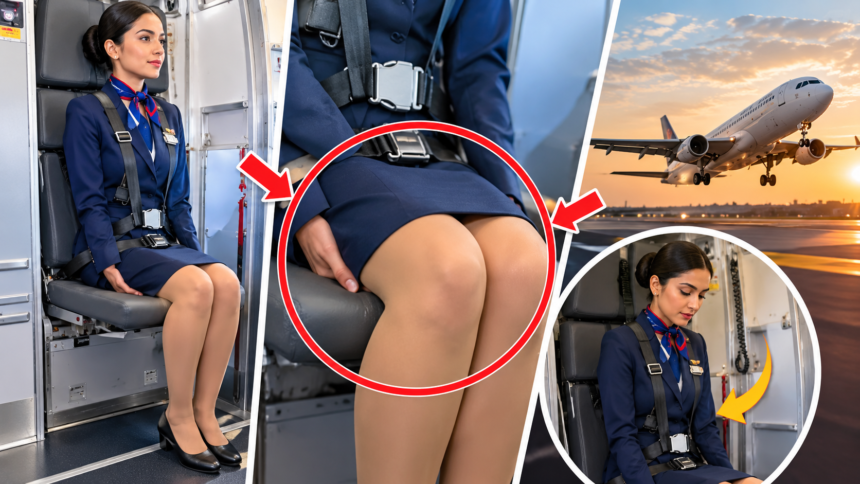
Have you ever noticed flight attendants sitting in a particular position during an aircraft’s takeoff and landing? While seated on their designated jump seats, cabin crew members often place their hands beneath their thighs or on their knees, keeping their bodies upright and their feet firmly positioned.
This posture is not simply a matter of comfort or habit. It is part of a safety procedure designed to help cabin crew prepare for potential emergencies. Known as the brace position, it helps them maintain a stable posture during critical phases of a flight while preparing to respond if something goes wrong.
1. What Is the Flight Attendant Brace Position?
Takeoff and landing are critical phases of a flight when cabin crew must remain seated and secured in their designated jump seats. During these periods, flight attendants follow specific safety procedures rather than sitting in a relaxed position.
They secure themselves with multipoint harnesses, sit upright, place their feet firmly on the floor and position their hands beneath their thighs with their palms facing upwards or on their knees, depending on the procedure being followed.
This posture is part of their preparation for situations involving sudden aircraft movement or an emergency landing. The exact position may vary according to the airline’s procedures and the aircraft type.
2. How Does This Position Help Restrict Body Movement?
During sudden deceleration, hard braking, turbulence or an emergency landing, the forces acting on the body can cause unexpected movement. Maintaining a prescribed seated posture helps cabin crew keep their bodies stable and reduces the risk of uncontrolled movement during an impact.
Securing the hands and positioning the feet correctly are important elements of this preparation. The objective is to help crew members remain in a controlled position during critical moments when sudden movement could lead to injury.
3. Protecting Cabin Crew Members for Emergency Duties
Flight attendants have important responsibilities if an emergency occurs. Their duties may include operating emergency exits, deploying evacuation slides and helping passengers leave the aircraft safely.
Injuries to their hands or arms could make it more difficult for them to operate emergency equipment or assist passengers. Following the prescribed safety posture helps cabin crew prepare for potential impact while supporting their ability to carry out their duties.
Remaining properly secured during takeoff and landing is therefore an important part of cabin crew safety training.
4. The Silent Safety Checklist Flight Attendants Follow
Flight attendants do not simply sit quietly during these critical phases of flight. They may also carry out a mental review of emergency procedures, commonly referred to as a silent checklist.
During this review, crew members mentally prepare for possible emergency situations. They may consider how to operate their assigned exits, identify the location of emergency equipment and review potential evacuation routes for passengers.
This mental preparation helps them remain alert and ready to respond quickly if an emergency develops.
Conclusion
The next time you see a flight attendant sitting with their hands beneath their thighs or resting on their knees during takeoff or landing, remember that the posture serves a safety purpose. It forms part of the procedures cabin crew follow to remain secure and prepare for potential emergencies.
From maintaining a stable position to mentally reviewing evacuation procedures, these actions are part of the preparation that helps flight attendants carry out their responsibilities when passengers need assistance.