
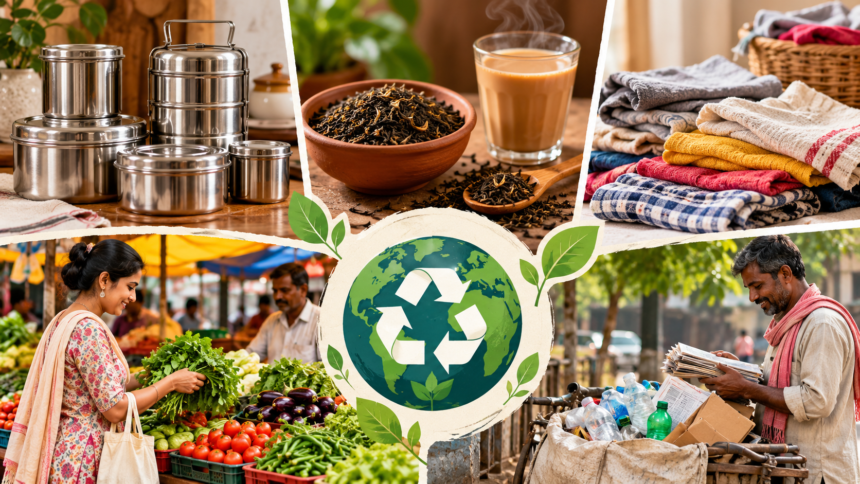
Sustainable living has become a popular topic, with social media increasingly highlighting ways to reduce waste and protect the environment. However, many Indian households have followed similar practices for generations without necessarily labelling them as sustainability habits.
From storing food in reusable steel containers to turning old clothes into cleaning rags, traditional Indian lifestyles often focus on making the most of available resources. These everyday practices demonstrate how simple household choices can help reduce waste and encourage more responsible consumption.
Here are five common Indian habits that reflect the principles of sustainable living.
1. Choosing Stainless Steel Dabbas Over Plastic Containers
Stainless steel dabbas are a familiar sight in Indian kitchens. They are used to pack school lunches, store spices and keep everyday food items organised. Their durability and reusability make them a practical alternative to disposable packaging and many single-use plastic products.
Unlike plastic containers that may eventually be discarded and contribute to waste, steel dabbas can remain useful for years with proper care. Stainless steel is also recyclable, making these traditional household essentials a useful example of long-lasting, resource-conscious living.
2. Brewing Chai With Loose Tea Leaves
For many Indian households, the day begins with a cup of chai. Using loose tea leaves instead of tea bags can be another small step towards reducing household waste.
Loose tea leaves can be composted under suitable conditions, while some tea bags contain plastic or synthetic materials that may not readily break down. Choosing loose tea can therefore help reduce unnecessary packaging and avoid certain materials associated with tea bags.
Along with being a familiar part of India’s tea-drinking tradition, this simple practice can support more mindful everyday consumption.
3. Turning Old Clothes Into Cleaning Cloths
Reusing old clothes is a common practice in Indian homes. Faded T-shirts, worn-out sarees and old towels are often cut into pieces and repurposed as cleaning cloths instead of being thrown away.
This habit extends the useful life of textiles and reduces the need to purchase disposable cleaning materials. It also helps households make better use of items that might otherwise end up in the waste stream.
By finding a second purpose for old garments, families can reduce waste through a simple practice that requires little effort or expense.
4. Shopping at the Local Sabzi Mandi
Neighbourhood vegetable markets, commonly known as sabzi mandis, remain an important part of everyday shopping in India. They allow consumers to buy fresh produce directly from local vendors and support the livelihoods of small traders and agricultural suppliers.
Buying locally available produce can reduce transportation requirements compared with goods brought from more distant locations, although the actual environmental impact depends on how the produce is grown, stored and transported.
Regular visits to local markets can also encourage people to buy fresh ingredients according to their household needs, helping them make more conscious food-shopping decisions.
5. The Role of Kabadiwalas in Everyday Recycling
The local kabadiwala, who collects recyclable household materials, plays an important role in India’s informal recycling system. Many households sell old newspapers, cardboard, glass bottles and scrap metal to these collectors rather than throwing them away with general waste.
These materials can then enter recycling and recovery channels, allowing useful resources to be processed and used again. The system also connects households with local collectors and scrap dealers who help keep recyclable materials in circulation.
By separating and selling household scrap, families participate in a practical recycling network that can reduce the amount of recoverable material sent to landfills.
Sustainable Living Begins With Everyday Choices
Living sustainably does not always require expensive products or major lifestyle changes. Everyday practices such as reusing steel containers, choosing loose tea leaves, repurposing old clothes, shopping at local markets and recycling household scrap can all contribute to more responsible resource use.
Many of these habits have been part of Indian household routines for generations. Continuing them with greater awareness can help reduce waste and demonstrate that sustainable living often begins with the simple choices people make at home.