
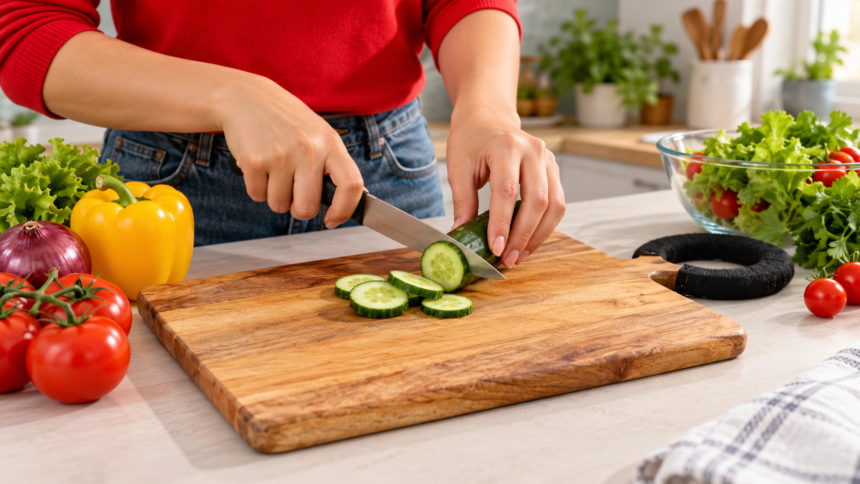
A cutting board is an essential kitchen tool used daily to prepare everything from vegetables to meat. However, regular use can gradually wear down its surface, making it harder to clean and potentially allowing bacteria to accumulate. Although proper washing helps maintain hygiene, deep cuts, cracks and other signs of damage can create places where food particles and moisture become trapped.
Knowing when to replace an old cutting board is important for maintaining a clean and hygienic kitchen. Here are six warning signs that indicate it may be time for a new one.
6 Signs Your Cutting Board Needs Replacing
1. Deep Knife Marks Across the Surface
Minor knife scratches are a normal part of using a cutting board. However, deep grooves can become difficult to clean thoroughly. Small food particles and moisture may collect inside these cuts, creating conditions that allow bacteria to grow even after washing.
If the surface has developed numerous deep grooves that are difficult to clean, replacing the board is a sensible option.
2. Visible Cracks or Splits
Cracks and splits indicate that a cutting board has deteriorated. These damaged areas can trap dirt, food residue and moisture, making proper cleaning more difficult.
Wooden cutting boards may also develop splits as they dry out. When cracks become noticeable or extensive, replacing the board can help maintain better kitchen hygiene.
3. Mould Spots That Keep Returning
Visible mould on a cutting board should not be ignored. If mould reappears even after the board has been cleaned and dried properly, it may indicate that moisture has penetrated damaged areas.
In such cases, replacing the board is a safer and more practical choice than repeatedly trying to remove the mould.
4. A Bad Smell That Does Not Go Away
A lingering unpleasant smell after washing may indicate that food residue or moisture remains trapped in damaged parts of the board. This can be particularly concerning when the surface has deep cuts or cracks.
If the odour persists despite thorough cleaning and proper drying, it may be a sign that the board can no longer be cleaned effectively.
5. Stubborn or Heavy Staining
Stains are common on cutting boards, especially after preparing foods such as tomatoes and beetroot. Discolouration alone does not necessarily mean that a board needs to be replaced.
However, stains accompanied by deep grooves, a rough surface or a persistent unpleasant smell may indicate more extensive wear. When several of these signs appear together, replacing the board may be the better option.
6. Warping or an Uneven Surface
A cutting board should sit securely on the kitchen counter to provide a stable surface for chopping. If it becomes warped or uneven, it may wobble during use, making food preparation less safe.
Warping can also make the board more difficult to clean properly. If it no longer rests flat on the counter, consider replacing it.
When Should You Replace Your Cutting Board?
Not every knife scratch means that a cutting board has reached the end of its useful life. The more important warning signs are deep grooves, cracks, recurring mould, persistent odours and significant warping.
Regular cleaning and proper drying can help maintain a cutting board, but they cannot always compensate for extensive damage. Inspecting its surface periodically and replacing it when necessary can help you maintain better hygiene in your kitchen.