
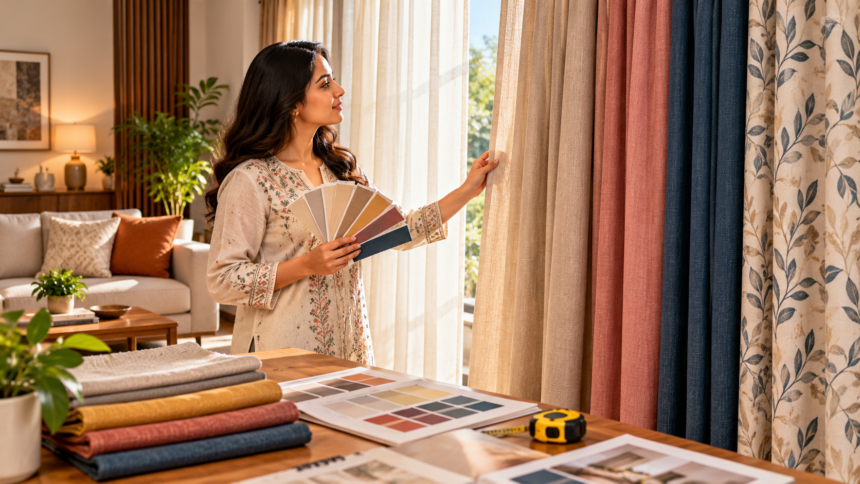
Curtains are an essential part of home interiors, influencing both the appearance and comfort of a room. Besides adding style, they help regulate sunlight, maintain privacy and create a comfortable atmosphere. Selecting the right curtains involves considering several factors, including wall shades, furniture colours, room dimensions and the amount of natural light available.
The right combination of colour, fabric and design can make a room appear more spacious, brighter and visually balanced. Whether you are decorating a compact bedroom or a large living room, understanding how different curtain styles work with your interiors can help you make the right choice. Here is a guide to choosing suitable curtain colours, fabrics and sizes for different spaces.
Why Are Curtains Important for Home Interiors?
Curtains serve several purposes beyond covering windows. They influence the overall appearance of a room while helping control the amount of sunlight and glare entering the space. They also provide privacy, particularly during the evening, and offer insulation during both summer and winter.
Another important feature of curtains is their ability to add texture and balance to interior spaces. Their colour, material and length can complement furniture, wall shades and other decorative elements.
Curtains can also contribute to the overall atmosphere of a room, whether the space is designed for everyday relaxation or entertaining guests. Choosing the right style helps create a coordinated and welcoming interior.
How to Choose Curtain Colours Based on Walls and Furniture
Curtain colour selection can significantly influence the overall look of a room. The ideal shade should complement the existing décor rather than overpower it. Before making a choice, consider the wall colour, furniture tones, natural lighting and overall interior theme.
Neutral shades such as white, beige, cream and grey are versatile options that work well with different interior styles. However, rooms with neutral walls and furniture can benefit from stronger shades such as navy blue, mustard or olive green, which introduce contrast and character.
Wall colours are particularly important when selecting curtains. Light-coloured walls offer flexibility, as they work well with both neutral and darker curtains. In contrast, rooms with dark walls can benefit from lighter window coverings that help maintain visual balance. Neutral walls also provide an opportunity to experiment with brighter curtain shades.
Furniture should also influence your decision. Since sofas and chairs occupy considerable visual space, curtains should complement their colours and finishes. Beige sofas, for instance, pair well with cream or soft grey curtains. Dark furniture can be balanced with lighter window coverings, while neutral furniture offers room for patterned curtains.
Matching Colours or Creating Contrast?
Both approaches can enhance a room when used thoughtfully. Matching shades create a coordinated and peaceful appearance. For example, light grey walls combined with slightly darker grey curtains can give the space a subtle layered effect.
Contrasting colours, on the other hand, add visual interest. Mustard or navy curtains against neutral walls can create a more distinctive interior.
For smaller spaces, coordinating curtains with the existing colour palette often helps maintain an open appearance. Larger rooms can accommodate stronger colour combinations without making the interiors feel overcrowded.
How Curtain Fabric Affects Natural Light and Comfort
Fabric selection is just as important as choosing the right colour. The material determines how curtains fall, how much sunlight enters the room and how easily they can be maintained.
Before selecting a fabric, consider the natural light available, privacy requirements, seasonal comfort and the overall interior design.
Lightweight materials allow sunlight to pass through while keeping the room bright and airy. Heavier fabrics offer greater light control and insulation, making them suitable for spaces that require more privacy or a structured appearance.
Lightweight Fabrics for Bright and Airy Spaces
Cotton, linen and sheer fabrics are popular choices for rooms where maintaining natural light is important. Their light texture creates an open and relaxed appearance, making them suitable for modern interiors and smaller spaces.
These materials are also useful during warmer months, as their lightweight construction allows better airflow and prevents the room from feeling visually heavy.
Heavy Fabrics for Formal and Spacious Rooms
Heavier materials can give interiors a rich and elegant appearance. Velvet, thick polyester blends and layered curtains are suitable options for larger rooms and traditional décor styles.
Layered window treatments, which combine sheer curtains with heavier drapes, offer flexibility in managing sunlight and privacy. Thick fabrics can also provide additional insulation during colder months.
However, heavy curtains should be selected carefully for compact rooms, as they may make the space appear smaller and crowded.
Choosing Curtains According to Room Size
Room dimensions should play an important role in deciding curtain colours, patterns and fabrics. The right selection can improve the visual proportions of a space and make it feel more comfortable.
Best Curtains for Small Rooms
Smaller rooms generally benefit from curtains that create a bright and spacious appearance. White, cream and pastel shades are suitable choices because they help maintain a light visual effect.
Sheer and lightweight fabrics are also useful for allowing natural light into the room. It is better to avoid excessively bold patterns and bulky drapes that can make compact spaces feel crowded.
Another useful tip is to install curtain rods slightly above the window frame. This can create the impression of greater ceiling height and make the room appear taller.
Best Curtains for Large Rooms
Larger rooms offer greater flexibility when it comes to curtain designs and colour combinations. Rich shades such as navy, mustard and deep green can add depth and become an attractive feature of the interior.
Homeowners can also experiment with layered curtains, textured materials and fabrics such as velvet and jacquard. These options can complement spacious living areas and formal interiors.
In larger spaces, curtains can serve as an important decorative element while continuing to provide light control and privacy.
Conclusion
Choosing the right curtains involves finding a balance between appearance, functionality and comfort. Wall colours, furniture, natural lighting and room dimensions should all be considered before selecting a design.
Light shades and breathable fabrics are generally suitable for smaller rooms and spaces that receive plenty of sunlight. Meanwhile, larger rooms offer more opportunities to experiment with darker colours, rich textures and layered window treatments.
Paying attention to curtain length, width and fabric can further improve the overall appearance of your interiors. With thoughtful selection, curtains can enhance your home’s décor while making every room feel comfortable, balanced and welcoming.