
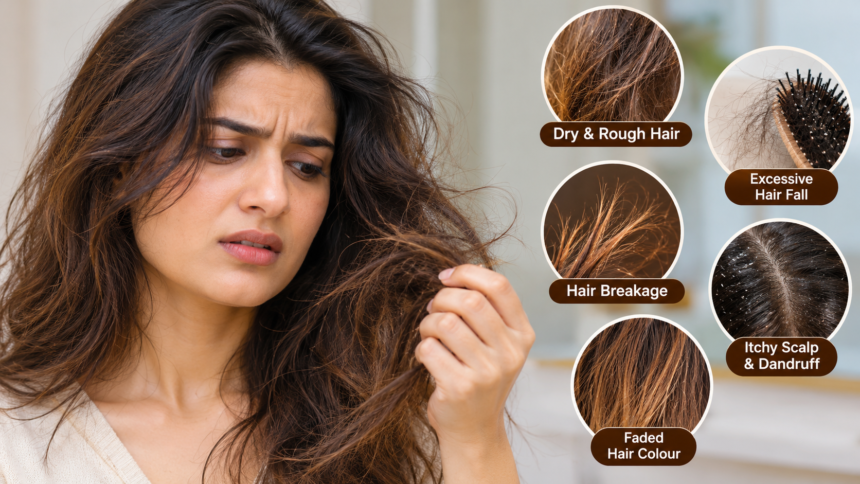
Changing shampoos, regularly oiling your hair and trying different hair care products may not always solve your hair problems. If your hair continues to feel dry, rough and lifeless, the water you use every day could be a contributing factor.
Several areas across Delhi-NCR receive hard water containing high concentrations of dissolved minerals. These minerals can accumulate on the hair over time, making it difficult to retain moisture and reducing the effectiveness of regular shampoos, conditioners and hair oils.
Why Is Water in Delhi-NCR Hard?
Hard water contains higher levels of dissolved minerals, particularly calcium and magnesium. A significant portion of Delhi-NCR’s water supply comes from the Yamuna and groundwater sources, both of which can contain considerable amounts of these minerals.
In several residential areas, Total Dissolved Solids (TDS) levels can exceed 500 parts per million (ppm), which is the acceptable limit specified by the Bureau of Indian Standards (BIS) for drinking water. However, water quality is not uniform across the region, and mineral concentrations can vary depending on the locality.
How Does Hard Water Affect Your Hair?
The minerals present in hard water may not wash away completely during bathing. Instead, they can gradually accumulate on the scalp and hair strands, creating a residue similar to the white deposits commonly seen around bathroom taps.
Over time, this buildup can leave hair feeling dry, rough and difficult to manage. Shampoo may also produce less lather, encouraging people to use larger quantities. Additionally, mineral deposits can make hair appear dull, reduce its softness and contribute to faster colour fading.
The scalp can also be affected. Mineral residue may contribute to irritation, itching and flakiness, while increased dryness can make hair more vulnerable to breakage.
Common Signs That Hard Water May Be Affecting Your Hair
Certain changes in your hair and scalp may indicate that the water you use regularly is contributing to your hair concerns.
- Waxy or heavy hair: Your hair may feel sticky, flat or coated even immediately after washing.
- Reduced conditioner effectiveness: Despite using conditioners and hair masks, your hair continues to feel dry because mineral deposits can interfere with moisture retention.
- Rough texture and frequent tangling: Hair may become coarse, straw-like and difficult to comb due to mineral and chlorine buildup.
- Increased hair breakage: Dry and brittle strands can snap during brushing, leaving behind short broken pieces without their roots.
- Faster hair colour fading: Coloured or bleached hair may lose its brightness more quickly or develop orange, dull or slightly greenish tones due to substances such as copper and chlorine in the water.
- Itchy and flaky scalp: Mineral content and the water’s high pH may contribute to scalp irritation and flaking.
- Improvement when washing elsewhere: If your hair feels noticeably softer and experiences less breakage after washing it at a gym or in another city, your household water quality could be a contributing factor.
Can Hard Water Cause Hair Fall?
The relationship between hard water and hair fall is not straightforward. Hard water can make hair dry and brittle, increasing the chances of breakage. This can sometimes be mistaken for hair falling out from the roots.
However, some dermatologists point out that scientific evidence directly linking hard water to increased root-level hair loss remains limited.
Hair shedding can have several other causes, including stress, iron or vitamin deficiencies, hormonal changes, pollution and genetic factors. Therefore, hard water may contribute to existing hair problems without necessarily being the primary reason for hair loss.
How to Protect Your Hair From Hard Water in Delhi-NCR
Making a few changes to your hair care routine and improving the quality of water used for washing can help reduce mineral buildup and manage dryness.
1. Install a Shower Filter
Installing a shower filter is one way to address water quality concerns. It may help reduce certain impurities, depending on the filter’s technology and capacity. However, not every shower filter effectively removes calcium and magnesium responsible for water hardness.
For more effective treatment, consider a suitable water softener for your home. If your tap water is particularly hard, using filtered or RO water for the final hair rinse may also help.
2. Choose the Right Shampoo and Conditioner
A mild sulphate-free shampoo can be suitable for regular hair washing, particularly if your hair is already dry. You can also use a clarifying shampoo occasionally, around once every two weeks, to help remove product and mineral buildup.
Avoid excessive clarifying washes, as they may increase dryness. Follow every shampoo wash with a good conditioner and use a nourishing hair mask once a week.
Washing your hair with lukewarm water instead of hot water can also help prevent additional dryness.
3. Consider Apple Cider Vinegar Carefully
Apple cider vinegar is sometimes used as a hair rinse to help remove residue and improve hair texture. However, it is not a proven solution for hard water and does not effectively soften water or remove its calcium and magnesium content.
If you consider using it, avoid applying undiluted vinegar directly to your scalp, as it may cause irritation.
When Should You Consult a Dermatologist?
If you notice excessive hair shedding from the roots, a visibly wider hair parting or persistent hair loss, consider consulting a dermatologist. Medical advice is particularly important if the problem continues for two to three months even after addressing your water quality.
A dermatologist may recommend tests to check for iron deficiency, low vitamin D levels or thyroid-related problems, depending on your symptoms.
Improving water quality may help manage dryness, roughness and breakage. However, it cannot address underlying medical conditions responsible for hair loss. Identifying the actual cause is essential for choosing the right treatment.