
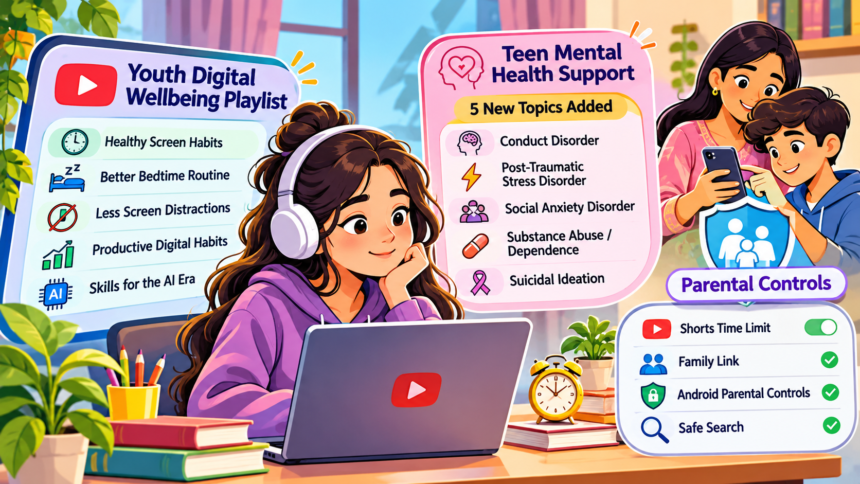
Google has announced a series of digital safety and online well-being initiatives across YouTube, Google Search and Android in India. The latest measures aim to help teenagers develop healthier screen habits while giving parents greater control over their children’s digital activities.
As part of these efforts, the company has expanded its teen mental health shelves on YouTube by introducing five additional topics. Google has also launched a new Youth Digital Wellbeing Playlist featuring Indian creators and highlighted parental safety features under its DigiKavach initiative.
Google Introduces Youth Digital Wellbeing Playlist
Google has partnered with popular learning and family-focused content creators to introduce the Youth Digital Wellbeing Playlist. The initiative focuses on helping teenagers maintain a healthy relationship with technology.
The playlist will feature content covering several aspects of digital well-being, including setting healthy online boundaries, developing better bedtime routines and reducing everyday screen distractions. It will also offer guidance on building productive digital habits and developing essential skills to navigate the growing influence of artificial intelligence.
YouTube Expands Teen Mental Health Shelves
Google has also expanded its dedicated teen mental health shelves in India, a feature introduced in the country last year. The latest update adds five subjects: conduct disorder, post-traumatic stress disorder, social anxiety disorder, substance abuse and dependence, and suicidal ideation.
When users between the ages of 13 and 17 search for information related to these subjects, YouTube will display a dedicated section featuring supportive and age-appropriate videos. The content will be sourced from trusted health organisations and qualified experts.
Google stated that clinical psychologists review the videos before they are recommended to young users. The existing mental health shelves already cover topics such as depression, anxiety, attention-deficit/hyperactivity disorder (ADHD) and eating disorders.
Google Highlights Parental Controls Under DigiKavach
Alongside these updates, Google is strengthening awareness of its parental safety tools through its DigiKavach initiative. One of the key features is the YouTube Shorts Feed Limit, which allows parents to manage the time their teenagers spend watching short-form videos.
Parents can set the daily Shorts viewing limit to zero, restricting access to the Shorts feed without preventing teenagers from watching longer educational videos on YouTube.
Google has also highlighted the benefits of Family Link, which enables parents to remotely approve app downloads, share location information and manage their children’s device screen time through their own smartphones.
Additionally, Android Parental Controls provide PIN-protected settings directly on a child’s device, while Google Search’s SafeSearch feature automatically filters explicit content from search results.
Through these initiatives, Google aims to promote safer online experiences for teenagers while helping parents manage their children’s digital activities more effectively.