
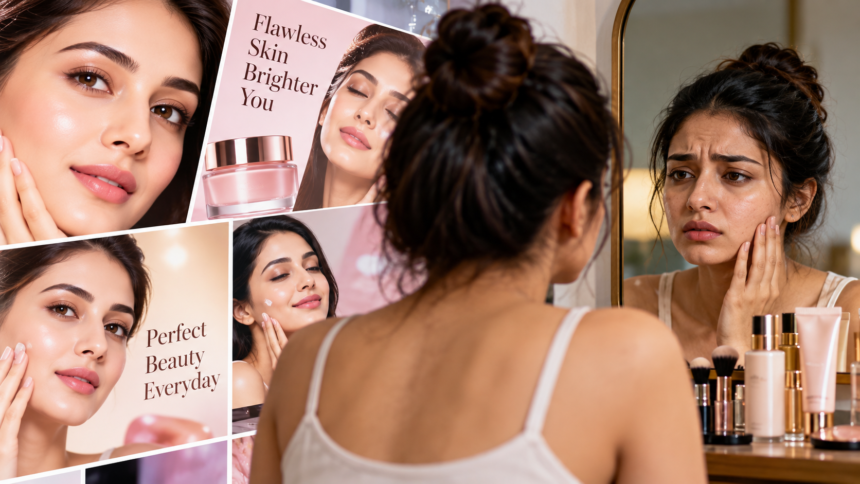
Beauty advertisements often promise a transformed appearance, showcasing radiant skin, flawless complexions, defined jawlines and perfectly proportioned bodies. These images present beauty as something desirable and easily achievable. However, behind these carefully designed campaigns lies a deeper concern: how repeated exposure to idealised appearances can influence body image, self-esteem and the way people judge their own worth.
Many of the seemingly perfect faces featured in beauty campaigns are enhanced through digital editing, retouching and carefully arranged lighting. Skin texture is softened, facial features are adjusted and imperfections are removed to create an idealised appearance. Even when people know these images have been altered, repeated exposure can gradually shape their expectations of what a normal face or body should look like.
How Beauty Advertising Influences Body Image
Constant exposure to digitally enhanced photographs can gradually change perceptions of attractiveness. Images that initially appear exceptional may eventually become the standard against which people judge themselves. Natural features such as visible pores, fine lines, uneven skin texture and facial shadows may begin to look like flaws rather than normal characteristics of human appearance.
This comparison can lead to dissatisfaction even when there is nothing inherently wrong with a person’s appearance. Looking in the mirror may become a source of disappointment when one’s reflection does not match the unrealistic standards repeatedly promoted through advertisements.
Over time, the difference between a person’s natural appearance and an imagined ideal can affect confidence, self-esteem and emotional well-being. As edited images become increasingly familiar, recognising their influence on personal expectations may become more difficult.
Advertising also plays a role in defining society’s beauty standards. When campaigns repeatedly feature similar skin tones, body shapes, facial features and age groups, these representations can appear to be the accepted norm rather than just one expression of beauty.
In India, the longstanding preference for fair skin and slim body types in beauty advertising has contributed to limited representations of attractiveness. Fairness-focused campaigns have often associated lighter skin with greater desirability and social advantages. Such messages can influence how people perceive themselves and others, reinforcing comparisons shaped by cultural expectations.
When certain physical characteristics receive consistent attention while others remain underrepresented, people may become dissatisfied with their natural features. This can narrow the understanding of beauty and leave little room for individual differences.
How Beauty Advertisements Create Insecurities
Beauty marketing can encourage insecurity by presenting ordinary physical features as problems that require a solution. Advertisements may highlight pigmentation, visible pores, wrinkles, body fat, hair texture or signs of ageing before promoting a product designed to address them.
Repeated exposure to these messages can encourage people to examine their appearance for flaws they might not otherwise have considered significant. Gradually, self-care may begin to feel like an ongoing effort to correct perceived shortcomings rather than an activity undertaken for personal comfort or enjoyment.
Instead of focusing on what makes them feel healthy and confident, consumers may start believing that certain aspects of their appearance must be changed before they can feel attractive enough.
The concern is not simply that people purchase beauty products. Rather, it is that persistent messages of inadequacy can influence their relationship with themselves, making dissatisfaction seem necessary for personal improvement.
Social Media and the Emotional Cost of Comparison
The influence of beauty advertising now extends beyond television commercials, magazine covers and billboards. Social media platforms have made idealised beauty more immediate and personal, with filters and editing tools allowing users to smooth their skin, brighten their complexion and alter facial proportions before sharing photographs or videos.
Repeatedly viewing enhanced versions of their own faces can create another standard against which people compare their natural appearance. As a result, an unfiltered photograph or reflection may seem disappointing, despite representing how they actually look.
Young people may be particularly vulnerable because their identities and self-esteem are still developing. However, appearance-related dissatisfaction can affect adults as well, especially when they regularly compare themselves with carefully curated images.
The emotional effects can extend beyond dissatisfaction with physical features. When advertisements associate attractiveness with happiness, success, desirability and social acceptance, they may reinforce the belief that looking a certain way is essential to living a fulfilling life.
Such expectations can contribute to appearance-related anxiety, reduced self-esteem, excessive concern about physical features and dissatisfaction with one’s body. These feelings may also influence spending decisions, social relationships and the willingness to participate in activities where individuals feel uncomfortable about their appearance.
Building a Healthier Relationship with Beauty
Developing a healthier body image does not require abandoning skincare, makeup, fashion or other beauty practices. These choices can be meaningful forms of creativity, personal expression and self-care. What matters is understanding whether they come from genuine enjoyment or from the belief that one’s natural appearance is inadequate.
Recognising the difference between advertising and reality is an important first step. Understanding the effects of lighting, camera angles, digital retouching and filters can help people view idealised images more critically and avoid treating them as realistic standards.
Practising self-compassion is equally important. The human body is more than an appearance to be judged or compared. It enables people to experience life, develop relationships, express themselves and engage with the world. Its value cannot be measured by how closely it resembles an image in an advertisement.
Beauty campaigns may continue to influence cultural expectations, but they do not have to determine how individuals evaluate themselves. Greater awareness of the images people consume can help them question unrealistic ideals and recognise the difference between manufactured perfection and everyday reality.
Dr. Chandani Tugnait, a psychotherapist, emphasises the importance of awareness in changing how people relate to their appearance. She says, “As a psychotherapist I believe awareness is an important starting point for changing our relationship with appearance. When we begin to question unrealistic standards rather than automatically measure ourselves against them, we create room for a more compassionate understanding of our bodies.”