
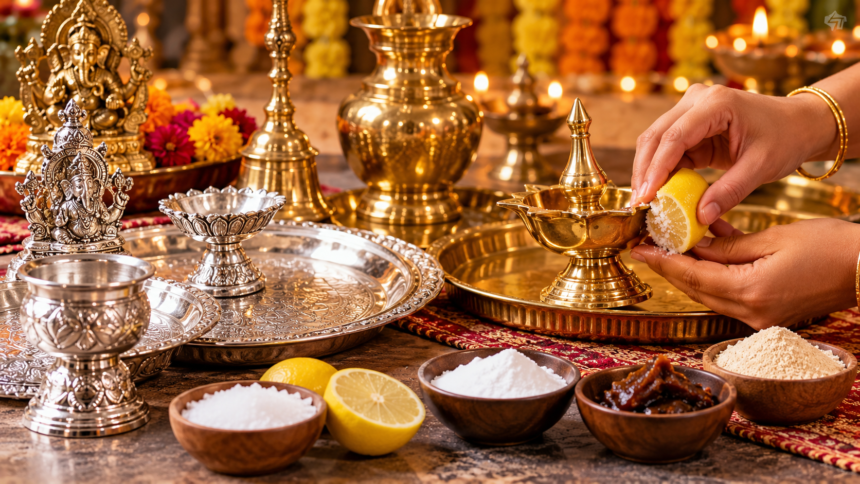
With Diwali 2026 approaching, many households are preparing for the festive season by cleaning their homes and bringing out their traditional pooja essentials. However, brass diyas, silver thalis and religious idols often lose their original shine over time. Brass utensils may develop a brownish layer, while silver items can turn black or develop grey patches.
Instead of spending money on expensive metal cleaners, you can use a few everyday kitchen ingredients to restore the appearance of your pooja utensils. Ingredients such as lemon, salt, tamarind, vinegar and baking soda can help remove tarnish and surface dirt. Here are six simple home cleaning methods to prepare your brass and silver pooja items for Diwali.
How to Clean Brass Pooja Utensils at Home
Brass diyas, bells, kalash and pooja thalis can become dull due to regular use and exposure to air and moisture. These simple kitchen remedies can help bring back their shine without using harsh chemical cleaners.
1. Lemon and Salt
Lemon and salt are among the easiest ingredients to use for cleaning brass utensils. Cut a lemon into two halves and dip the exposed side into regular salt. Gently rub it over the brass surface using circular movements.
Allow the mixture to sit for two to three minutes before rinsing the item with lukewarm water. Immediately wipe it dry using a soft cotton cloth. This method is particularly suitable for brass diyas, bells, kalash and small decorative lamps.
2. Tamarind Pulp for Heavily Tarnished Brass
For brass utensils with stubborn greenish-brown or dark stains, tamarind pulp can be a useful cleaning option. Soak a small ball of tamarind in warm water for 15 to 20 minutes until it becomes soft. Mash it into a thick pulp and spread it over the brass item.
Use your fingers or an old toothbrush to apply the pulp, paying attention to engraved areas and corners. Leave it for approximately 10 minutes, scrub gently and rinse thoroughly with water. This technique works well for older temple lamps and larger brass pooja vessels.
3. Vinegar, Flour and Salt Paste
A homemade paste made with vinegar, flour and salt can help clean brass items that have not been polished for a long time.
Combine one spoonful of salt with one spoonful of wheat flour. Gradually add white vinegar until the mixture forms a thick paste. Apply it evenly to the brass surface and leave it for 15 to 20 minutes. Rinse thoroughly with water and dry using a clean cloth.
The thick consistency makes this mixture convenient to apply to curved and uneven surfaces, including kalash and handis.
How to Clean Silver Pooja Items at Home
Silver diyas, coins, bowls and idols can develop a black coating over time due to tarnishing. Since silver is softer than brass, it requires gentle cleaning to avoid scratches and damage.
4. Baking Soda for Silver Utensils
Baking soda can help remove surface tarnish from silver pooja items. Mix a small amount of baking soda with water to prepare a smooth paste.
Apply it gently to the silver thali, bowl or coin using a soft cloth. Avoid applying excessive pressure while rubbing. Once cleaned, rinse the item properly and wipe it completely dry to prevent watermarks from forming.
5. Aluminium Foil and Baking Soda Method
For silver items that have become noticeably dark, the aluminium foil and baking soda technique is another commonly used household cleaning method.
Take a bowl and cover its inner surface with aluminium foil, keeping the shiny side facing upwards. Place the silver items inside, ensuring they touch the foil. Add one spoonful of baking soda and pour hot water into the bowl.
Allow the utensils to remain in the solution for five to 10 minutes. The tarnish will begin to lift during this process. Remove the items carefully, rinse them with clean water and wipe them dry with a soft cloth.
However, avoid using this technique on oxidised silver or antique pieces with intricate black detailing, as it may remove their decorative finish.
Why Do Brass and Silver Pooja Items Lose Their Shine?
The darkening of brass and silver utensils is a natural process that occurs over time. Brass reacts with air and moisture, which can create a brownish layer on its surface. Silver develops a black coating because of tarnishing.
Apart from these natural reactions, everyday pooja materials such as ghee, oil, sindoor, roli and agarbatti smoke can also accumulate on the utensils. These substances leave deposits that make the metal appear dull. In many cases, the change in appearance is caused by surface buildup rather than permanent damage.
Important Tips to Keep Pooja Utensils Clean and Shiny
While cleaning brass and silver items, a few precautions can help protect their finish. Always dry the utensils completely after washing, as leftover moisture can cause them to lose their shine again.
Avoid cleaning brass and silver together in the same bowl. Steel scrubbers and steel wool should also be avoided because they can leave scratches on the metal surface.
For idols decorated with stones, paint or meenakari work, use a damp cloth instead of applying homemade cleaning mixtures. If you are trying a cleaning remedy for the first time, test it on a small, less visible area before applying it to the entire item.
How to Maintain the Shine of Brass and Silver Utensils
Regular maintenance can reduce the need for intensive cleaning before every festival. After daily pooja, wipe your brass and silver utensils with a clean, dry cloth to remove oil, ghee and other surface deposits.
Silver items can be stored in soft cotton cloth or small zip-lock pouches to limit their exposure to air. Brass utensils should be kept in a dry cupboard to protect them from moisture.
You can also lightly rub a couple of drops of coconut oil over brass items to maintain their soft glow. With these simple cleaning and storage habits, your traditional pooja utensils can remain well-maintained and ready for festive occasions.