
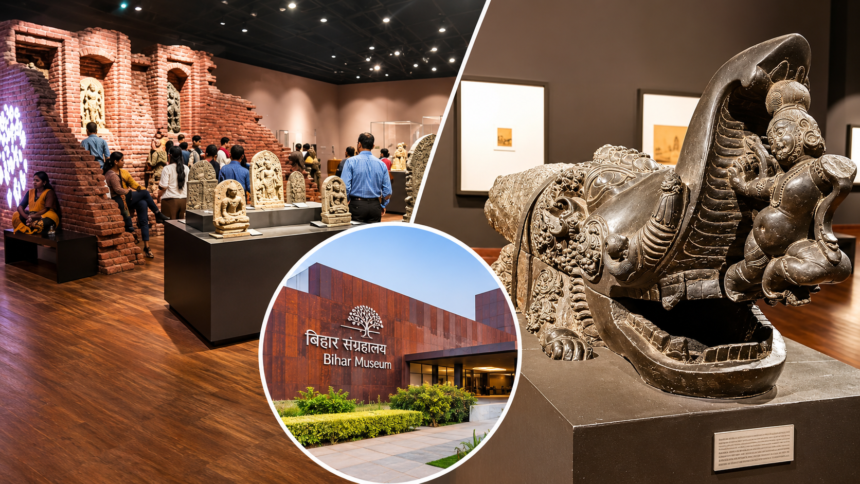
An Indian museum has earned international recognition by securing a place among the world’s leading cultural institutions. The Bihar Museum in Patna, which opened just 11 years ago, has been ranked 9th in the World’s 100 Best Museums 2026 list, making it the highest-ranked museum in Asia.
The achievement has brought attention to Bihar’s rich cultural history, remarkable architecture and extensive collection of historical artefacts. The museum’s recognition alongside renowned institutions such as the Metropolitan Museum of Art (The Met) and the Louvre has also highlighted India’s contribution to global art and heritage.
But what makes the Bihar Museum stand out? From its contemporary architectural design to its centuries-old collections, here’s a closer look at the institution.
1. A Unique Blend of Japanese Architecture and Indian Heritage
Partially opened in August 2015, the Bihar Museum combines modern Japanese architectural principles with India’s cultural identity. The project was designed by Pritzker Prize-winning Japanese architect Fumihiko Maki, the lead architect of Maki and Associates, in collaboration with Mumbai-based Studio Opolis.
Spread across 13.9 acres, the museum features interconnected low-rise buildings, landscaped courtyards and spacious exhibition areas. Its design creates a connection between contemporary architecture and the historical significance of the region.
Around Rs 498 crore was invested in the project in 2013 to develop the museum into the landmark it is today. One of its most distinctive architectural features is the exterior, which is covered in weathering Corten steel. Its earthy, rust-like appearance reflects India’s ancient metallurgical traditions.
The museum has also received a five-star GRIHA rating, recognising its environmentally sustainable design.
2. A Rich Collection of India’s Historical Treasures
The Bihar Museum houses more than 30,000 artefacts representing different periods of Indian history. Its collection explores the cultural and historical development of the Gangetic plains, beginning with the Stone Age and extending to the 1764 Battle of Buxar.
One of its most celebrated exhibits is the Yakshi sculpture, which was discovered on the banks of the River Ganga in 1917. Dating back approximately 2,000 years, this life-sized Mauryan-era sculpture is carved from a single block of highly polished Chunar sandstone. It is particularly renowned for its distinctive mirror-like Mauryan finish.
Among the museum’s other significant collections are the Kurkihar bronzes, prehistoric stone tools, a Kushan-period stone slab depicting the birth of Buddha, rare manuscripts, ancient coins and traditional folk art.
The museum also features three historical art galleries that take visitors through important chapters of Indian civilisation. These exhibitions highlight the Indus Valley Civilisation, the Mauryan Empire under Ashoka, the Gupta Golden Age and the reign of Sher Shah Suri.
Together, these collections offer visitors an opportunity to explore the artistic, cultural and historical contributions of different periods.
3. Bringing Indian Art and Craft to the Global Stage
For many years, India’s historical collections were largely displayed in buildings dating back to the colonial period. The Bihar Museum presents a different approach by bringing Indian heritage into a contemporary architectural setting.
The museum highlights Bihar’s important role in the development of Indian civilisation, particularly through its historic centres of Pataliputra and Nalanda. By presenting these historical connections through its extensive collections and modern exhibition spaces, it gives the region’s cultural legacy greater visibility.
Its international recognition also draws attention to the value of Indian art, craftsmanship and architectural traditions.
4. Why Bihar Museum’s Global Recognition Matters
The Bihar Museum’s achievement reflects an approach that brings together traditional heritage and contemporary design. Rather than simply following the architectural styles of established international museums, it presents India’s history through a distinctive combination of modern spaces and historical collections.
Its place among the World’s 100 Best Museums 2026 has put Bihar’s cultural legacy in the international spotlight. From the ancient Yakshi sculpture to its remarkable architectural design, the museum offers a contemporary space to explore India’s rich artistic and historical traditions.
The recognition also highlights how Indian museums can present their cultural heritage to a global audience while maintaining a strong connection with their historical roots.