
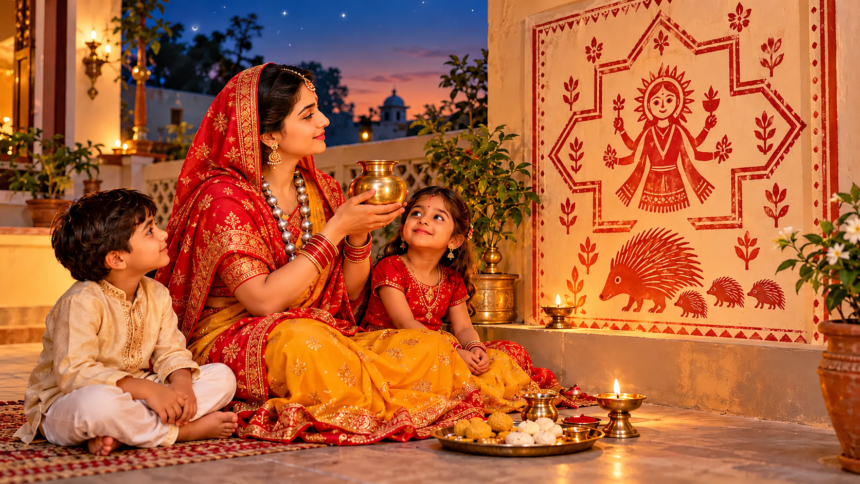
Ahoi Ashtami is an important Hindu festival observed mainly by mothers across North India for the well-being, prosperity and long life of their children. On this auspicious occasion, mothers observe a day-long fast and worship Ahoi Mata with devotion, seeking her blessings for their children’s health, happiness and protection.
Ahoi Ashtami 2026 will be celebrated on Sunday, November 1, 2026. The festival is observed on Krishna Paksha Ashtami during the Hindu month of Kartik, approximately eight days before Diwali. Here is everything you need to know about the festival, including its date, puja timings, significance and traditional rituals.
Ahoi Ashtami 2026: Date and Puja Muhurat
According to Drik Panchang, Ahoi Ashtami will be observed on November 1. The important puja timings and tithi details for the festival are as follows:
- Ahoi Ashtami Date: Sunday, November 1, 2026
- Ashtami Tithi Begins: 02:51 PM on November 1, 2026
- Ashtami Tithi Ends: 01:10 PM on November 2, 2026
- Puja Muhurat: 05:36 PM to 06:54 PM
- Puja Duration: 1 hour and 18 minutes
- Star Sighting Time (Tara Darshan): Around 06:00 PM
- Moonrise Time: 11:40 PM
Traditionally, mothers conclude their fast after sighting the stars in the evening. Tara Darshan holds special importance as it marks the time when devotees offer prayers and seek blessings for their children.
Ahoi Ashtami Significance and Religious Importance
Ahoi Ashtami holds a special place in Hindu traditions, particularly among mothers who observe this fast for the longevity, good health and happiness of their children. Devotees worship Ahoi Mata, who is believed to be a form of Goddess Parvati and is regarded as the divine protector of children.
The festival has a distinct tradition compared to Karwa Chauth. While women observing Karwa Chauth break their fast after seeing the moon, Ahoi Ashtami devotees traditionally end their fast after sighting stars.
According to Vedic astrology, the sky contains 27 Nakshatras, which are believed to influence human life and destiny. Worshipping the stars on Ahoi Ashtami symbolises prayers for children’s protection, well-being and a positive future.
Ahoi Ashtami 2026: Puja Vidhi and Rituals
Mothers begin the day by waking up early, taking a bath and making a religious vow, known as Sankalp, to observe the fast. Traditionally, many women keep a Nirjala Vrat, which means abstaining from both food and water throughout the day. However, those who find it difficult may observe the fast by consuming fruits or Satvik food.
In the evening, devotees prepare an image of Ahoi Mata on a wall using geru. The traditional artwork includes an Asht Koshthak, representing eight corners, along with the figures of her seven cubs, the Sun and the Moon.
A Karwa filled with water is placed near the puja arrangement. Eight puris, halwa and other traditional offerings are also prepared for the worship.
Women then listen to or recite the Ahoi Ashtami Vrat Katha as part of the religious ceremony. After completing the evening prayers, they offer Arghya to the stars. The moon is also offered Arghya at night as part of the traditional observance.
The Folklore and Story Behind Ahoi Ashtami
The religious significance of Ahoi Ashtami is closely connected with an ancient legend about a moneylender’s wife. According to the popular folklore, she accidentally killed a cub while digging soil. Following this incident, all seven of her sons died.
After being informed that her suffering was connected to the unintentional act, she began praying to Ahoi Mata. She drew the image of a cub and observed the Ashtami fast with complete faith and devotion.
Moved by her prayers, Ahoi Mata blessed her by bringing her seven sons back to life. Since then, mothers have continued the tradition of observing Ahoi Ashtami to seek forgiveness, divine protection and blessings for the long life and well-being of their children.
The festival continues to be an important part of Hindu culture, bringing families together through faith, devotion and traditional rituals.