
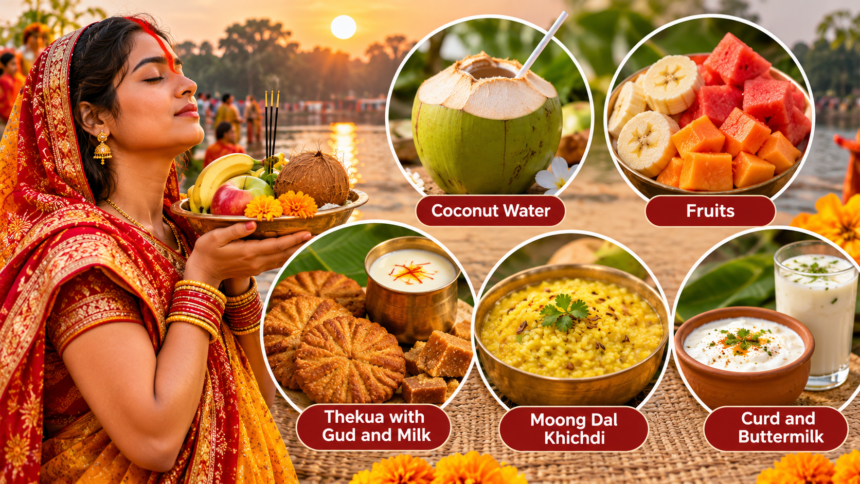
Completing the 36-hour Nirjala fast during Chhath Puja requires dedication and discipline. However, taking care of your body after the fast is equally important. Going without food and water for such a long period can leave the body dehydrated, exhausted and sensitive, making it essential to choose the right foods when resuming your regular diet.
Eating heavy, oily or spicy meals immediately after breaking the fast may lead to acidity, bloating, nausea and stomach discomfort. Instead, your digestive system needs time to adjust. Starting with liquids, followed by fruits and light meals, can make the recovery process more comfortable.
Here are five gentle food options that can help you regain energy and recover after the Chhath Nirjala fast.
5 Best Foods to Eat After Breaking the Chhath Fast
1. Coconut Water: Start With Hydration
Coconut water is a refreshing option to begin your post-fast recovery. After 36 hours without water, the body needs fluids and electrolytes to restore hydration.
Rather than drinking a large quantity at once, take a few small sips and wait for 10-15 minutes before drinking more. Coconut water provides natural electrolytes and energy without putting much pressure on your digestive system.
2. Fruits: Banana, Papaya and Watermelon
Soft and water-rich fruits are suitable options for the initial stage of breaking the fast. Bananas provide potassium and quick energy, papaya supports digestion, while watermelon helps replenish lost fluids.
It is better to avoid citrus fruits such as oranges and lemons immediately after fasting, as their acidity may trigger stomach discomfort.
Start with a small bowl of fresh fruit, eat slowly and chew properly instead of consuming too much at once.
3. Thekua With Jaggery and Warm Milk
Chhath Puja’s traditional prasad can also be included in your post-fast meal. A small portion of Thekua with jaggery (gur) and warm milk offers nourishment while allowing you to enjoy the festival’s traditional flavours.
Jaggery is traditionally valued for its iron content, while warm milk can provide nourishment and feel soothing to the stomach.
However, avoid eating several pieces of Thekua immediately after breaking the fast. Begin with one or two pieces and give your digestive system time to adjust.
4. Moong Dal Khichdi: A Light and Filling Meal
Once you have gradually resumed eating, soft moong dal khichdi can be a suitable option for your first proper meal. Ideally, have a small bowl around 1-2 hours after breaking the fast.
Prepared with rice and moong dal, khichdi is relatively easy to digest and provides protein. Adding a teaspoon of desi ghee can make it more nourishing.
You can include a little cumin (jeera) and turmeric (haldi) for flavour, but keep the spices minimal. Avoid making the khichdi too oily or spicy.
5. Curd and Buttermilk: Support Digestion
Fresh curd and buttermilk are traditional additions to meals that can support digestion. After having khichdi, a small bowl of curd or a glass of buttermilk can be included in your diet.
Curd contains beneficial bacteria, while buttermilk offers a lighter alternative. You can add a little roasted cumin powder to buttermilk for flavour.
Avoid consuming curd directly from the refrigerator if very cold food causes discomfort.
Foods and Habits to Avoid Immediately After the Chhath Fast
Breaking a long fast requires patience. Certain foods and eating habits are best avoided immediately after completing the Nirjala vrat.
- Avoid drinking a large amount of water all at once.
- Stay away from fried snacks, pakoras, chole and heavily spiced dishes initially.
- Do not consume tea or coffee on an empty stomach.
- Avoid overeating, even if you feel extremely hungry.
- Prefer small portions instead of immediately returning to your regular eating routine.
Conclusion
Chhath Puja is a festival that celebrates devotion, discipline and gratitude towards Surya Dev and Chhathi Maiya. After completing the 36-hour Nirjala fast, it is equally important to give your body enough time to recover.
Follow a gradual approach by starting with liquids, moving on to fruits, enjoying traditional prasad and then having a light meal. Allow your stomach around 2-3 hours to adjust before returning to regular eating habits.
Continue drinking water slowly throughout the day, get adequate rest and avoid spending long periods in direct sunlight. A careful approach to breaking the fast can help make the post-Chhath recovery period more comfortable.