
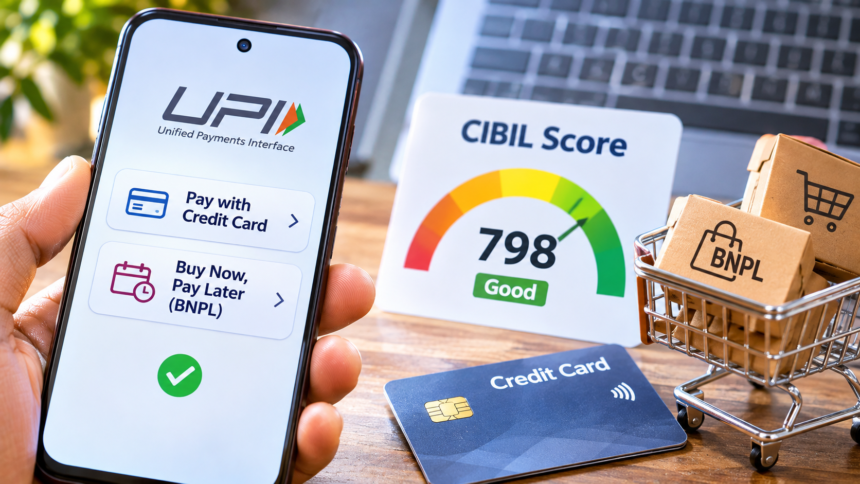
Digital payments have become a regular part of everyday life, and UPI has made transactions faster and easier. Along with payments directly from bank accounts, several banks and financial institutions now allow customers to use credit cards and credit lines through UPI. At the same time, Buy Now, Pay Later (BNPL) services are becoming increasingly popular, allowing customers to purchase products immediately and pay later.
However, many users are unaware that using credit through UPI or BNPL facilities can affect their CIBIL score. These services do not automatically damage your credit profile. In fact, responsible usage and timely repayments can help establish a positive credit history. On the other hand, missed payments and excessive borrowing can negatively affect your credit score.
Here is how UPI-based credit and BNPL services work and what borrowers should keep in mind.
How Does Using Credit Through UPI Affect Your CIBIL Score?
When you transfer money directly from your bank account using UPI, the transaction generally has no impact on your CIBIL score because you are not borrowing money.
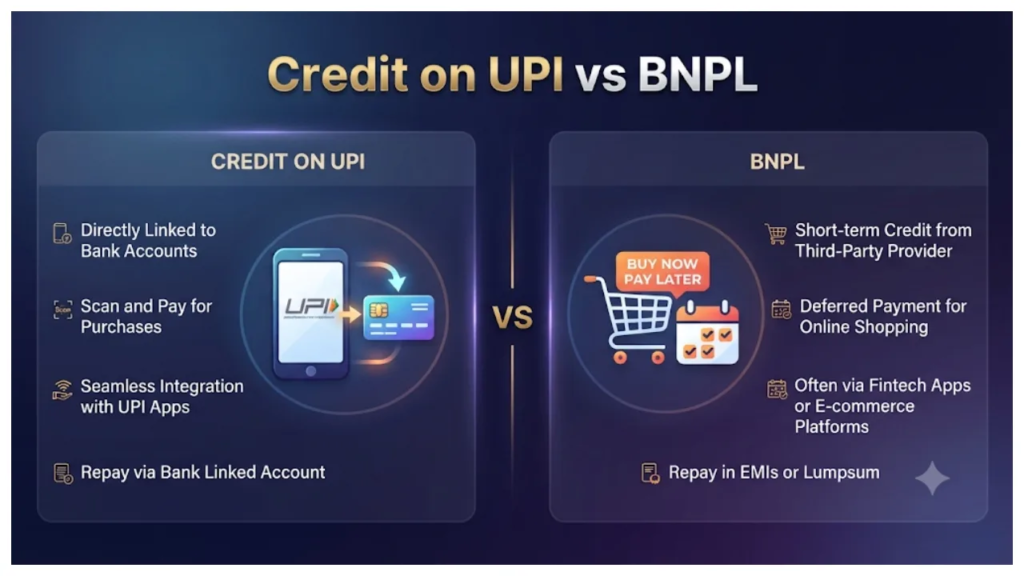
The situation is different when you make payments through a credit card or a bank-provided credit line linked to UPI. These transactions involve borrowed funds, so your repayment behaviour and credit utilisation can influence your credit history.
When Can Credit on UPI Improve Your Credit Score?
Using credit responsibly can support a healthy credit profile. Paying your credit card bills in full and before the due date helps maintain a positive repayment record.
Keeping your credit utilisation low is another important factor. Regular payments and controlled borrowing demonstrate responsible credit management and may improve your financial standing when applying for loans in the future.
When Can Credit on UPI Damage Your Credit Score?
Late payments can negatively affect your CIBIL score. If you regularly miss credit card payment deadlines, your repayment history may suffer.
Paying only the minimum amount due can also create problems. The remaining outstanding balance generally continues to attract interest, increasing your debt burden.
Similarly, using a very large portion of your available credit limit may negatively affect your credit profile.
What Is BNPL and How Does It Affect Your CIBIL Score?
Buy Now, Pay Later is a payment facility that allows customers to purchase products or services immediately and settle the amount later, either in one payment or through instalments.
Some BNPL services are offered in partnership with banks and Non-Banking Financial Companies (NBFCs). Depending on the arrangement, the amount used may be recorded as a credit facility or a small loan.
Information about these borrowings and repayments may be shared with credit bureaus. As a result, BNPL usage can influence your CIBIL score.
When Can BNPL Be Beneficial?
Making every BNPL payment on time can help establish a positive repayment history. Consistent and responsible use may contribute to building a stronger credit profile.
A good repayment record can also support your eligibility when applying for loans or other credit facilities in the future.
However, missed instalments or unpaid dues can have the opposite effect and negatively influence your credit history.
How to Maintain a Healthy CIBIL Score
Whether you use credit cards through UPI, bank credit lines or BNPL services, managing borrowed money carefully is essential.
Keep your credit utilisation under control and avoid opening too many BNPL accounts unnecessarily. Always pay your outstanding bills and instalments on time rather than relying only on the minimum amount due.
You should also check your credit report regularly to identify incorrect entries, missed payment records or unfamiliar credit accounts.
Maintaining a disciplined repayment routine can help protect your credit profile and reduce the risk of unnecessary debt.
How Long Does It Take for Your CIBIL Score to Update?
Your CIBIL score does not change immediately after every payment. Updates generally become visible within approximately 30 to 45 days, depending on when the bank or lending institution shares the latest account information with the credit bureau.
For example, if you have cleared your credit card outstanding balance or paid a BNPL instalment, the updated information may take some time to appear in your credit report.
Therefore, do not expect an immediate change in your score after making a payment. Check your credit report periodically to confirm that your repayment information has been updated correctly.
Disclaimer
This article is intended for general financial awareness and informational purposes only. The impact of UPI-based credit and BNPL facilities on credit scores may vary depending on the lender’s reporting practices and the individual’s repayment history. Credit score updates and reporting timelines are also subject to the policies of financial institutions and credit bureaus. Readers should review their loan agreements and credit reports and consult their lenders for specific information.