
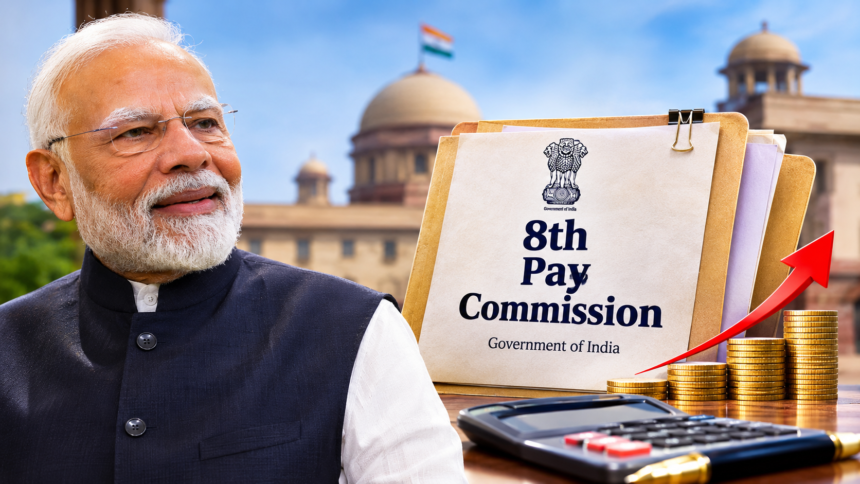
The 8th Pay Commission has completed around one year since its announcement in November last year. The Commission has been given 18 months to complete its work and submit its recommendations to the Central Government. With approximately six months remaining, discussions around salary revisions, Dearness Allowance (DA), pensions and the fitment factor have gained momentum.
Employee unions and staff organisations are presenting their demands before the Commission, seeking better salary structures and improved financial benefits. Some of the key proposals include merging DA with basic pay, increasing DA four times a year and fixing the fitment factor at 3.8333.
Demand to Merge DA With Basic Salary
One of the major demands raised by employee organisations is the merger of Dearness Allowance with basic pay once DA reaches 50%.
The Bharatiya Pratiraksha Mazdoor Sangh (BPMS) has strongly supported this proposal. The organisation presented its demand during the second round of discussions with the 8th Pay Commission on November 18.
According to the organisation’s proposal, DA should become part of basic salary when it reaches the 50% mark. However, there is currently no such provision in place.
If the recommendation is considered, it could have an impact on the overall salary structure and related benefits of eligible central government employees.
Employees Seek Four DA Hikes Every Year
Several employee organisations have also requested a change in the frequency of Dearness Allowance revisions.
At present, DA is generally revised twice a year. However, employee representatives want the government to introduce four revisions annually instead.
Their argument is that inflation and changing living costs require more frequent adjustments. They believe quarterly DA revisions could help employees receive inflation-related relief at shorter intervals rather than waiting for the existing half-yearly revisions.
The final decision on this proposal will depend on the Commission’s recommendations and the government’s approval.
Fitment Factor Demand of 3.8333
The fitment factor is another important issue being discussed in connection with the 8th Pay Commission.
The National Council-Joint Consultative Machinery (NC-JCM) has proposed a fitment factor of 3.8333. If this proposal is accepted, the basic salary of central government employees could increase from the existing ₹18,000 to approximately ₹69,000.
For comparison, the 7th Pay Commission had recommended a fitment factor of 2.57.
The 8th Pay Commission has not yet announced its position on the proposed fitment factor. This has led to continued discussion among employees about the possible salary increase under the new pay structure.
8th Pay Commission Holds Meetings Across India
To understand the concerns and expectations of employees from different regions, the 8th Pay Commission has organised meetings in several major cities.
These include Delhi, Mumbai, Kolkata, Jaipur, Chennai, Bhubaneswar, Jammu and Kashmir, and Lucknow.
The meetings provide an opportunity for employee representatives and other stakeholders to present their views and demands. Participants are required to follow the prescribed procedure to take part in these discussions.
What Happens After the 8th Pay Commission Report?
The Central Government generally constitutes a Pay Commission at intervals of around 10 years to review salary structures, pensions, Dearness Allowance and other related benefits for government employees and pensioners.
The Commission studies economic conditions and employee requirements before preparing its recommendations. Once the report is submitted, the Union Cabinet will examine the proposals and take a decision on their implementation.
For now, demands concerning DA merger, quarterly DA revisions and a higher fitment factor remain important discussion points. Employees will be watching the Commission’s recommendations closely as the deadline for submitting its report approaches.
Disclaimer: The demands and salary figures mentioned in this article are based on proposals submitted by employee organisations and the information currently available. They should not be treated as approved government decisions. The final salary structure, fitment factor, DA revisions and other benefits will depend on the 8th Pay Commission’s recommendations and subsequent approval by the Central Government.