
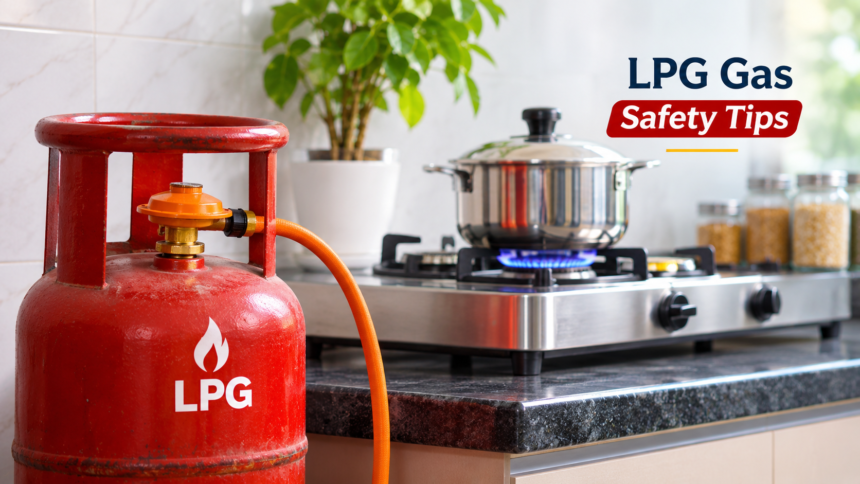
LPG gas cylinders are an essential part of everyday cooking in millions of Indian households. However, improper handling, damaged pipes or negligence while using a gas stove can increase the risk of fire and gas-related accidents. Even a small mistake in the kitchen can have serious consequences.
Following basic LPG safety precautions can help protect your family and home. From checking the cylinder before accepting delivery to knowing what to do during a gas leak, here are some important safety measures every household should follow.
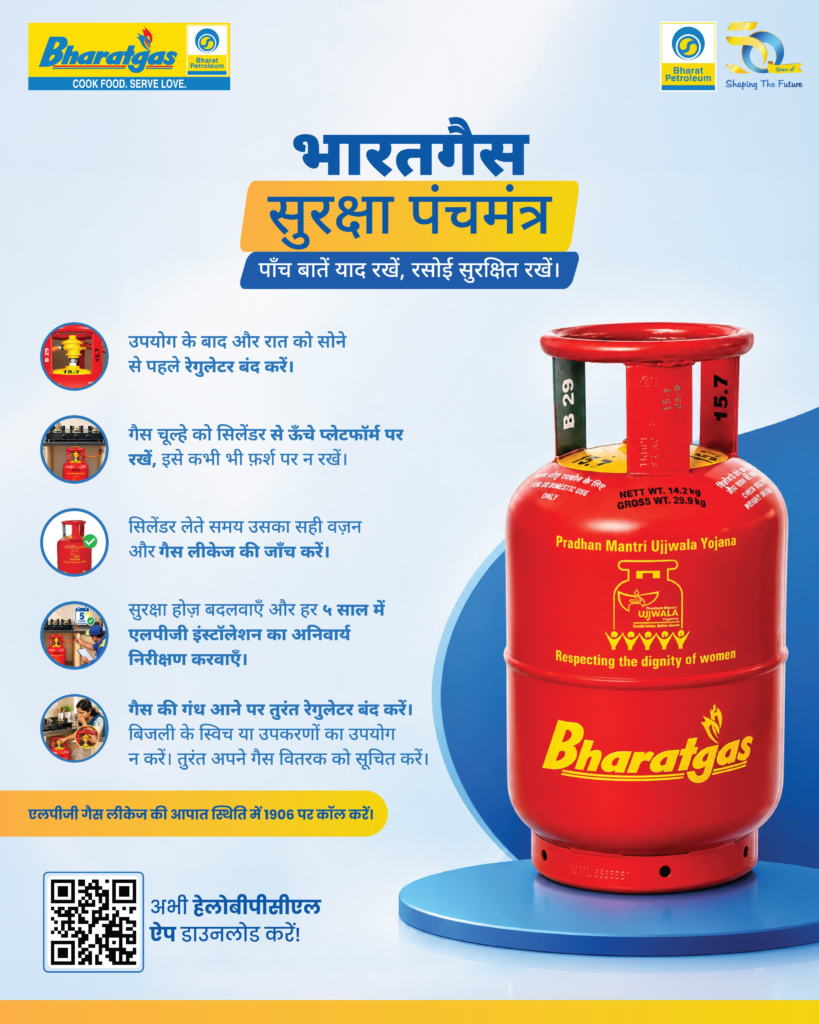
1. Always Turn Off the Gas Regulator After Cooking
One of the simplest ways to reduce the risk of gas leakage is to switch off the regulator after finishing your cooking.
First, turn off the gas stove and then close the regulator fitted to the cylinder. Make it a habit to check the regulator again before going to bed at night or leaving the house.
Keeping the regulator switched off when the gas is not being used helps reduce the chances of accidental gas leakage.
2. Keep the Gas Stove on a Proper Platform
The placement of your LPG stove is another important safety consideration. Always keep the stove on a strong, stable and elevated kitchen platform rather than placing it directly on the floor.
Choose a location that provides enough space for comfortable cooking and allows the gas cylinder to remain positioned safely.
A properly arranged cooking area also makes it easier to operate the stove and check the gas connection whenever required.
3. Check Cylinder Weight, Seal and Gas Pipe Regularly
Never accept an LPG cylinder without checking its condition. Before using a newly delivered cylinder, inspect its weight, safety seal and cap. Also, make sure there are no signs or smells indicating a gas leak.
If you notice anything unusual, avoid using the cylinder and immediately inform your LPG distributor.
The connecting rubber hose between the cylinder and gas stove also requires regular attention. Continuous use can cause the pipe to become weak, worn out or damaged over time. According to the recommended guidance in the source, the hose should be inspected at least once every five years.
Never ignore cracks, loose connections or other visible damage.
4. What Should You Do If You Smell LPG Gas?
A gas leak requires immediate attention. If you notice the smell of LPG in your kitchen or home, remain calm and follow the necessary precautions.
If it is safe to do so, turn off the cylinder regulator. Do not operate electrical switches, fans or other appliances, either to turn them on or off. Avoid using matches, lighters or anything that could produce a flame or spark.
Open doors and windows to allow the accumulated gas to escape, and move everyone in the house to a safe location.
Contact your LPG distributor or call the gas leakage emergency helpline at 1906 for assistance.
If the gas smell continues, do not return to the kitchen or enter the affected area until it has been declared safe. Wait in a secure location and seek professional assistance.
Disclaimer
This article is intended for general awareness and informational purposes only. LPG safety procedures and emergency instructions should always follow the latest guidelines issued by authorised gas distribution companies and relevant safety authorities. In case of a suspected gas leak, prioritise evacuation and contact the official LPG emergency helpline at 1906. Never attempt to repair a damaged cylinder, regulator or gas connection yourself.