
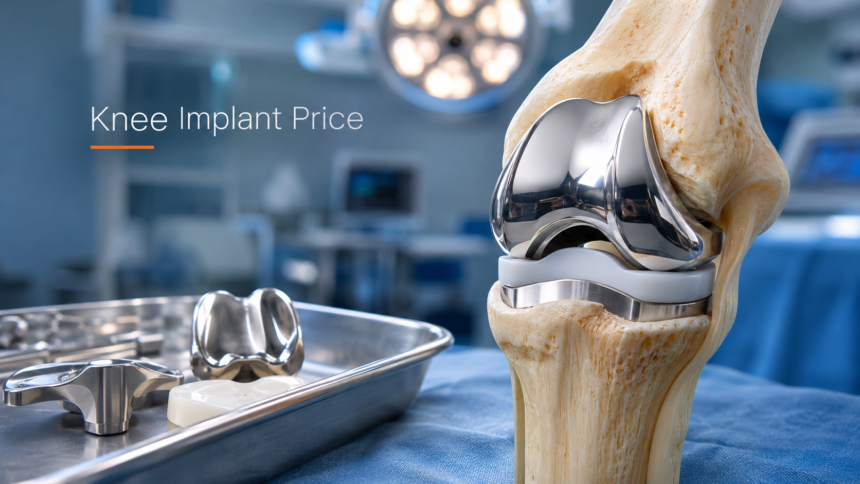
The National Pharmaceutical Pricing Authority (NPPA) has extended the existing price ceiling on orthopaedic knee implants used in knee replacement surgeries until January 2027. The decision comes amid concerns over high medical device prices and recent judicial scrutiny of excessive mark-ups on medicines and healthcare products.
According to the latest notification, the existing price restrictions will remain in force for at least two more months, providing relief to patients undergoing knee replacement procedures. The move also gives the regulator additional time to examine demands from manufacturers and industry associations seeking changes to the current pricing policy.
NPPA Extends Knee Implant Price Ceiling Until January 15, 2027
In a notification issued on November 13, the NPPA confirmed that the existing price ceiling on orthopaedic knee implants would continue until January 15, 2027, unless a fresh notification changes the order.
The extension comes after several manufacturers and industry organisations requested the government to remove or revise the price restrictions.
According to sources familiar with the matter, manufacturers have cited multiple reasons for seeking a revision. These include fluctuations in foreign exchange rates, higher labour and transportation expenses, an increase in the Wholesale Price Index (WPI) and ongoing supply chain difficulties.
The NPPA has acknowledged receiving representations from manufacturers and industry groups and is currently examining their concerns.
Domestic medical technology organisations have welcomed the extension, stating that continuing the existing price framework will provide stability to the industry and prevent any immediate increase in implant prices.
Medical Device Industry Welcomes NPPA Decision
Rajiv Nath, Forum Coordinator at the Association of Indian Medical Devices Industry (AIMED), said the extension would give the regulator adequate time to examine actual market conditions before making further decisions.
He highlighted several important factors that need consideration, including domestic manufacturing capacity, government procurement prices, differences between price to distributor (PTD) and maximum retail price (MRP), and the availability of advanced medical technologies under the existing pricing system.
According to the industry association, a detailed review of these factors is necessary to ensure that pricing decisions consider both the interests of patients and the requirements of the medical device sector.
Why Did the Government Introduce Knee Implant Price Controls?
The NPPA first introduced a price ceiling on orthopaedic knee implants in 2017 by using its special powers under Paragraph 19 of the Drugs (Prices Control) Order (DPCO), 2013.
The original restriction was introduced for one year. However, the regulator has continued extending the price ceiling annually. The previous extension was announced on September 10 last year.
Earlier NPPA orders highlighted concerns about unusually high and unjustified trade margins on knee implants. These mark-ups had pushed up the final prices of implants, increasing the amount patients had to pay from their own pockets.
The government introduced the restrictions to address these pricing concerns and make knee replacement treatment more affordable.
Supreme Court Raises Concerns Over Excessive Medical Mark-Ups
Paragraph 19 of the DPCO came into greater focus in 2026 after the Supreme Court raised concerns about excessive mark-ups on essential medicines and medical consumables.
During the proceedings, a Bench comprising Justices Vikram Nath and Sandeep Mehta questioned the difference in price regulation between scheduled medicines, which are subject to price controls, and non-scheduled medicines, which generally remain outside direct price ceilings.
The Bench also examined whether medicines classified as non-essential should continue to remain outside the scope of price regulation.
Following this development, the NPPA used its powers under Paragraph 19 to impose a 30% ceiling on trade margins for 137 non-scheduled cancer drugs. The measure covers more than 1,300 individual brands and dosage forms.
The latest extension of knee implant price controls is another development in the broader discussion around medical affordability, pricing transparency and regulation of healthcare products in India.
Disclaimer
This article is intended for general informational and educational purposes only. The information regarding knee implant price controls and NPPA notifications is based on the details provided and should not be treated as legal, medical or financial advice. Pricing regulations and government policies may change through subsequent official notifications. Readers are advised to refer to the NPPA and Ministry of Chemicals and Fertilizers websites for the latest updates.